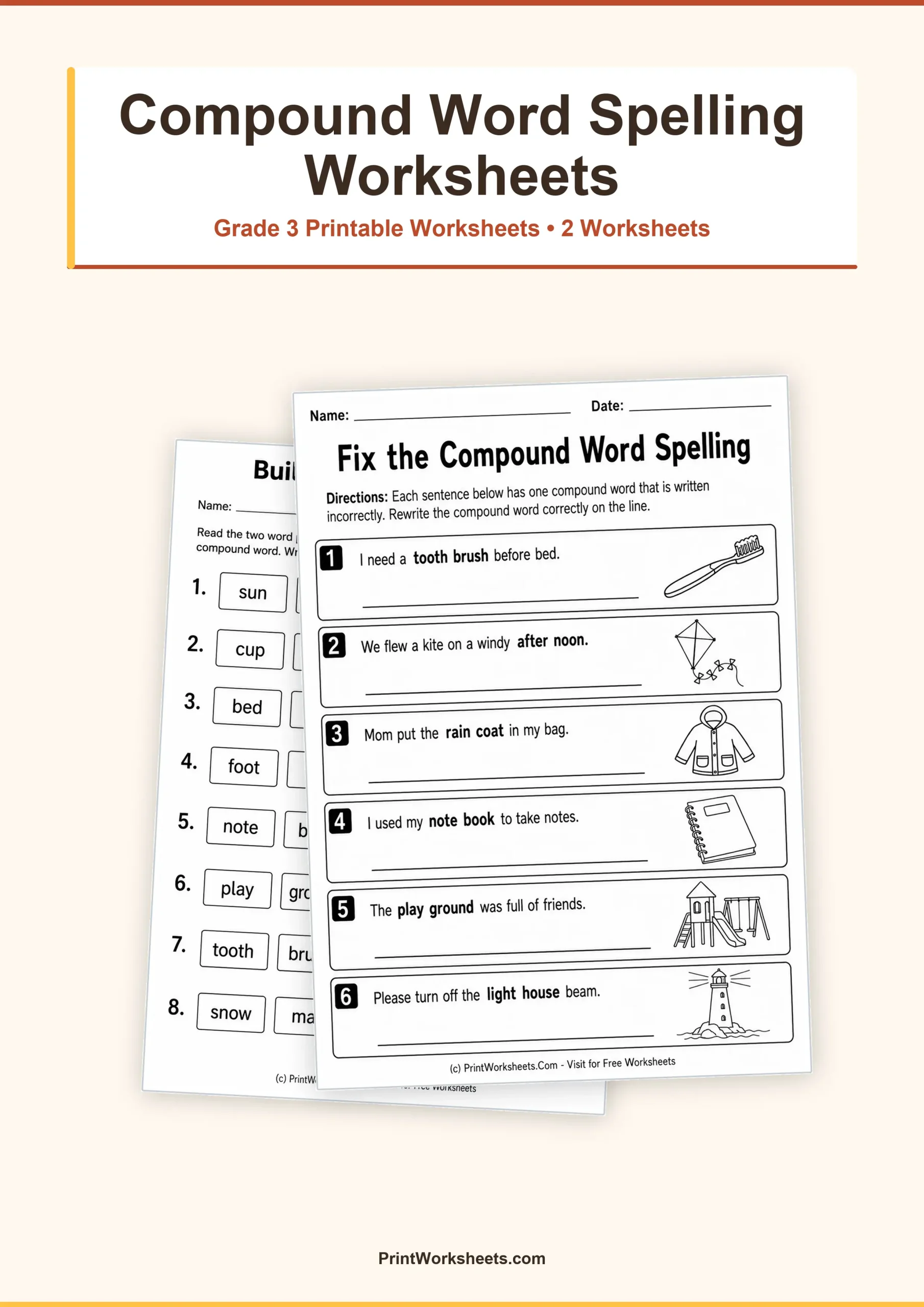
These compound word spelling worksheets give third graders two focused ways to practice how familiar words join together. Students begin by combining clearly shown word parts such as sun + flower, cup + cake, and note + book. They then move into sentence-level proofreading, where compound words have been incorrectly split into two words and must be rewritten correctly. This sequence helps students connect word formation with accurate spelling in real reading and writing contexts.
Compound Word Spelling Practice for Grade 3
Closed compound words can look simple once students know them, but recognizing that two smaller words should be written together is an important spelling skill. These printable activities keep the task concrete. Instead of asking students to guess from vague clues, the first worksheet presents both parts of each compound word directly. Students combine the parts and write the complete word, making the relationship between the smaller words and the new word easy to see.
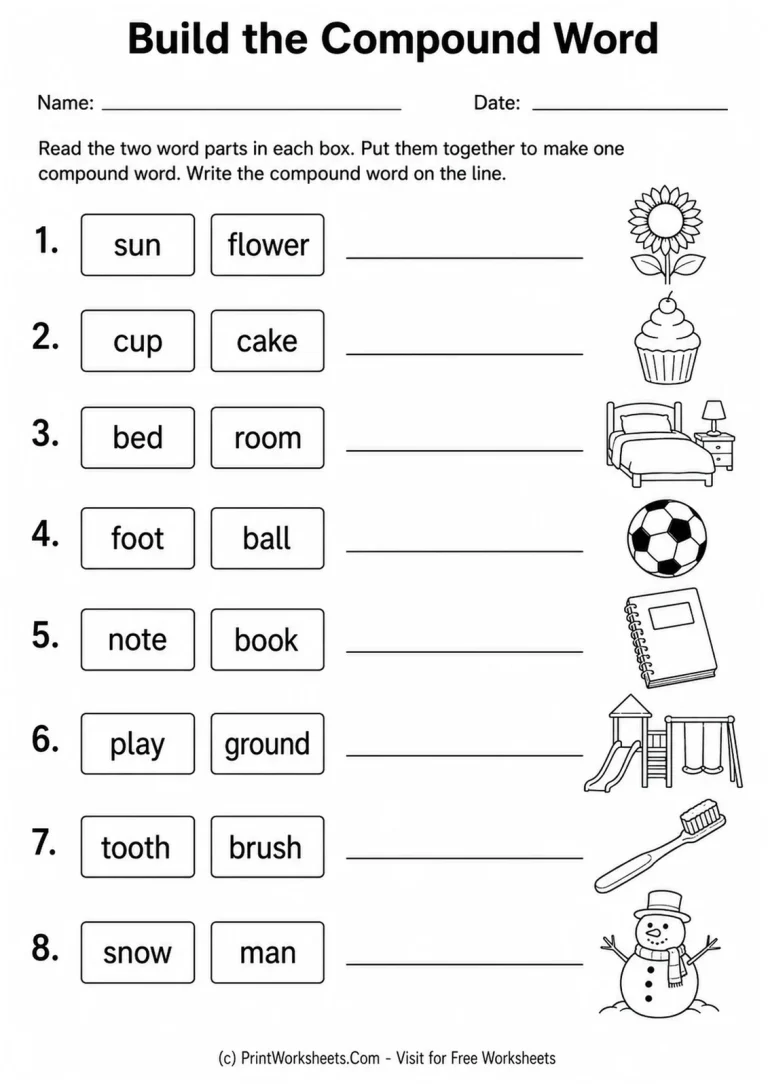
The word-building page includes eight familiar combinations: sun + flower, cup + cake, bed + room, foot + ball, note + book, play + ground, tooth + brush, and snow + man. These become sunflower, cupcake, bedroom, football, notebook, playground, toothbrush, and snowman. Matching pictures give students an additional visual cue, which can support independent work while still keeping the central task focused on spelling and word construction.
From Building Words to Fixing Spelling
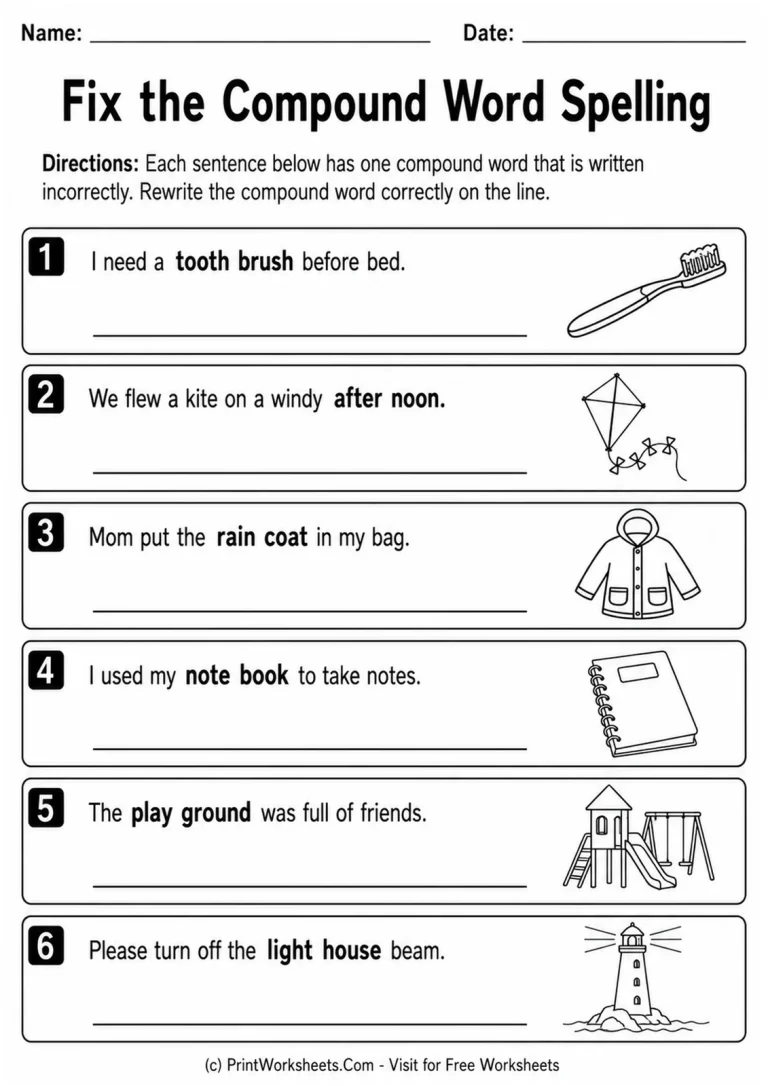
After students practice forming complete compounds from two visible parts, the second worksheet asks them to notice the same spelling pattern inside sentences. Each sentence contains one compound word that has been incorrectly separated. Students identify the problem and rewrite the word in its correct closed form.
The proofreading targets include tooth brush, after noon, rain coat, note book, play ground, and light house. Students correct them to toothbrush, afternoon, raincoat, notebook, playground, and lighthouse. This change in task format matters because students are no longer simply combining two boxes placed side by side. They must recognize that the two written words represent one established compound and then apply the correct spelling independently.
Skills Practiced in These Compound Word Worksheets
Across the two pages, students work with several connected language skills. They identify the two meaningful parts inside a compound word, combine those parts into one correctly spelled word, read familiar vocabulary, notice spacing errors, and edit incorrect spelling in sentence context. Because several words appear in everyday elementary reading and writing, the practice can also strengthen automatic recognition of common compounds.
The activities are especially useful for students who understand the meaning of words such as playground or notebook but still separate them when writing. Seeing the word first as two meaningful parts can clarify how it was formed, while the proofreading activity reinforces that the final spelling should be written as one word.
Ways to Use the Two Printable Pages
The Build the Compound Word page works well as direct practice after a short lesson on compound words. A teacher can model one example, such as sun + flower = sunflower, and then let students complete the remaining pairs independently. The pictures can serve as a quick confirmation without replacing the spelling task.
The Fix the Compound Word Spelling page is a useful follow-up because it requires closer reading. Students can read each sentence, locate the incorrectly separated compound, and rewrite only that word. Teachers may also ask students to read the corrected sentence aloud or explain which two smaller words make up the compound. This adds a simple oral-language check without changing the worksheet itself.
Useful for Classwork, Review, and Extra Practice
These Grade 3 worksheets can be used during a spelling lesson, literacy center, independent practice period, homework assignment, or short review session. Since the first activity provides strong visual and structural support, it can be used before the proofreading page for students who need a gradual progression. Students who already recognize common compounds can move directly from the word-building practice into the sentence corrections.
For additional reinforcement, teachers or parents can ask students to choose several corrected words and use them in new sentences. They can also separate a word such as lighthouse into light and house and discuss how the meanings of the smaller words help explain the meaning of the compound. The printable set keeps the main practice concise while still offering several natural opportunities to extend spelling, vocabulary, and editing work.
Practice Accurate Compound Word Writing
By moving from visible word pairs to proofreading complete sentences, these worksheets help students see compound words as both word structures and spelling patterns. The two activities provide a clear progression: build familiar closed compounds first, then recognize and correct those same kinds of spacing mistakes in context. This makes the set a practical Grade 3 resource for focused compound word spelling practice.