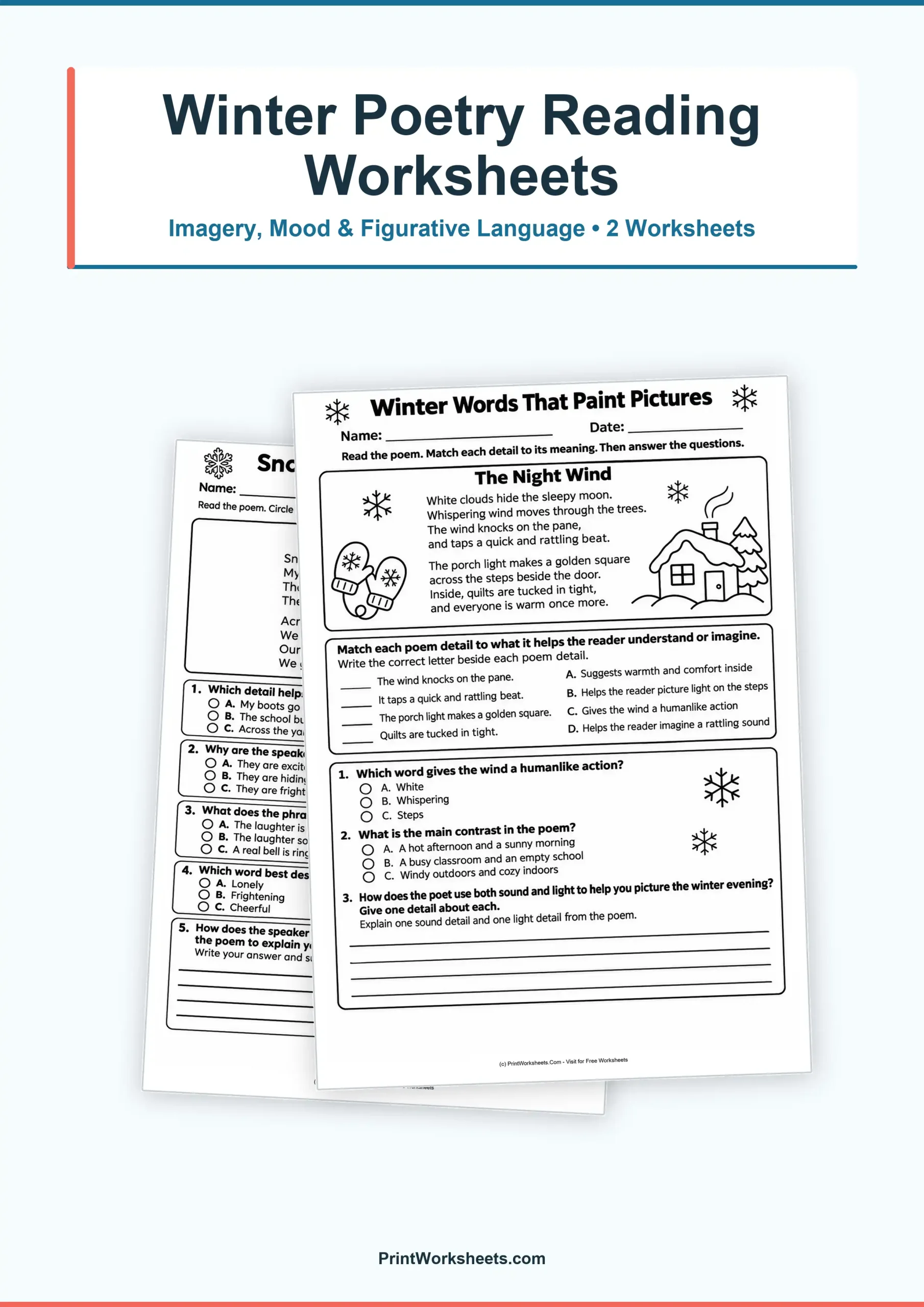
Winter poetry reading comprehension worksheets help students look beyond the literal meaning of a poem and discover how carefully chosen words create sounds, feelings, and mental pictures. This printable collection features original winter poems with focused questions about sensory details, figurative language, mood, and inference. Students read closely, select answers supported by the text, and explain their thinking using specific poetic details.
The activities are especially useful for upper elementary readers developing confidence with poetry. Instead of asking students to memorize definitions, the poems invite them to notice what they can hear, picture, and infer from the speaker’s experience. The printable format makes the activities suitable for independent reading, teacher-guided discussion, literacy centers, and at-home practice.
What These Winter Poetry Reading Comprehension Worksheets Teach
The collection approaches poetry comprehension through different winter settings. A cheerful school morning introduces sound imagery, friendship, and mood. A windy evening explores personification, contrasting settings, and the relationship between sensory language and meaning.
Students practice identifying evidence rather than relying only on personal impressions. They consider why a particular line suggests happiness, how an ordinary sound becomes vivid, and what a description reveals about the atmosphere of a scene. Written responses encourage students to connect an interpretation with details from the poem.
Before the Bell: Discovering Clues in a Snowy Morning Poem
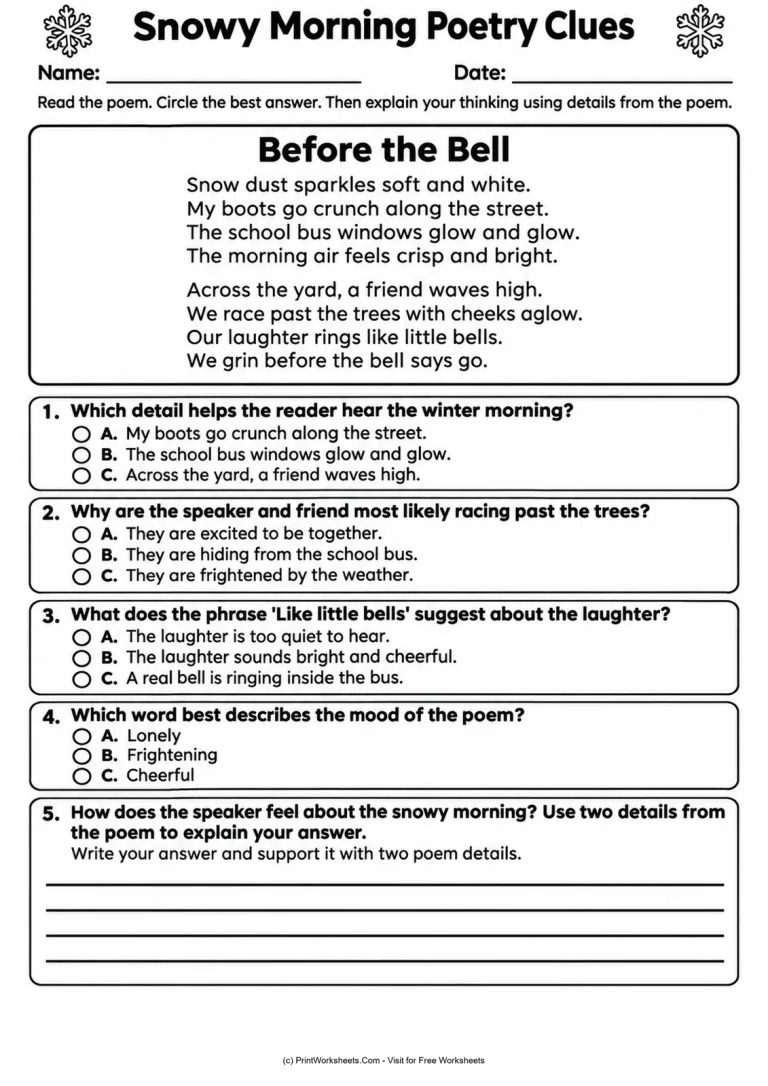
In Before the Bell, the speaker describes walking toward school on a snowy morning. Snow sparkles, boots crunch along the street, school bus windows glow, and a friend waves across the yard. The poem ends with laughter and excitement before the school bell rings.
The first question asks students to identify a detail that helps readers hear the winter morning. The sound of boots crunching along the street provides a clear example of auditory imagery. Another question asks why the speaker and a friend race past the trees, prompting an inference based on their joyful interaction.
Students also interpret the comparison between laughter and little bells. This simile suggests a bright, cheerful sound rather than a literal bell ringing. A mood question invites readers to recognize how actions, descriptions, and word choices work together to create a happy atmosphere.
The final writing prompt asks students to explain the speaker’s feelings about the snowy morning using two details from the poem. Students might refer to the friends racing together, their laughter, or their smiles. This moves the lesson from choosing an answer toward explaining why an interpretation makes sense.
The Night Wind: Personification and Sensory Imagery
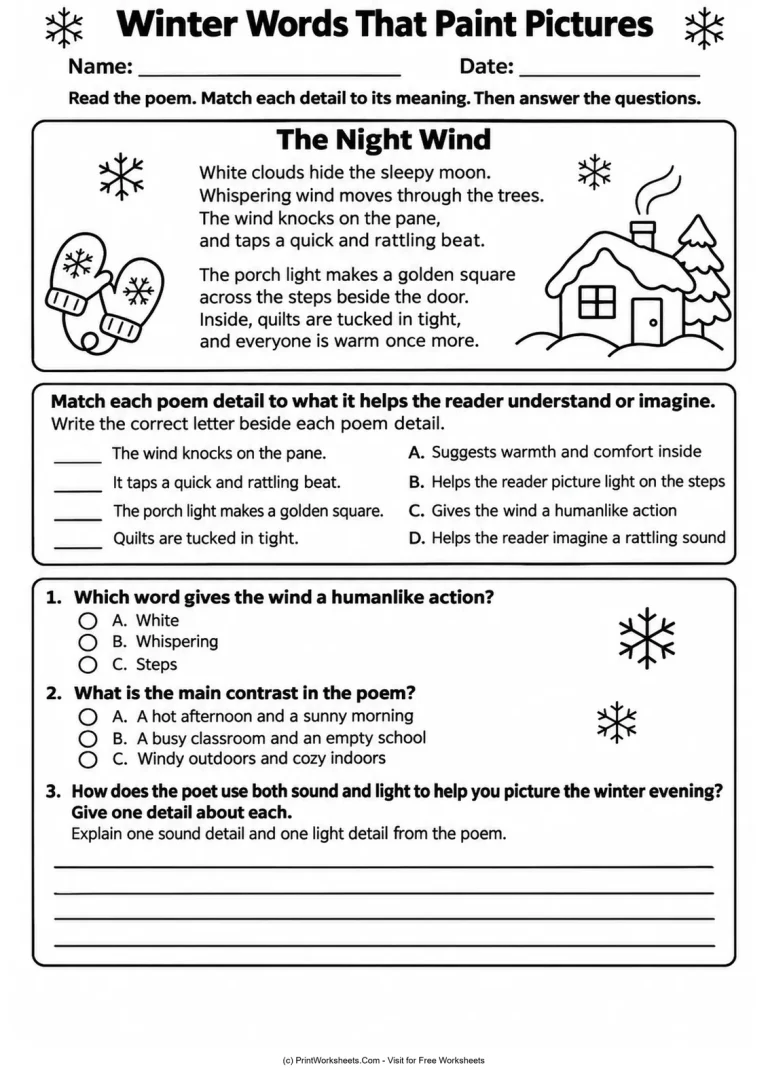
The second poem, The Night Wind, presents a different winter experience. Outside, the wind whispers through trees, knocks on a windowpane, and taps a rattling beat. Inside, a porch light casts a golden square across the steps, while tucked-in quilts suggest warmth and comfort.
Students begin with a matching activity connecting poetic details to their effects. The wind knocking on the pane suggests a humanlike action, the rattling beat creates a sound, the golden square helps readers picture light, and the quilts suggest comfort. This structure allows students to examine individual lines before interpreting the poem as a whole.
Multiple-choice questions then explore personification and the contrast between windy outdoor conditions and the cozy indoor setting. The written response asks students to explain how the poet uses sound and light to help readers imagine the winter evening.
This activity is particularly helpful when introducing the difference between what a poem states directly and what its language helps readers imagine.
How to Teach Poetry with Text Evidence
Begin by reading a poem aloud and inviting students to listen for memorable words or sounds. Read it again so they can identify the lines that answer the questions. Encourage students to underline or point to relevant details before choosing an option.
For figurative language, ask whether a description should be understood literally. In Before the Bell, laughter is compared to bells; in The Night Wind, the wind performs actions associated with people. Discuss how these choices affect the reader’s understanding without changing what is physically happening.
For written responses, use a simple routine: make a claim, identify a detail, and explain the connection. A student describing the morning poem as cheerful could mention the friends’ laughter and their excitement while running together. When discussing the evening poem, students can contrast the rattling wind with the porch light illuminating the steps.
More Winter Reading Practice
Students who would benefit from additional seasonal reading activities can explore our winter reading comprehension worksheets for 3rd grade. These provide another way to practice understanding winter-themed texts.
For younger readers developing foundational comprehension skills, see our winter reading comprehension passages for grades 1–2.
Bring Winter Poetry into Your Reading Lessons
These printable poetry activities combine close reading with accessible, imaginative winter scenes. Use them to introduce figurative language, strengthen inference skills, or help students support written interpretations with specific lines from a poem. Download the printable PDF to make sensory imagery, mood, and poetry comprehension part of your next reading lesson.