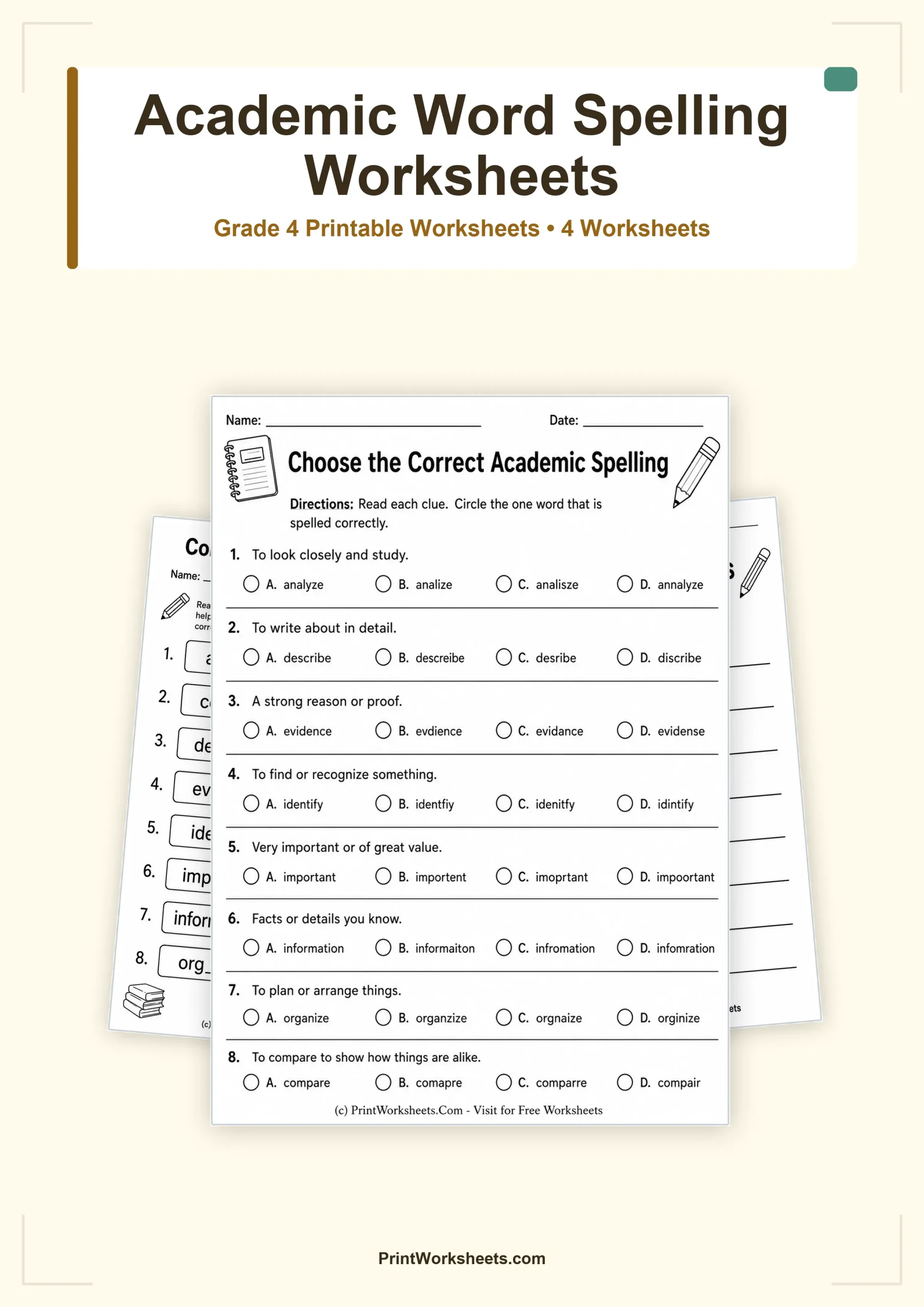
Academic word spelling becomes more useful when students practice the same school-language vocabulary in several different ways. These Grade 4 worksheets move beyond a simple word list by asking students to complete missing letters, recognize correct spellings from meaning clues, rebuild words from chunks, and proofread academic words inside sentences. The four-page set gives students repeated exposure to words they may encounter in reading responses, science explanations, classroom directions, and written assignments.
Academic Word Spelling Practice for Grade 4
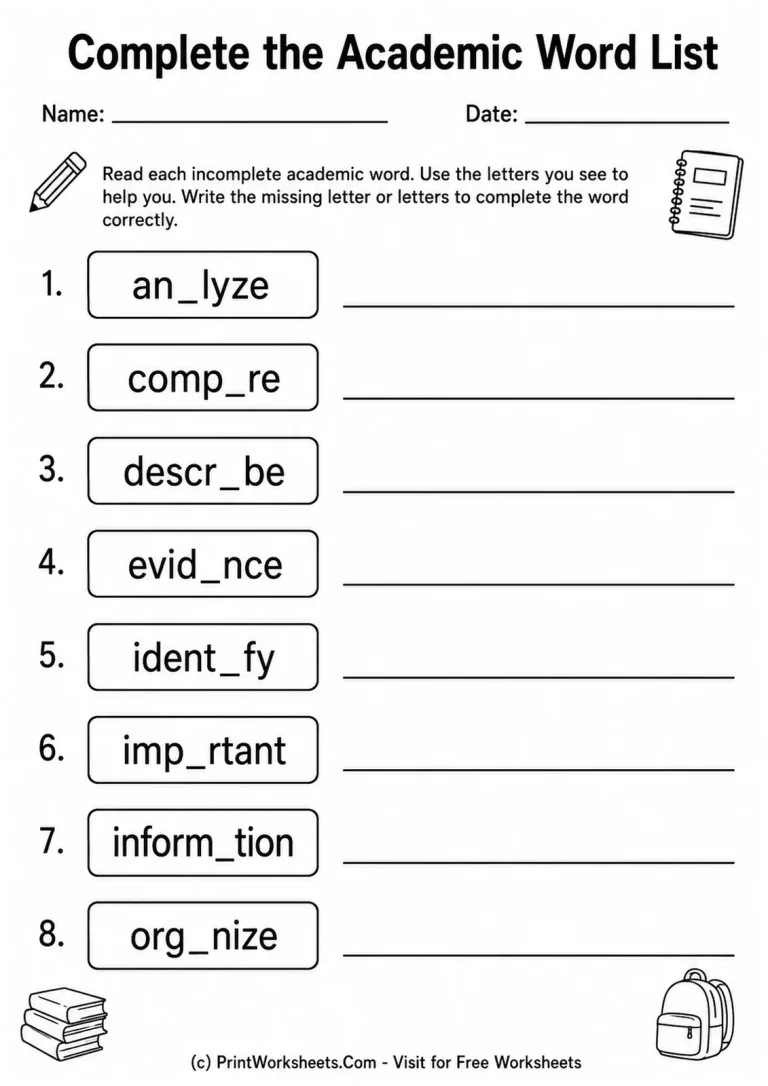
The first worksheet, Complete the Academic Word List, focuses attention directly on letter patterns. Students complete eight partially written words: analyze, compare, describe, evidence, identify, important, information, and organize. Because part of each word is already visible, students must look closely at the internal spelling rather than simply copy a complete model. This format is especially useful for words such as information and important, where several syllables can make the correct sequence of letters harder to remember.
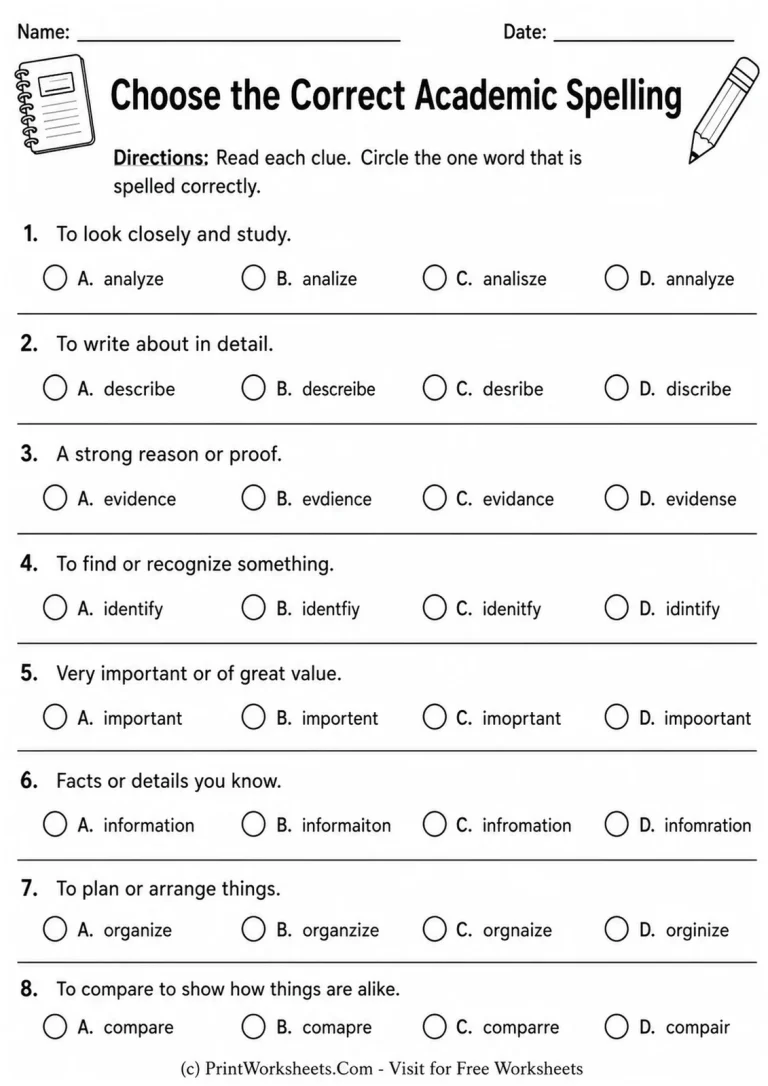
The second page changes the task from production to recognition. In Choose the Correct Academic Spelling, students read a short meaning clue and choose the correctly spelled academic word from four options. The choices include plausible errors such as analize, evidance, and infomation. Students therefore need to connect meaning with accurate spelling instead of choosing by appearance alone. The activity revisits many words from the first page, including analyze, describe, evidence, identify, important, information, organize, and compare.
Build Longer Academic Words from Meaningful Chunks
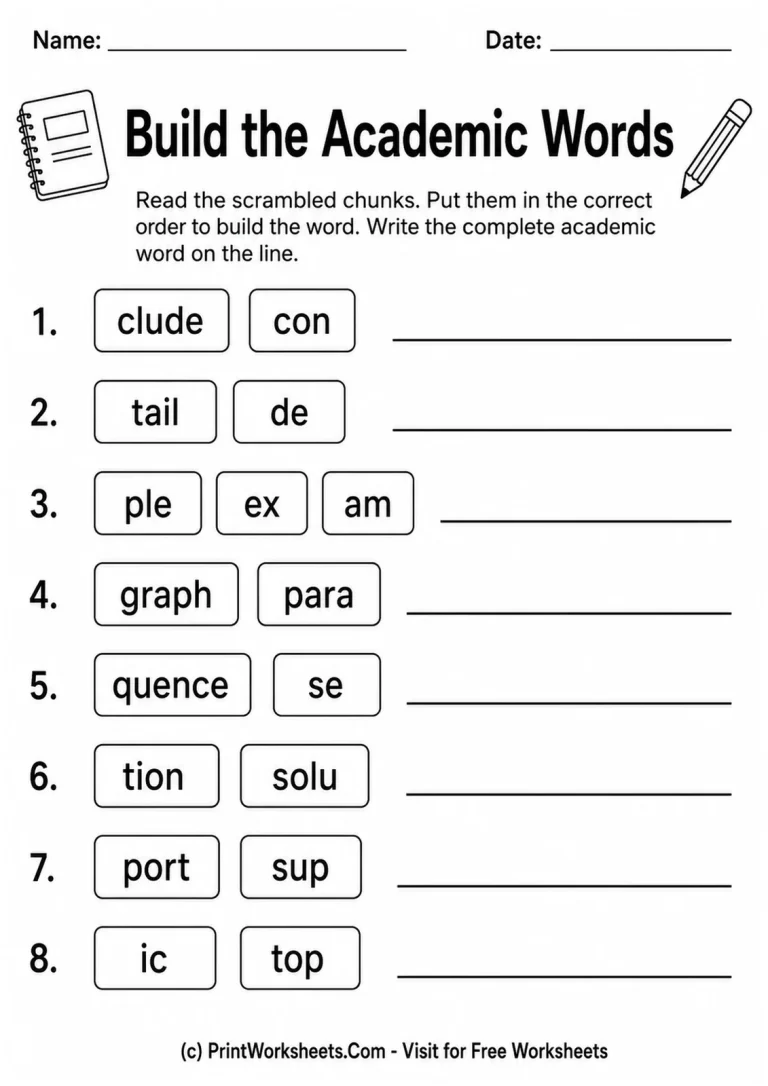
The third worksheet, Build the Academic Words, introduces a different spelling strategy. Students reorder two or three visible chunks to form complete words. Examples include combining con + clude to make conclude and para + graph to make paragraph. Other target words include detail, example, sequence, solution, support, and topic.
This word-building format helps students notice that longer academic vocabulary can often be handled in manageable parts. Instead of treating a multisyllabic word as one long string of letters, students examine how recognizable sections fit together. That shift can support more careful spelling when students later encounter these words in independent writing.
Proofread Academic Words in Complete Sentences
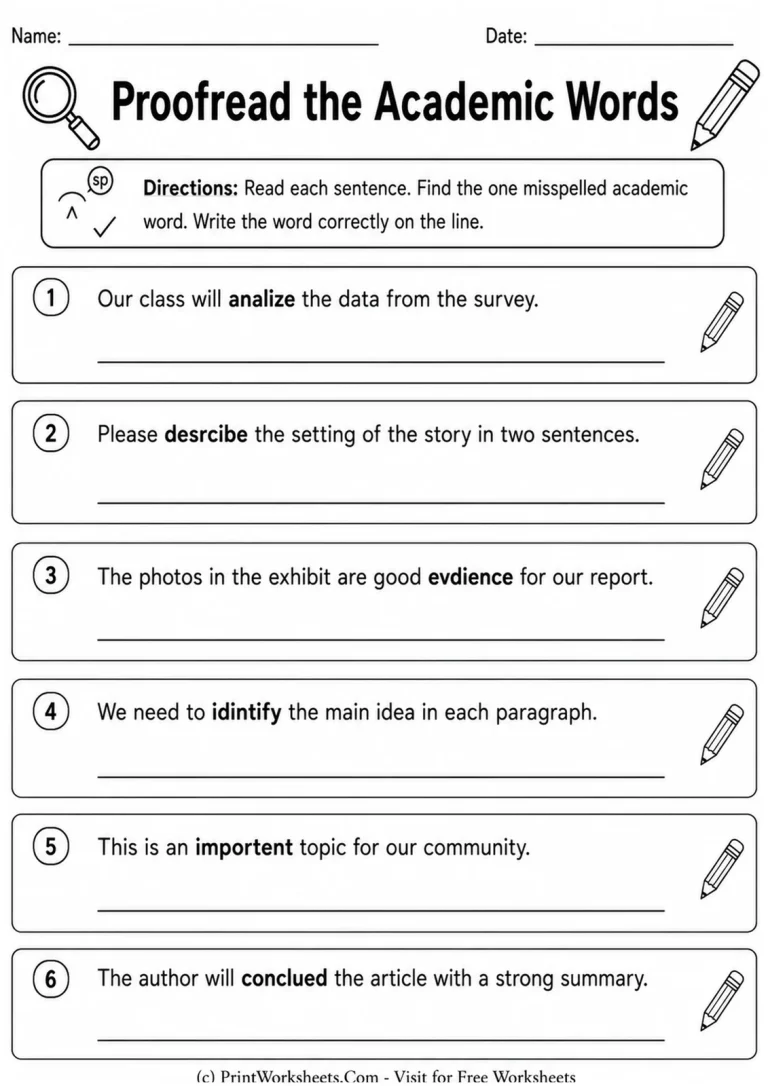
The final student page places spelling inside context. In Proofread the Academic Words, students read six sentences, locate a misspelled bold academic word, and rewrite it correctly. Errors include analize, descrbie, evdience, idintify, importent, and conclued. Unlike isolated spelling practice, this activity asks students to notice an error while also processing the sentence around it.
Contextual proofreading is a useful final step because students often know a word when they see it in a list but still misspell it while writing. By correcting academic vocabulary inside full sentences, learners practice the kind of checking they can apply to reports, constructed responses, paragraph writing, and other classroom work.
How the Four Worksheets Work Together
The sequence moves from supported spelling toward increasingly independent application. Students first supply missing letters, then distinguish correct spellings from realistic alternatives, next assemble longer words from chunks, and finally detect and repair spelling errors in sentences. This progression gives teachers and parents several ways to revisit the same general skill without repeating the same exercise format.
The vocabulary also extends beyond one narrow subject area. Words such as compare, describe, evidence, identify, organize, conclude, sequence, solution, support, and topic appear across many school tasks. Practicing their spelling can therefore support students as they explain ideas, respond to reading, organize information, discuss evidence, and write complete academic responses.
Ways to Use These Grade 4 Spelling Worksheets
The pages can be used individually for morning work, literacy centers, spelling review, homework, intervention, or short independent practice. They can also be completed in order as a compact academic vocabulary spelling sequence. A teacher might begin with the missing-letter page, use the multiple-choice activity to check recognition, continue with word chunks to highlight structure, and finish with proofreading to see whether students can spot errors in context.
For additional practice, students can keep a personal list of words they found difficult and use those words in original sentences after completing the worksheets. The strongest benefit of the set is its variety: students are not simply rewriting a list, but examining letters, meanings, word parts, and sentence context while working with Grade 4 academic vocabulary.