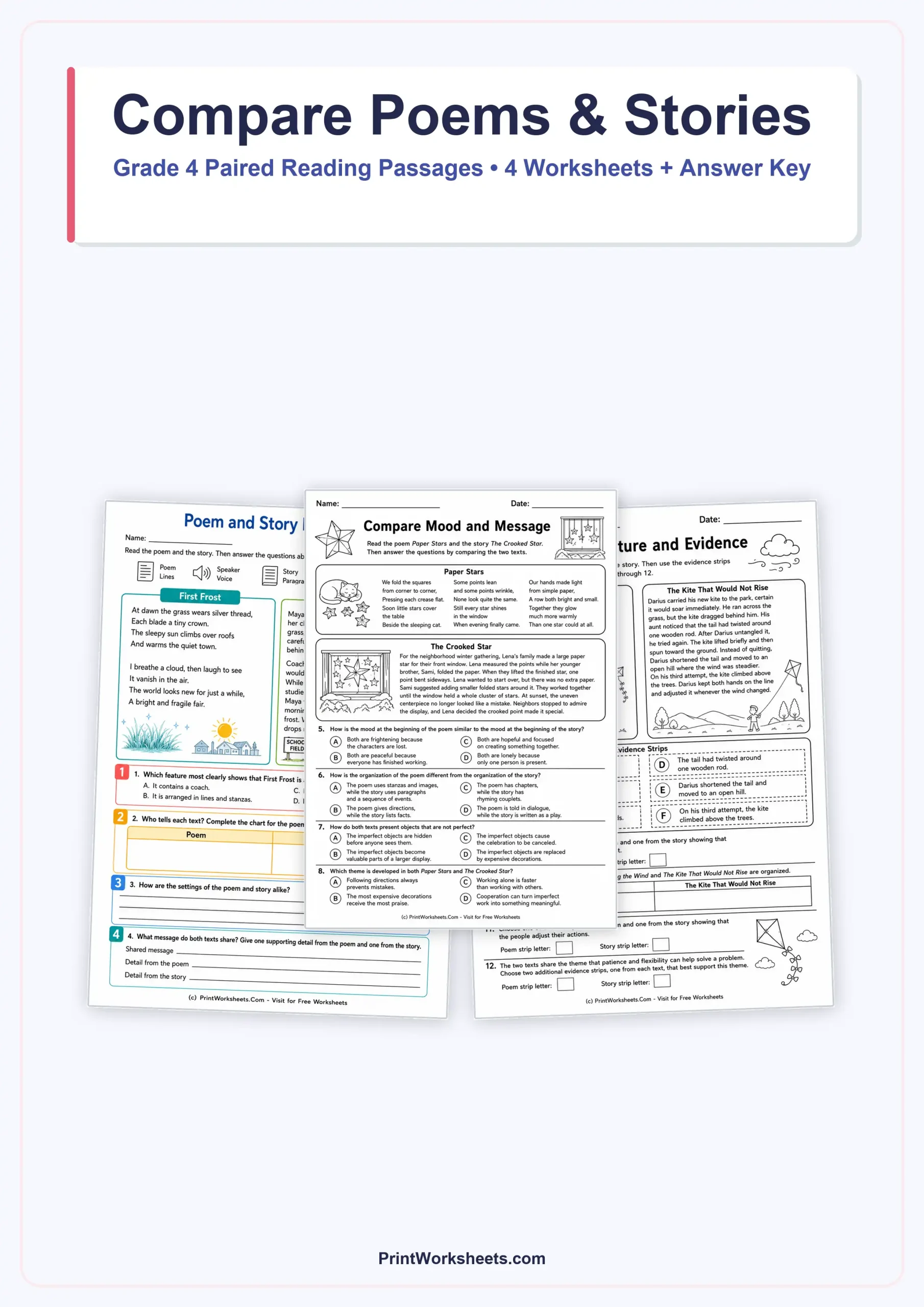
These compare poems and stories worksheets give fourth graders a practical way to notice how two different literary forms can explore similar ideas in different ways. Across four student pages, children read paired poems and short stories, then compare features such as speaker and narrator, setting, organization, mood, theme, and supporting evidence. The set moves from guided questions to more independent written analysis, making it useful for whole-class reading lessons, small groups, homework, intervention, or independent practice.
Compare Poems and Stories Through Paired Reading
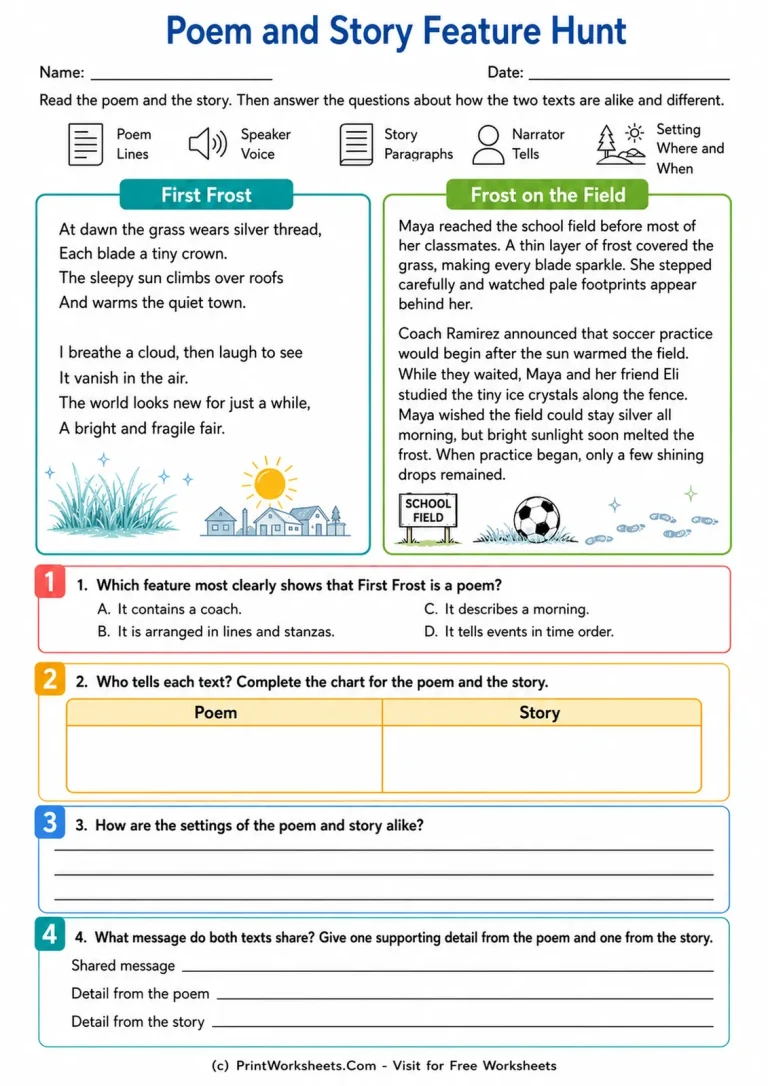
The first worksheet, Poem and Story Feature Hunt, pairs the poem First Frost with the story Frost on the Field. Both texts describe a cold, frosty morning, but they present the experience in different forms. Students identify the feature that most clearly shows the poem is a poem, distinguish a first-person speaker from a third-person narrator, compare the settings, and explain a message shared by both texts. The final response asks for one supporting detail from each selection, introducing the important habit of backing up comparisons with evidence instead of relying on general impressions.
The questions also help students connect structure to meaning. The poem is arranged in lines and stanzas and uses compact imagery such as silver grass, visible breath, and morning sunlight. The story uses paragraphs and a sequence of events involving Maya, her classmates, and a soccer field warming in the sun. This gives readers a concrete example of how two texts can share a setting and idea while using noticeably different forms.
Mood, Structure, and Theme Practice
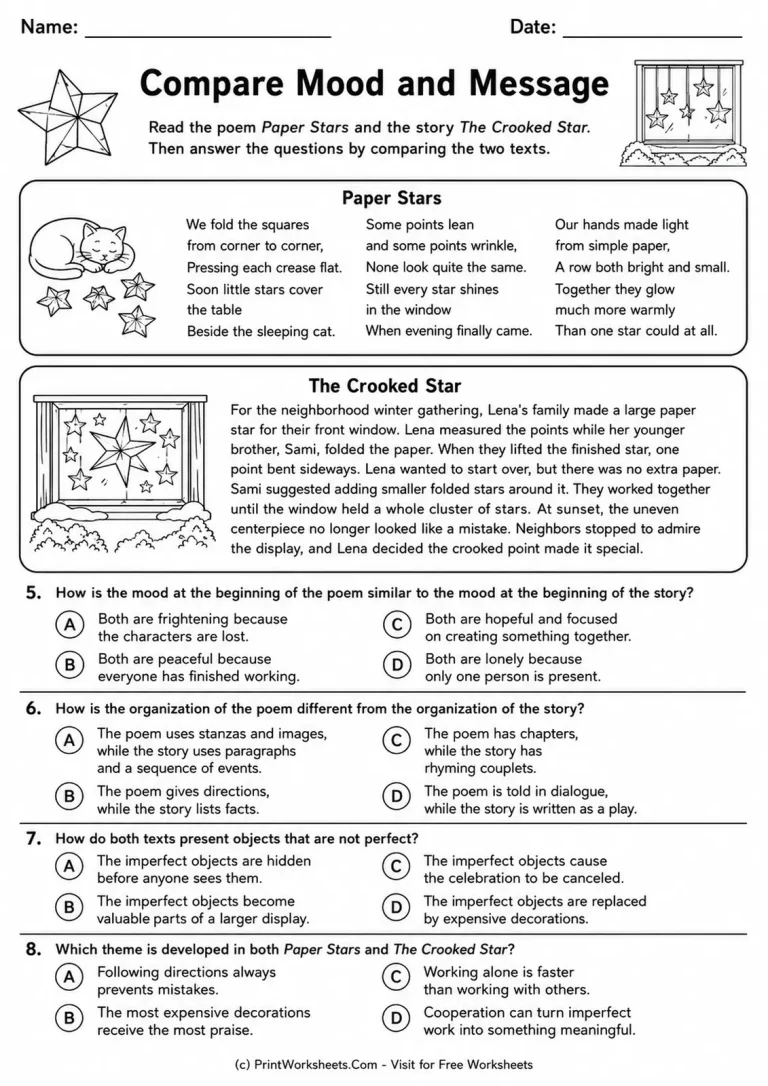
On Compare Mood and Message, students work with Paper Stars and The Crooked Star. The paired texts focus on handmade paper stars that are imperfect but become meaningful when people work together. Four multiple-choice questions ask readers to compare the mood at the beginning, the organization of the poem and story, the role of imperfect objects, and the theme developed in both selections.
This page is especially useful for helping fourth graders separate literary elements that are often confused. Students must recognize that mood describes the feeling created by a text, while theme expresses a broader message. They also see a clear structural contrast: the poem uses stanzas and images, while the story develops events in paragraphs and chronological order. The shared idea that cooperation can turn imperfect work into something meaningful gives students a strong, age-appropriate theme to trace across both forms.
Using Text Evidence to Support Comparisons
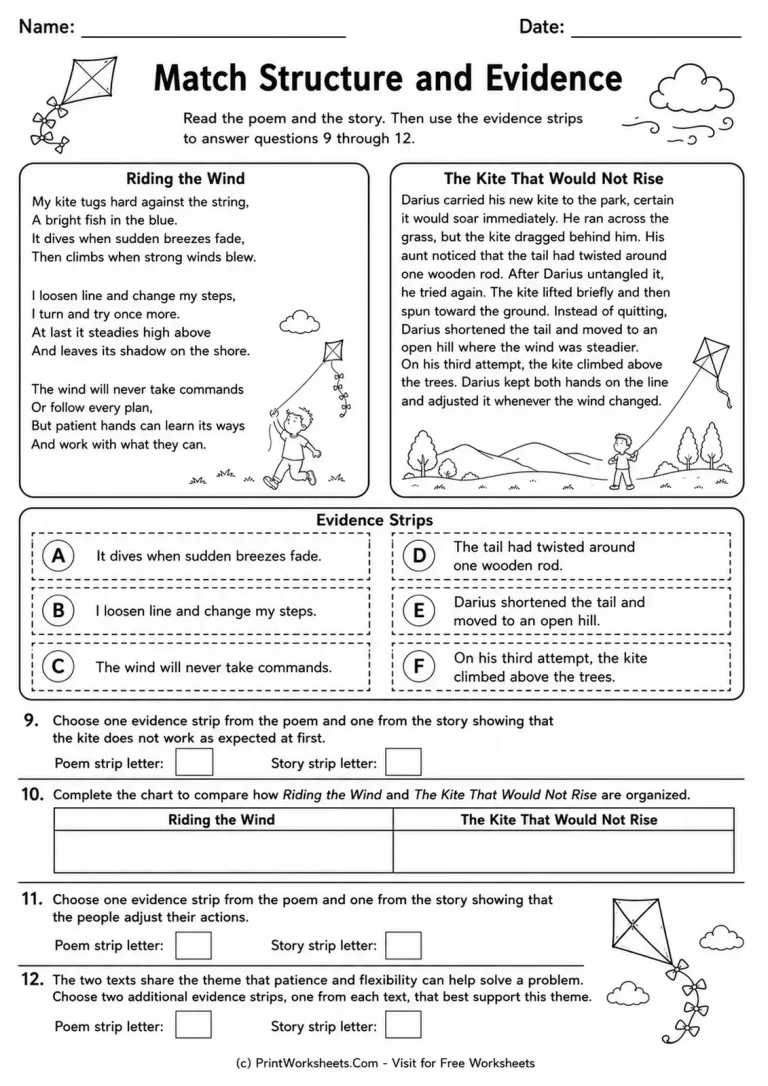
Match Structure and Evidence increases the level of independence. Students read Riding the Wind and The Kite That Would Not Rise, then use labeled evidence strips to answer questions. They identify evidence showing that the kite does not work as expected, compare how each text is organized, and choose details showing how the people adjust their actions. A final item asks them to support the theme that patience and flexibility can help solve a problem.
The evidence-strip format makes close reading visible. Rather than simply asking students to explain what happened, it requires them to match claims with specific lines from each text. The poem shows a speaker changing steps and learning to work with the wind, while the story follows Darius through several attempts to make his kite rise. This creates a natural bridge from basic comprehension to evidence-based literary analysis.
Extended Responses for Grade 4 Readers
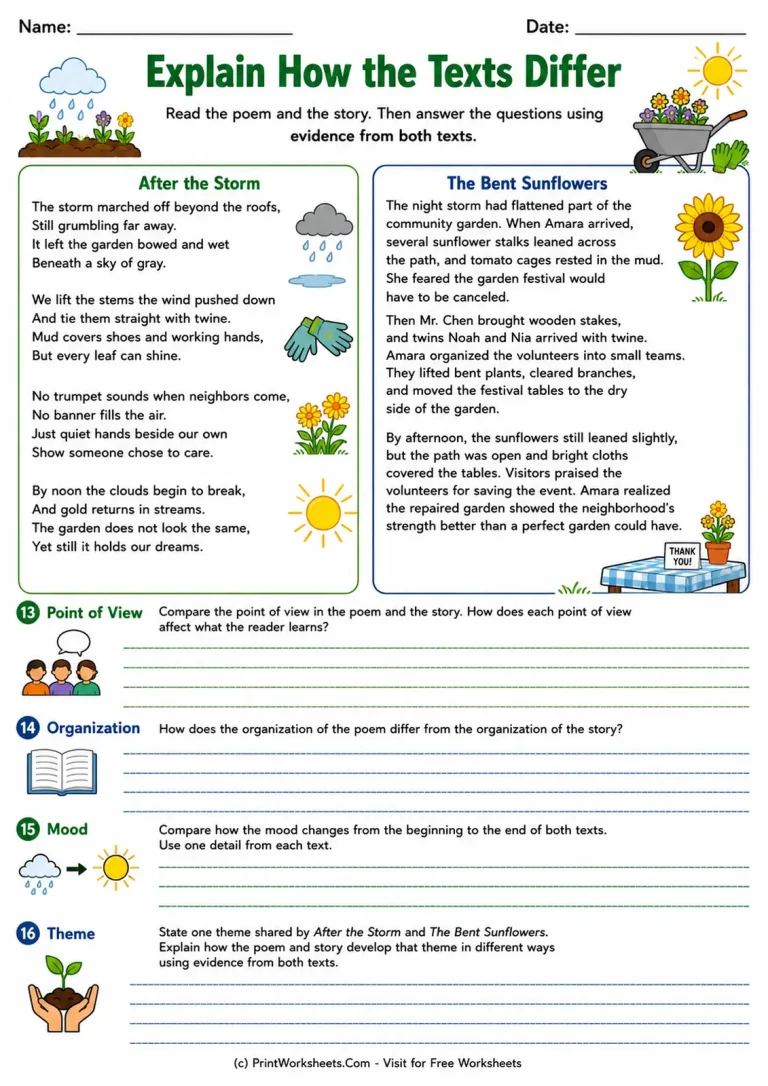
The final student page, Explain How the Texts Differ, pairs After the Storm with The Bent Sunflowers. Here, students write longer responses about point of view, organization, mood, and theme. They compare the poem’s first-person plural voice with the story’s third-person narration focused on Amara, explain how the poem’s stanzas differ from the story’s chronological sequence, and trace how both texts move from worry or gloom toward hope and pride.
The theme question asks students to explain how both selections develop the idea of restoring hope through cooperation after a setback. Because the poem emphasizes quiet shared work while the story describes specific actions by Amara and community volunteers, students must do more than name a theme; they must explain how each author develops it differently.
Teaching Ideas and Differentiation
Teachers can use the four worksheets as a short progression rather than assigning them all at once. Begin with the first page for direct instruction on poem and story features, use the second for guided multiple-choice discussion, then move to the evidence-strip activity before assigning the final constructed responses independently. For students who need support, read each paired text aloud and have them underline one detail from the poem and one from the story before answering. More advanced readers can be asked to explain why an author might choose a poem instead of a story to communicate the same idea.
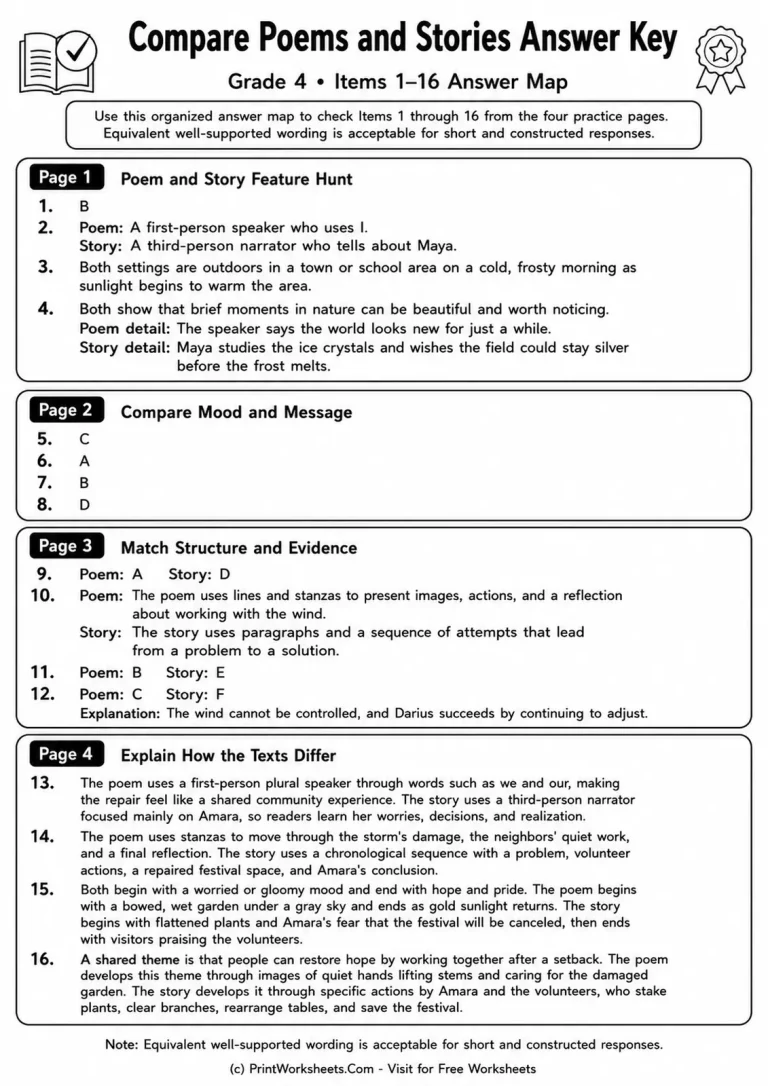
The included answer key covers Items 1–16 and provides sample wording for short and extended responses. Because reasonable evidence-based wording may vary, it can be used both for quick checking and for discussion of what makes a strong comparative answer. Together, the pages provide a focused Grade 4 resource for teaching students to compare literary forms with clear evidence and precise reading vocabulary.