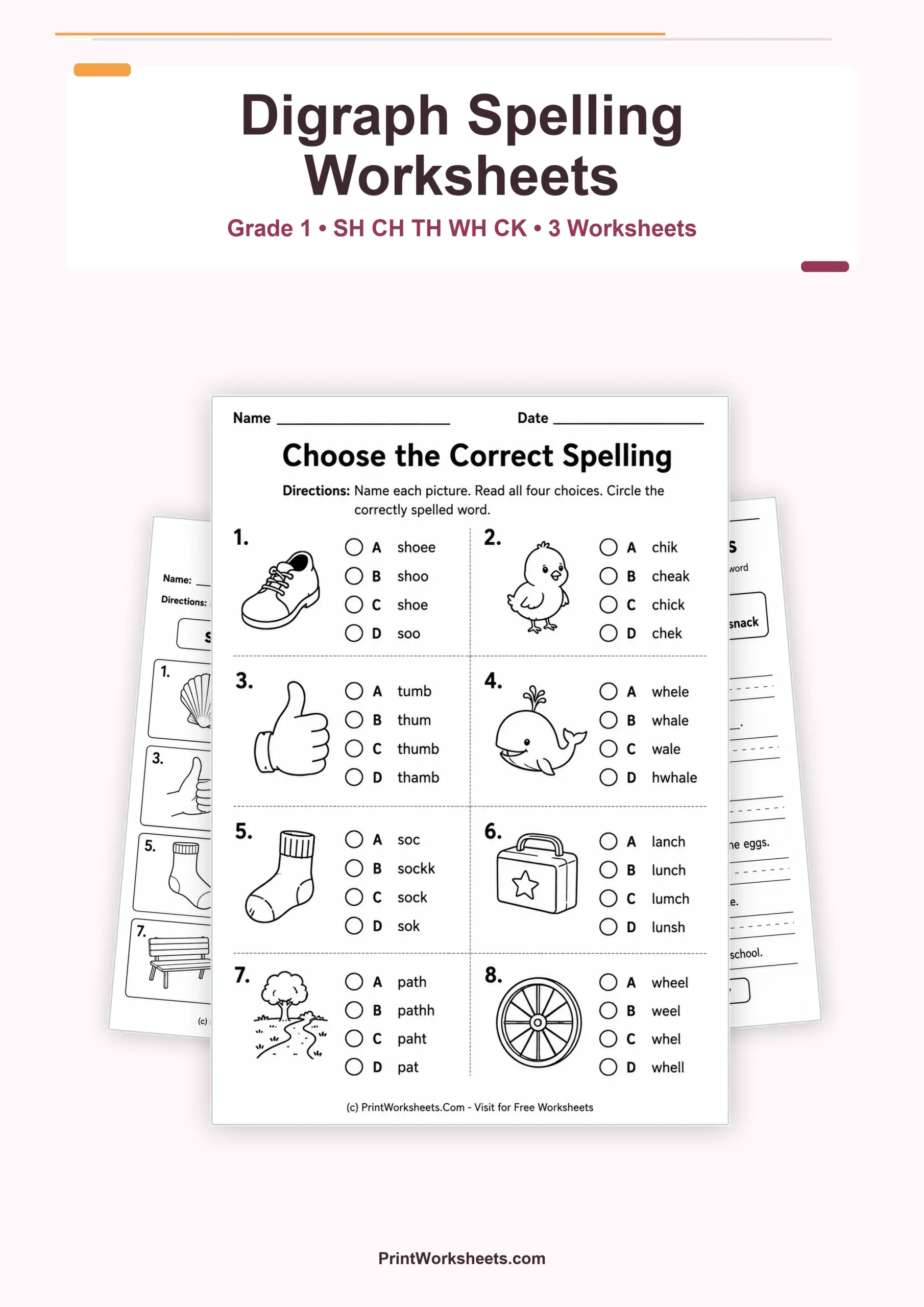
These digraph spelling worksheets give first-grade students focused practice with sh, ch, th, wh, and ck in familiar words. Across three printable activities, children move from supplying a missing digraph to recognizing the correctly spelled word and then choosing digraph words that make sense in complete sentences. Picture support is built into each page so beginning readers can connect a spoken or pictured word with its written spelling pattern.
Grade 1 Digraph Spelling Worksheets with Picture Support
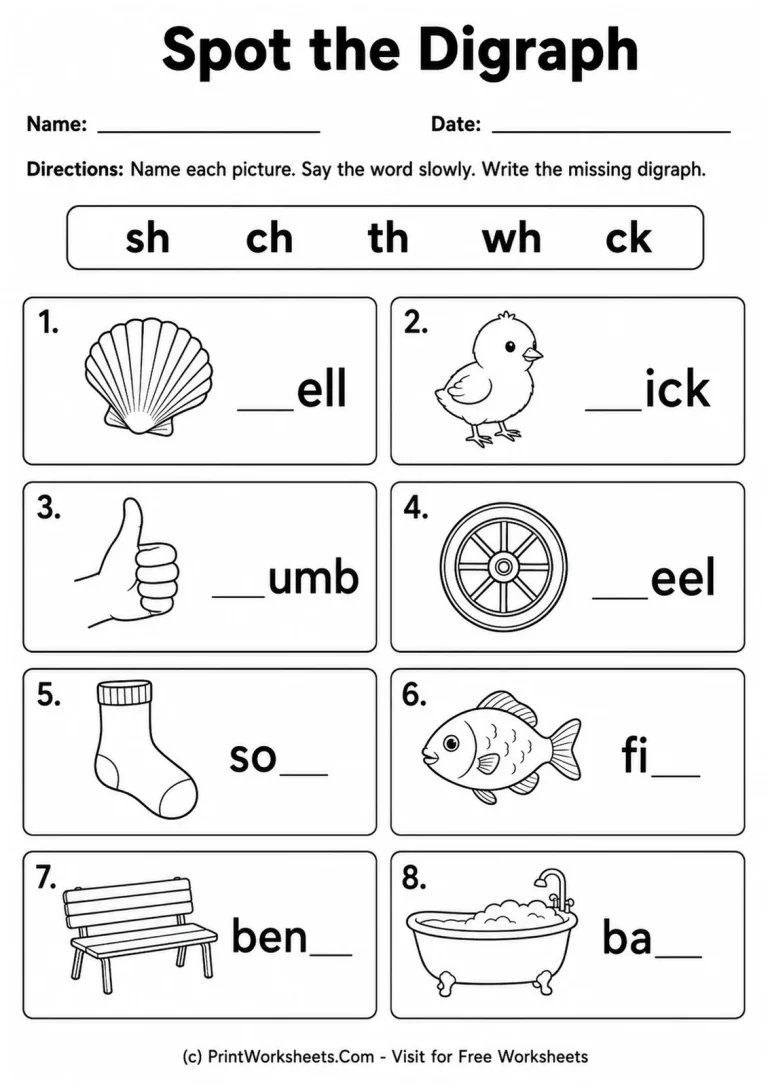
The first activity, Spot the Digraph, asks students to complete eight picture-supported words by choosing the missing two-letter spelling pattern. The available digraphs include sh, ch, th, wh, and ck. Students work with words such as shell, chick, thumb, wheel, sock, fish, bench, and bath. Because the illustrations identify the intended word, children can concentrate on the letters that complete the spelling instead of trying to guess an unfamiliar vocabulary item.
This type of task is especially useful when students already recognize common digraph sounds but still need practice remembering which letter pair belongs in a written word. It encourages them to look at the beginning, middle, or end of a word and notice that two letters can work together as one important spelling unit.
Practice Choosing the Correct Digraph Spelling
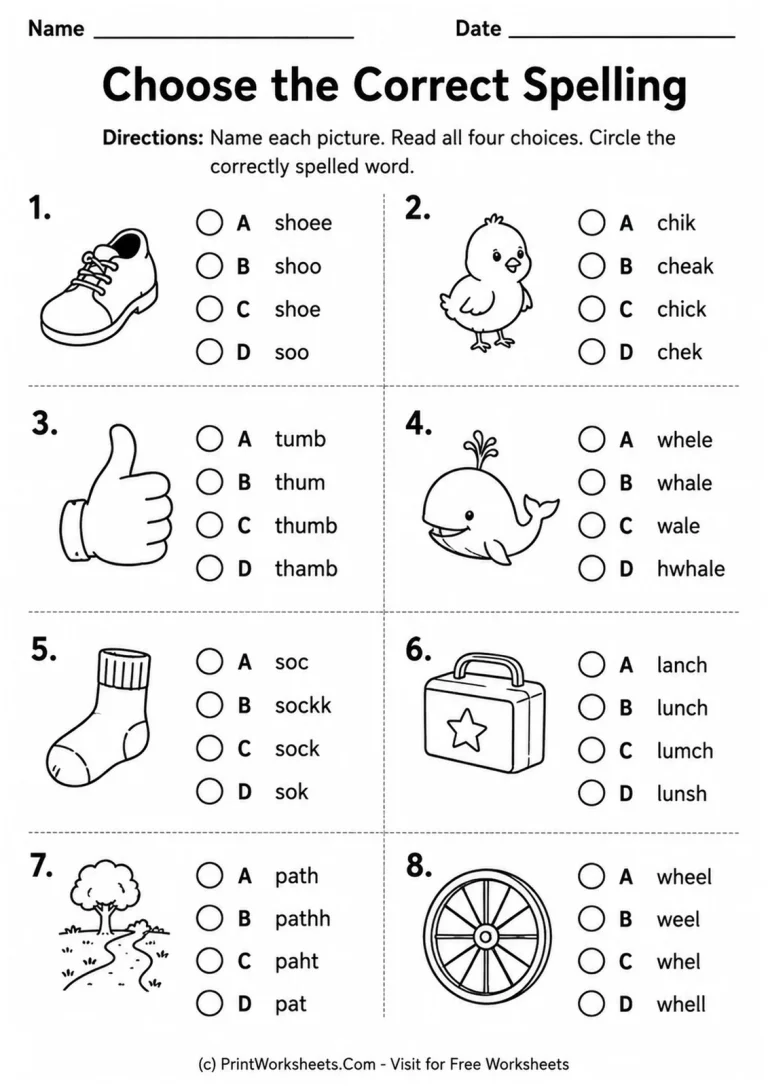
The next worksheet changes the response format. In Choose the Correct Spelling, students name a picture and select the correct word from four spelling choices. The target words are shoe, chick, thumb, whale, sock, lunch, path, and wheel. The incorrect choices include realistic spelling mistakes, such as a missing digraph, a changed letter, or an extra letter.
That comparison work helps children slow down and inspect the whole word rather than choosing an answer from its first letter alone. For example, a student must distinguish the complete spelling of a familiar word from alternatives that may look nearly correct. The activity therefore combines visual word recognition with careful attention to letter patterns.
Using Digraph Words in Sentences
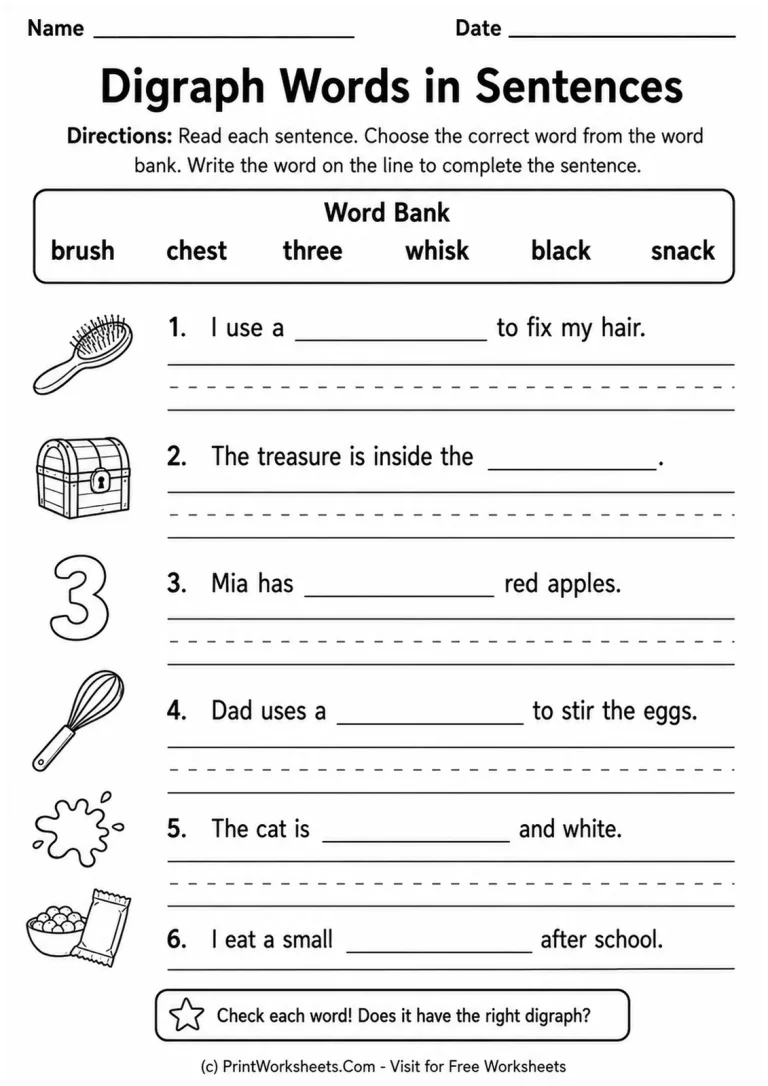
The final activity extends spelling practice into meaning and sentence context. In Digraph Words in Sentences, students choose from the word bank brush, chest, three, whisk, black, and snack. Each word completes one sentence, and a nearby illustration provides an additional clue to the intended meaning.
This page asks students to do more than identify a spelling pattern in isolation. They must read enough of each sentence to decide which digraph word fits both grammatically and logically. That shift from single words to short sentences gives students an opportunity to apply spelling knowledge while also practicing basic reading comprehension and vocabulary use.
What Students Practice Across the Set
The three worksheets create a clear sequence of skills. Students begin by adding a missing digraph to a pictured word, continue by discriminating between correct and incorrect spellings, and finish by selecting digraph words according to sentence meaning. The repeated attention to sh, ch, th, wh, and ck provides useful reinforcement without requiring every page to use the same task format.
The vocabulary is appropriate for early elementary practice because the words are short, concrete, and generally easy to represent with pictures. Examples such as shoe, whale, wheel, fish, bath, brush, snack, and chick allow children to use visual clues while concentrating on spelling details. Other words, including thumb, three, chest, and whisk, add variety while continuing the same central digraph skill.
Ways to Use These Worksheets
Teachers can use the pages during a spelling lesson, phonics review, literacy center, independent practice period, or small-group session. A student who is still learning the patterns can say each pictured word aloud before writing or selecting an answer. A student who is ready for more independence can complete the activities first and then read the finished words or sentences aloud.
Parents can also use the set for short at-home spelling practice. Rather than completing every page at once, children can work through one activity at a time and briefly review the target digraphs before starting. Asking a child to identify the two letters that form the important spelling pattern in each finished word can reinforce the connection between the word they hear, the picture they recognize, and the letters they see.
Build Confidence with Common Digraph Spellings
These Grade 1 worksheets keep the focus on a manageable group of common digraph spellings while varying the way students respond. Picture clues support word identification, spelling choices encourage close visual comparison, and sentence completion gives the target words a meaningful context. The result is a practical printable set for reinforcing sh, ch, th, wh, and ck spelling through several connected forms of practice.