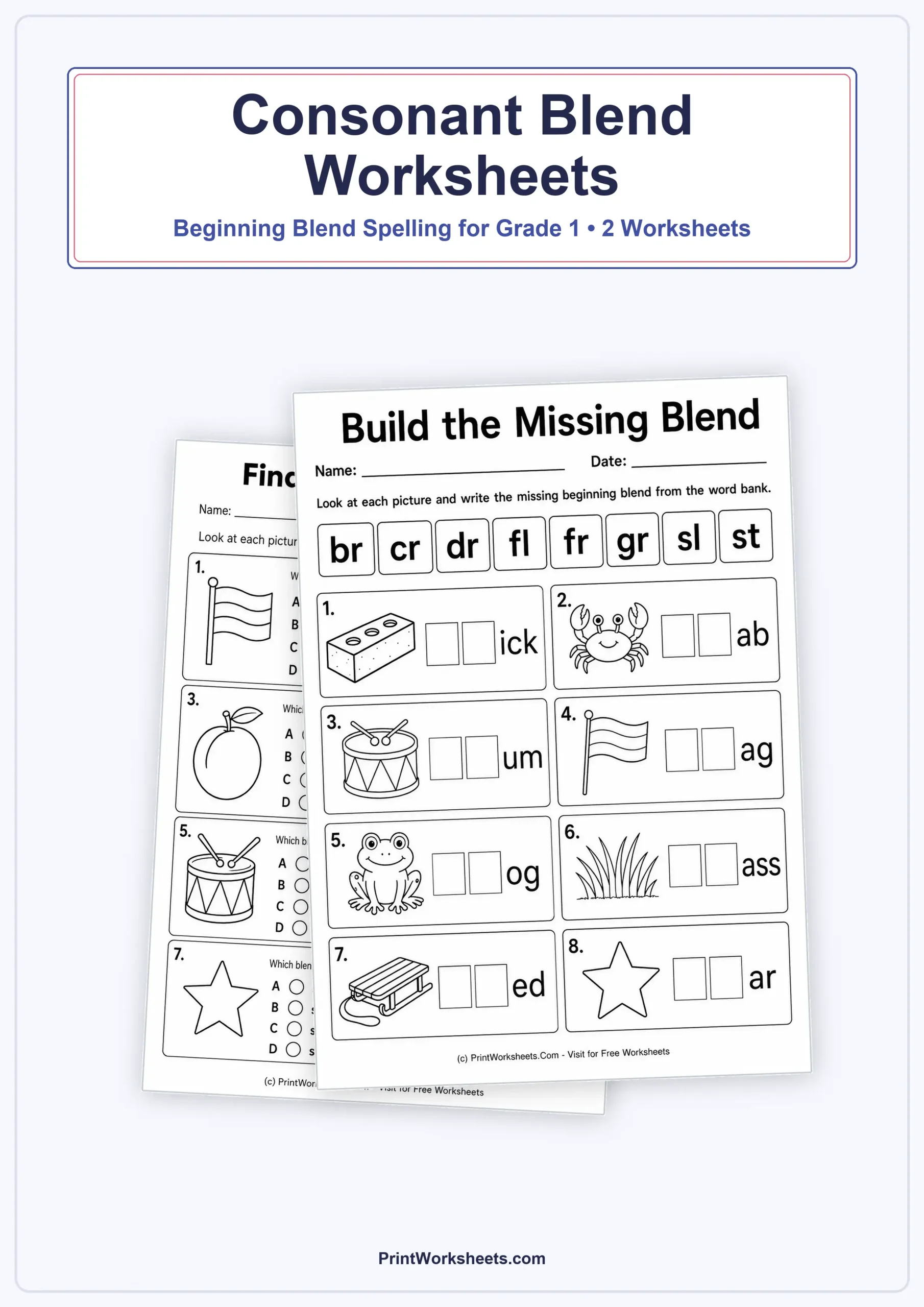
Consonant blend worksheets give first graders a focused way to listen for two beginning consonant sounds and connect those sounds to correct spelling. This printable Grade 1 set uses familiar pictures and short words so children can concentrate on the opening letters instead of decoding long or unfamiliar vocabulary. Across the two worksheets, students work with blends such as fl, cl, pl, fr, dr, tr, st, sp, br, cr, gr, and sl. The activities move from recognizing a beginning blend to supplying the missing letters independently, making the set useful for both guided phonics practice and short spelling review.
From Pictures to Beginning Consonant Blends
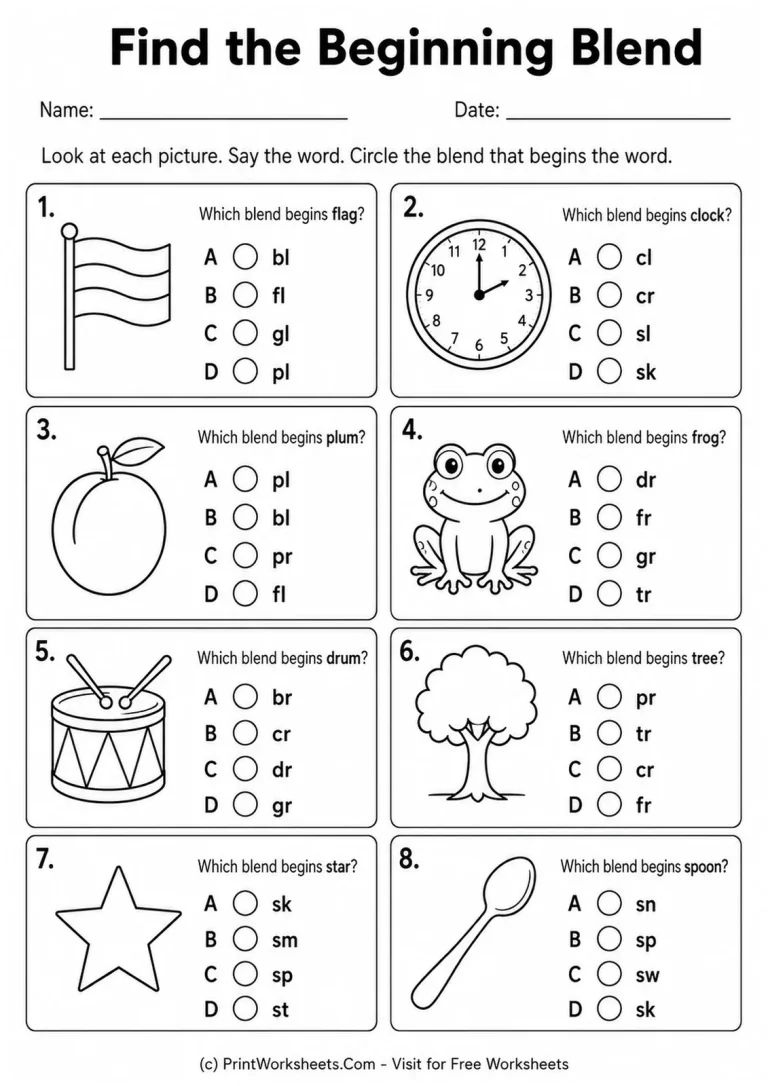
The first worksheet, Find the Beginning Blend, presents eight picture-based multiple-choice questions. Students identify each picture, say the word, listen closely to its first two sounds, and circle the correct blend from four choices. The pictured words are flag, clock, plum, frog, drum, tree, star, and spoon. Together they provide practice with fl, cl, pl, fr, dr, tr, st, and sp.
This format is especially helpful when children are still becoming confident with consonant clusters. The picture gives meaning first, while the answer choices narrow the spelling decision. A child looking at a picture of a flag, for example, can say the word slowly and notice that both /f/ and /l/ are heard at the beginning. Because each item has one clear answer, the page can be used for independent work, a quick phonics center, morning review, or a brief check of blend recognition.
Consonant Blend Worksheets That Move Into Spelling
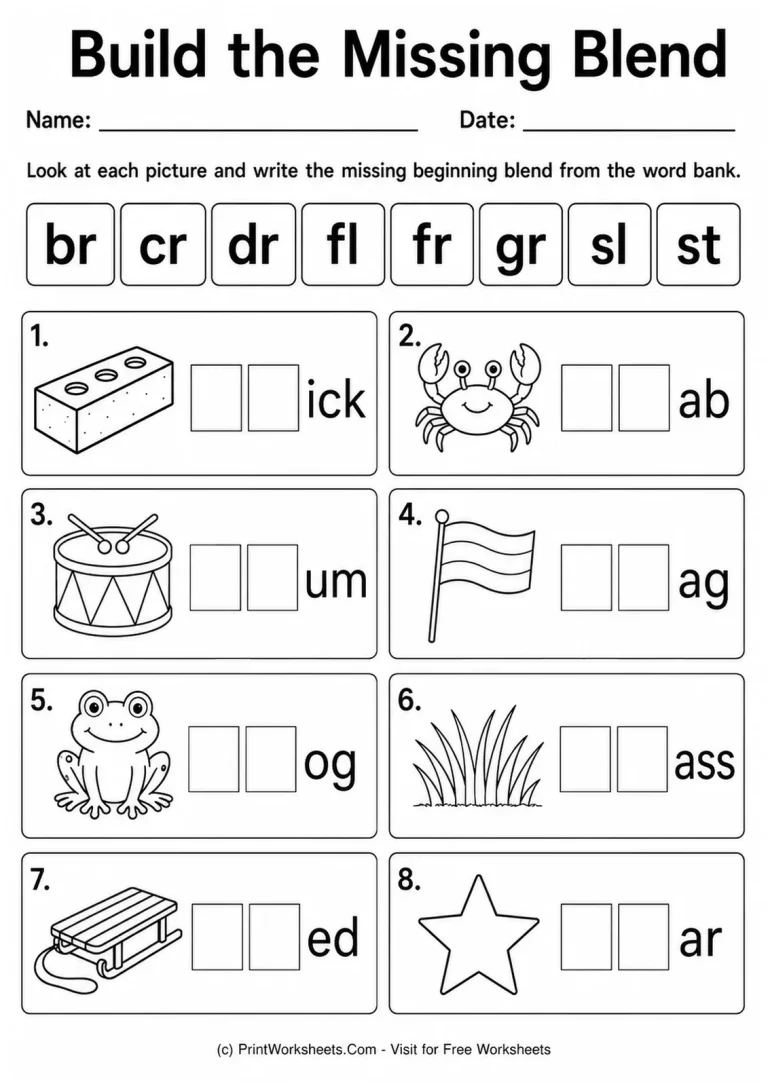
The second worksheet, Build the Missing Blend, increases the level of responsibility. Instead of choosing among several answers, students use a word bank containing br, cr, dr, fl, fr, gr, sl, and st. Each item includes a picture, the visible ending of the word, and two separate boxes for the missing beginning letters. Students select the correct blend and write its two letters to complete brick, crab, drum, flag, frog, grass, sled, and star.
This change from selecting to writing is an important step in early spelling practice. Students still receive visual and print support, but they must recall the correct letter pair and place it in the word themselves. The separate letter boxes also reinforce that a consonant blend contains two letters and two audible consonant sounds. Words such as brick and crab introduce br and cr, while grass and sled add gr and sl to the range of beginning patterns practiced in the set.
Skills Practiced in These Grade 1 Spelling Pages
These activities strengthen several closely related early literacy skills. Students connect pictures with spoken words, isolate the beginning sounds, distinguish one blend from another, connect sounds with letters, and complete spellings accurately. Because the word choices are concrete and easy to picture, children can devote more attention to the target skill instead of spending unnecessary effort working out what each word means.
The two pages can also help teachers notice the difference between recognition and production. A student may successfully circle st for star when choices are provided but need more support when asked to write st without those choices. Using the worksheets in sequence makes that difference visible and can help identify which children are ready for independent blend spelling and which need additional oral practice.
Simple Ways to Use the Printable Set
For a quick lesson, begin by having the student name each picture aloud before looking at the printed options or word bank. Ask the child to stretch the beginning of the word and listen for both consonant sounds. After completing the first page, move to the missing-blend activity and encourage the student to say each completed word again after writing the letters. This keeps pronunciation, phonics, and spelling connected.
The pages also work well as literacy-center tasks, homework review, intervention practice, or a short warm-up before a broader spelling lesson. Teachers can revisit individual examples orally by asking students to think of another word beginning with the same blend. Parents can use the same approach at home by reading the picture word together, emphasizing the first two sounds, and then letting the child complete the written response.
A Short Practice Sequence for First Graders
Start with picture identification, continue with blend recognition, and finish with writing the missing letters. That compact progression gives children repeated exposure without turning the activity into simple repetition. By the end of the set, students have practiced both noticing beginning consonant blends in familiar words and using those blends to complete correct spellings.