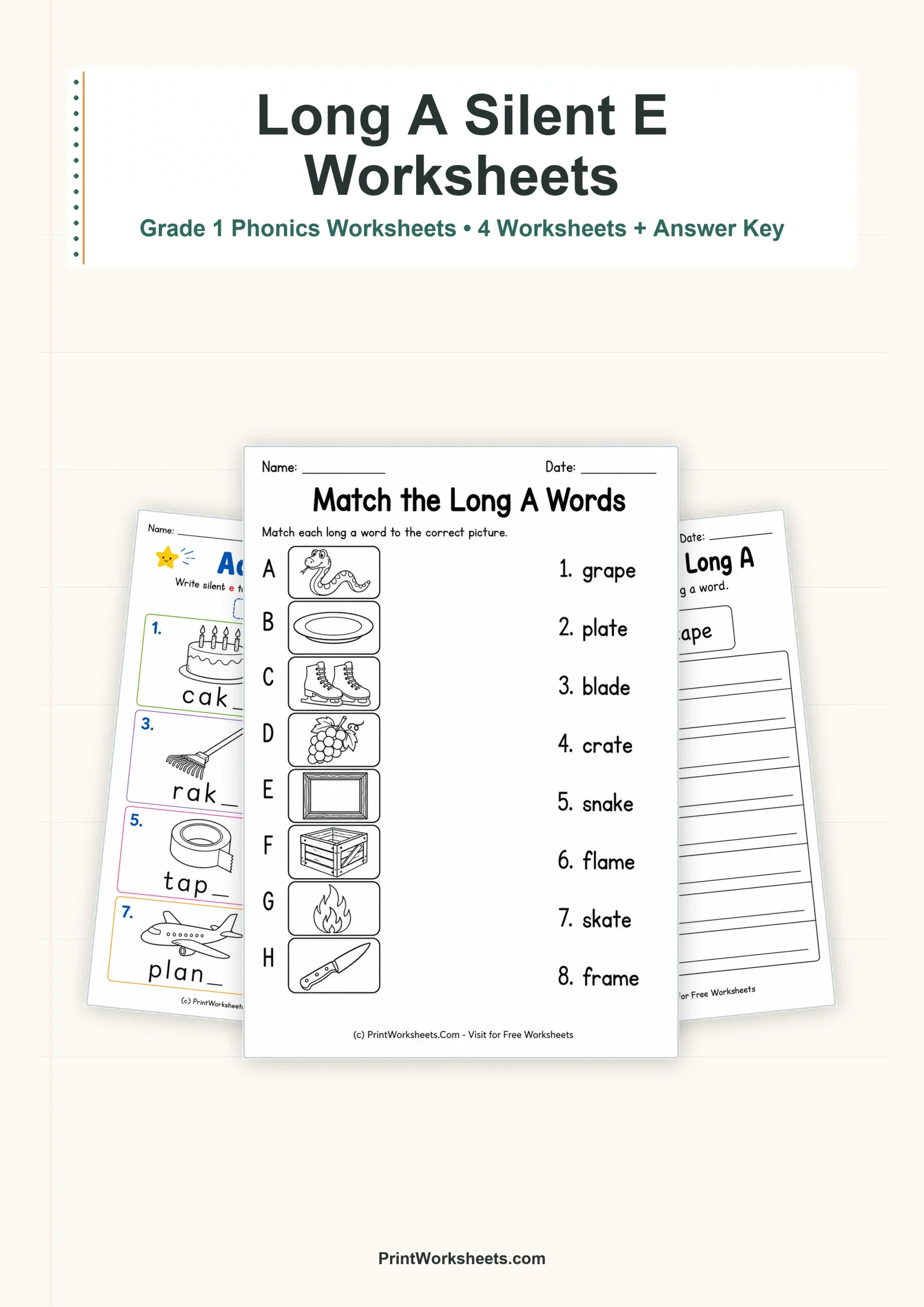
These long A silent e worksheets give first graders focused practice with the a_e spelling pattern through four different phonics activities. Students begin by adding silent e to familiar word forms, move into picture and word matching, change short A words into long A words, and finally use long A words in complete sentences. The sequence helps children notice how a final silent e changes the vowel sound while also giving them repeated opportunities to read, write, and understand words such as cake, lake, plane, snake, flame, cape, game, and safe.
Long A Silent E Worksheets for Building the a_e Pattern
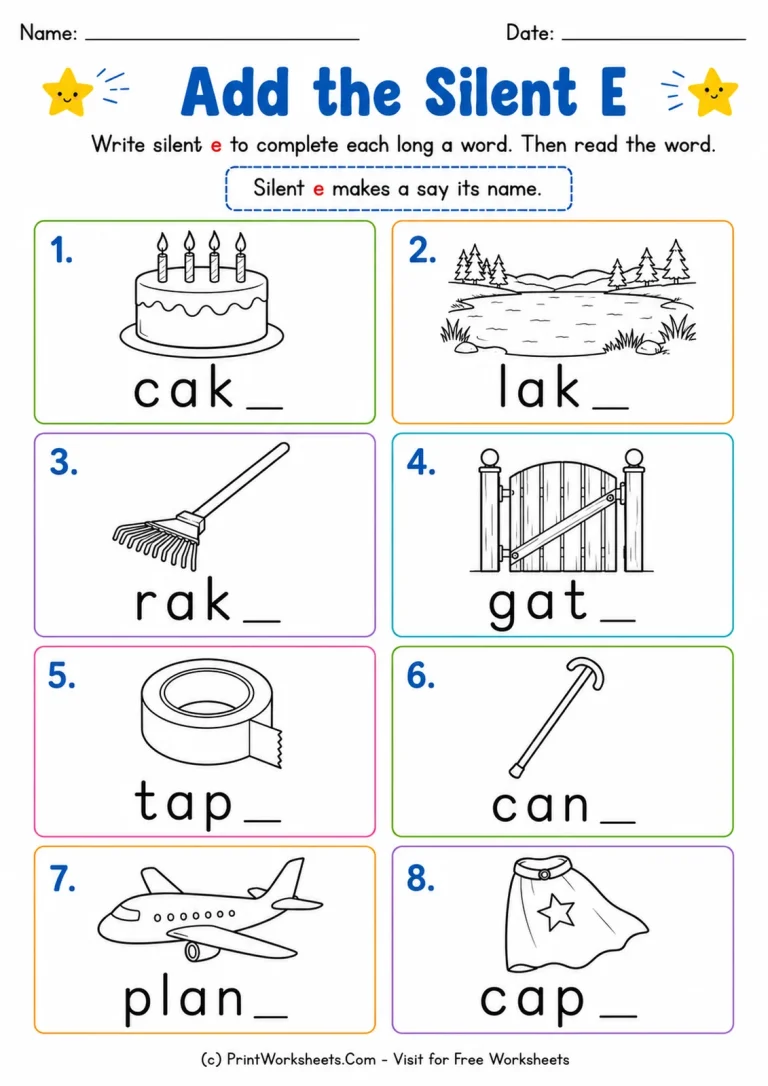
The first worksheet, Add the Silent E, introduces the spelling change in a highly visual way. Children see eight pictures and complete the matching words by adding the final e. The targets include cake, lake, rake, gate, tape, cane, plane, and cape. A short reminder that silent e makes the vowel say its name reinforces the phonics rule while students work. Because each word is paired with a clear picture, beginning readers can connect the spelling pattern to both meaning and pronunciation.
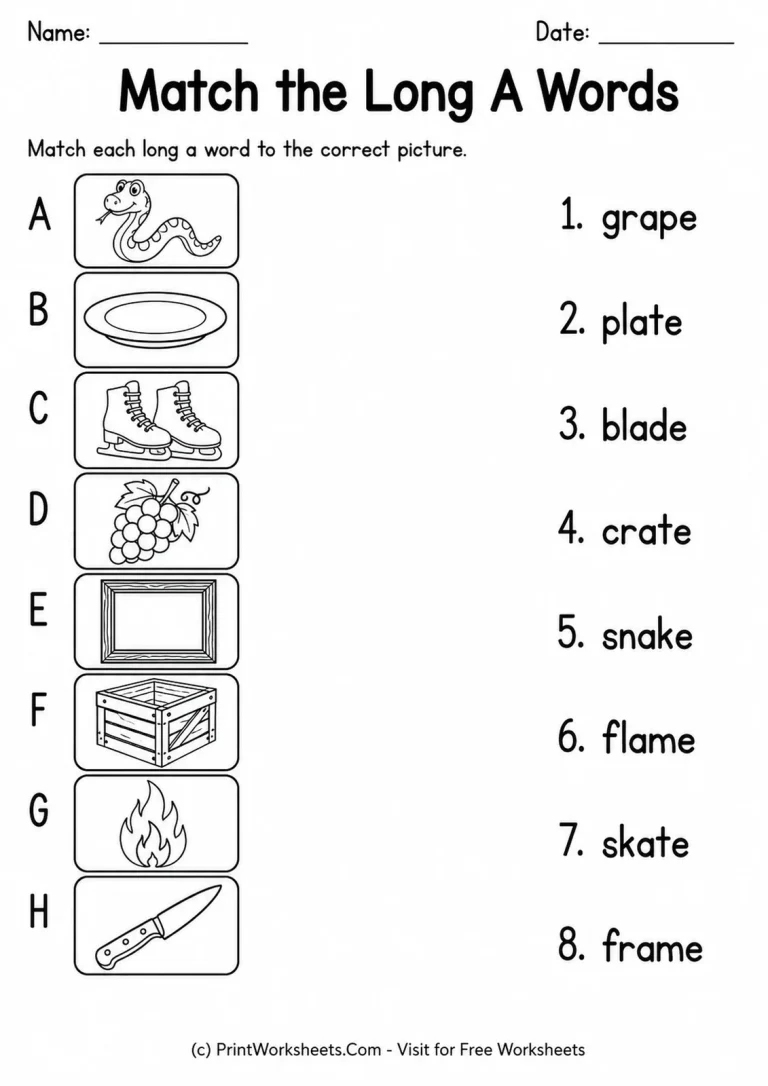
The second page, Match the Long A Words, shifts the task from constructing words to recognizing them. Students match long A words including grape, plate, blade, crate, snake, flame, skate, and frame with the correct pictures. This activity asks children to look closely at each complete word rather than relying only on the first letter. It works well after a teacher has introduced the a_e pattern and wants students to practice identifying it across a wider group of vocabulary words.
Change Short A Words into Long A Words
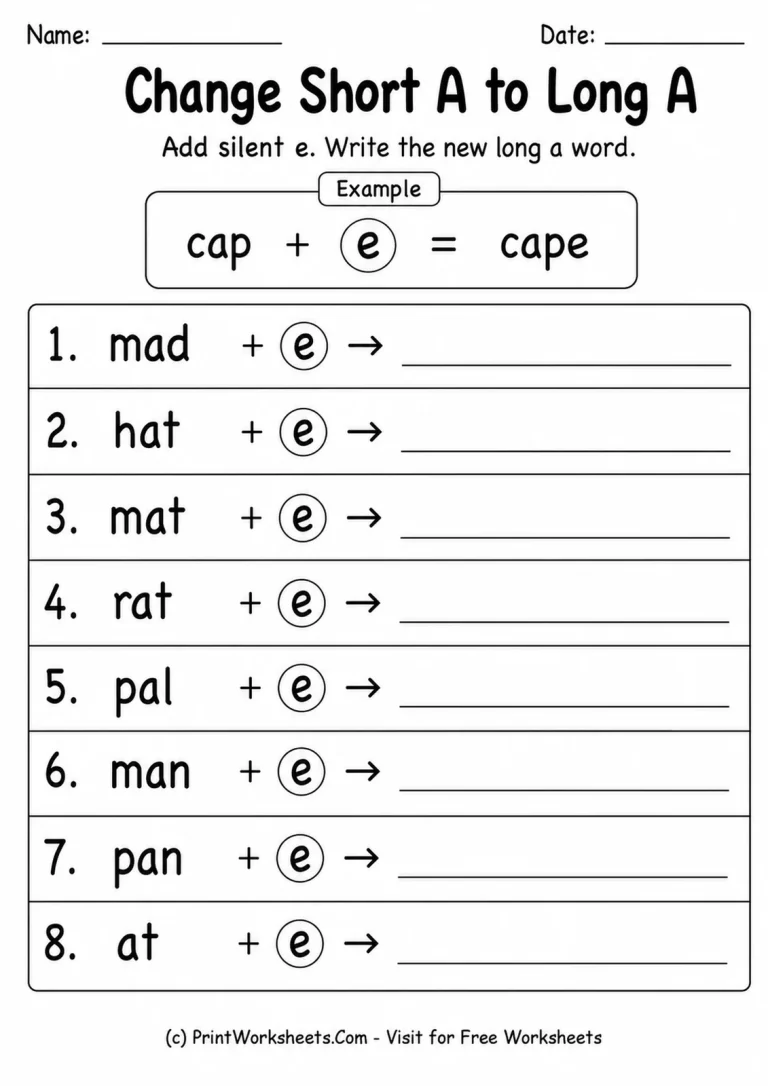
The third worksheet makes the effect of silent e especially visible by placing short and long vowel forms in direct contrast. A model shows cap + e = cape, and students then add e to eight short A words to create new words. Examples include mad to made, hat to hate, mat to mate, rat to rate, pal to pale, man to mane, pan to pane, and at to ate. This word-building format helps students see that a small spelling change can create both a new vowel sound and a new word.
This page can also support oral phonics practice. A teacher or parent can ask the child to read the short word first, add the e, and then read the new word aloud. Hearing pairs such as mat and mate or pan and pane makes the vowel contrast easier to notice. Students can also point to the final e and explain what changed in the middle vowel sound.
Use Long A Words in Sentence Context
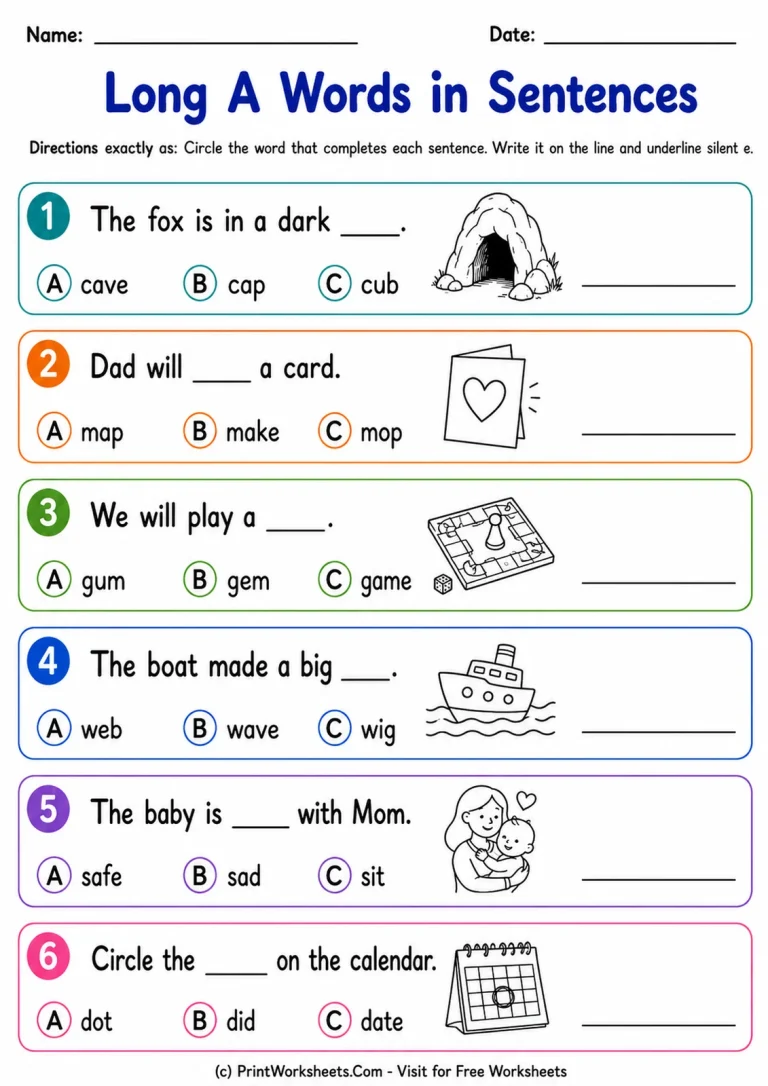
The fourth student page, Long A Words in Sentences, moves beyond isolated word reading. Each of the six items presents a sentence with three possible word choices. Students select the word that makes sense, write it on the line, and identify the silent e by underlining it. The target answers include cave, make, game, wave, safe, and date. Pictures and sentence meaning provide useful clues, so children must combine phonics knowledge with basic reading comprehension.
This final activity is valuable because decoding a word correctly is only one part of early reading. Students also need to decide whether a word fits the meaning of a sentence. Moving from word formation to sentence-level choices gives the set a natural progression and makes it suitable for more than simple spelling drill.
Ways to Use These Grade 1 Phonics Pages
The four worksheets can be used together as a short long A unit or assigned separately. The picture-supported pages are useful for initial guided practice, literacy centers, or small-group instruction. The short-A-to-long-A transformation page can serve as independent practice after the rule has been modeled. The sentence page works well as a follow-up check because students must apply the spelling pattern in context rather than simply copy a word.
Parents can also use the pages for home phonics review. Completing one worksheet at a time keeps practice manageable, while reading each finished word aloud adds an extra decoding step. Teachers may ask students to circle the vowel a and underline the silent e to make the a_e structure even more visible.
Printable Practice with an Answer Key
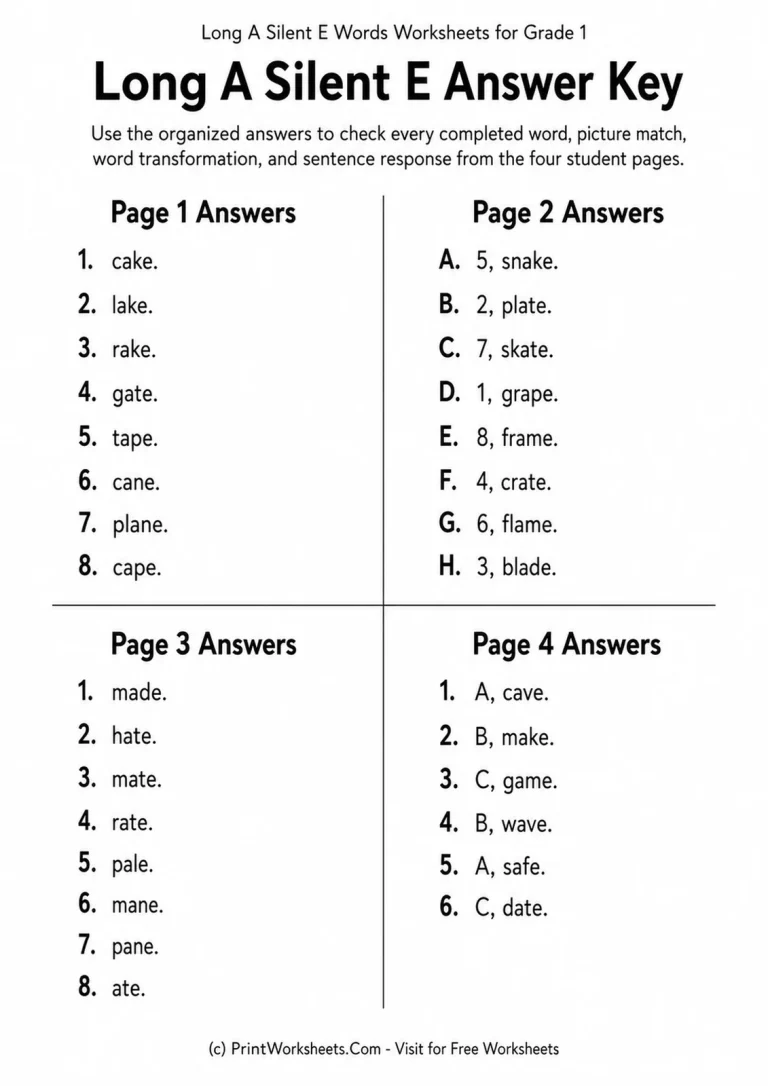
The printable set includes four student worksheets plus a separate answer key covering every objective response from the activities. This makes the resource practical for classroom assignments, homework, independent stations, tutoring, or quick skill checks. The variety of completion, matching, transformation, and sentence tasks gives first graders repeated exposure to the same long A spelling concept without asking them to complete the same type of exercise on every page.
Use the set to help students recognize the a_e pattern, hear the difference between short A and long A, build new words with silent e, and apply those words meaningfully in sentences.