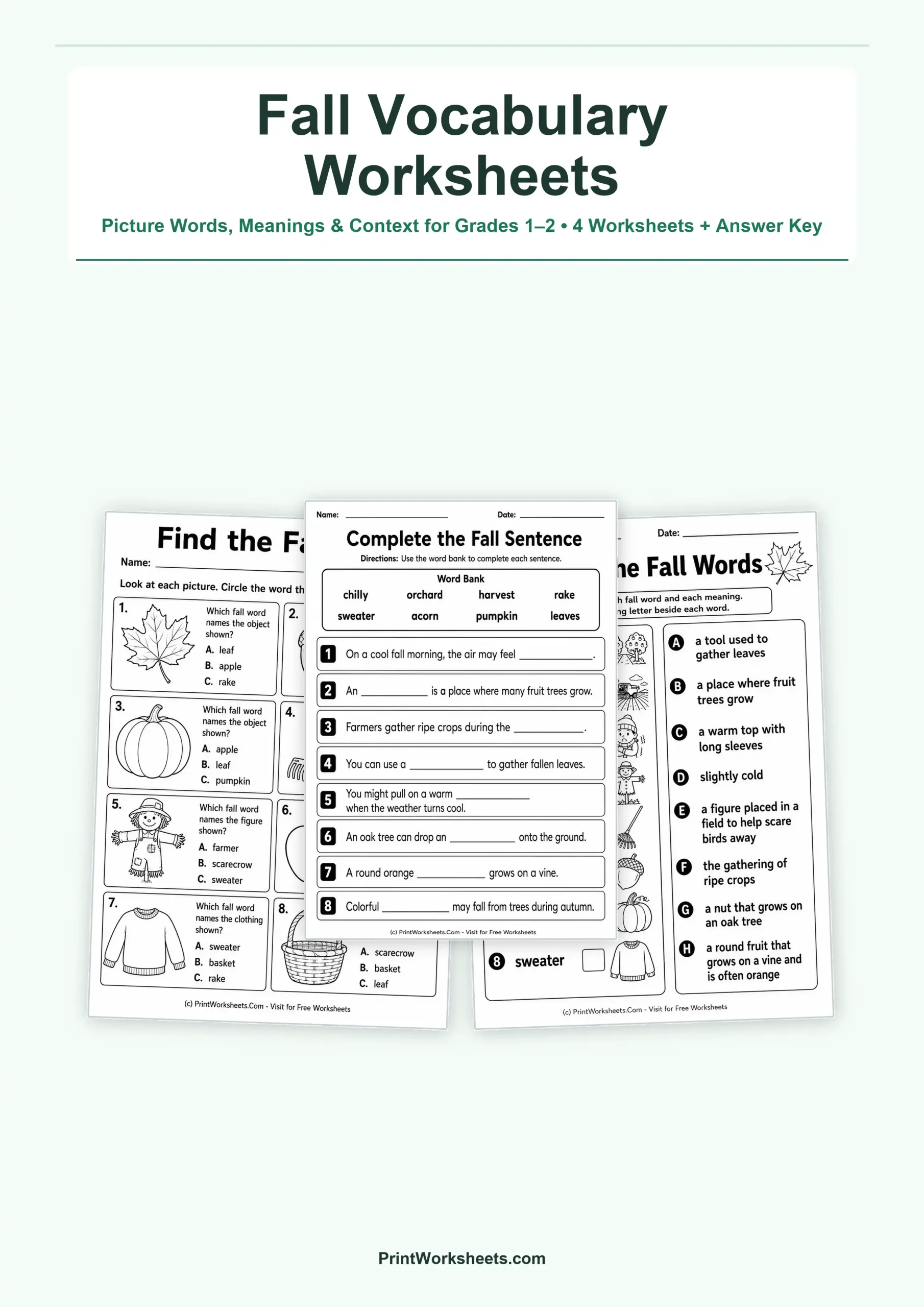
Bring seasonal language into reading practice with these fall vocabulary worksheets for Grades 1 and 2. The four-page student set moves beyond simply naming autumn pictures: children identify familiar fall objects, complete sentences with a word bank, match vocabulary to definitions, and use short situations to determine meaning from context. The repeated vocabulary gives young learners several chances to meet the same words in different ways, while the changing task formats keep practice purposeful and manageable.
Fall Vocabulary Worksheets That Build Meaning Step by Step
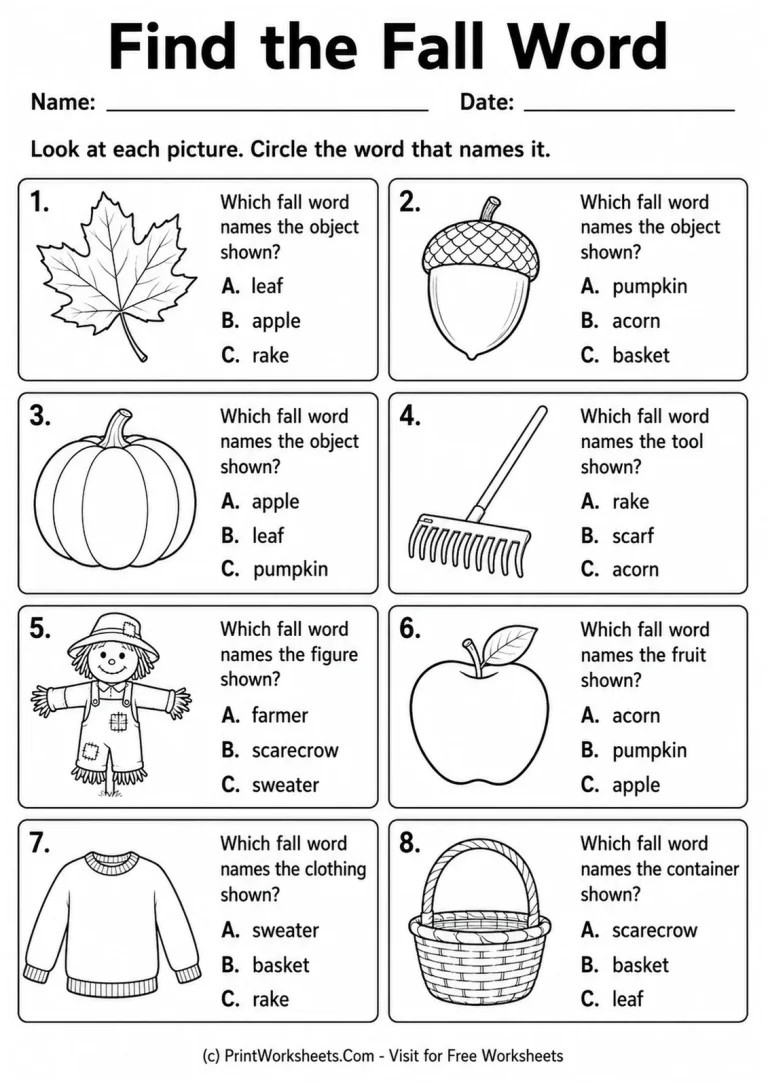
The first worksheet begins with concrete picture-to-word identification. Students look at eight clear illustrations and choose the word that names each one. The set includes leaf, acorn, pumpkin, rake, scarecrow, apple, sweater, and basket. Because each question provides three choices, this page works well for students who are still developing independent reading confidence. The pictures offer support, but students must still distinguish the correct written word from two distractors.
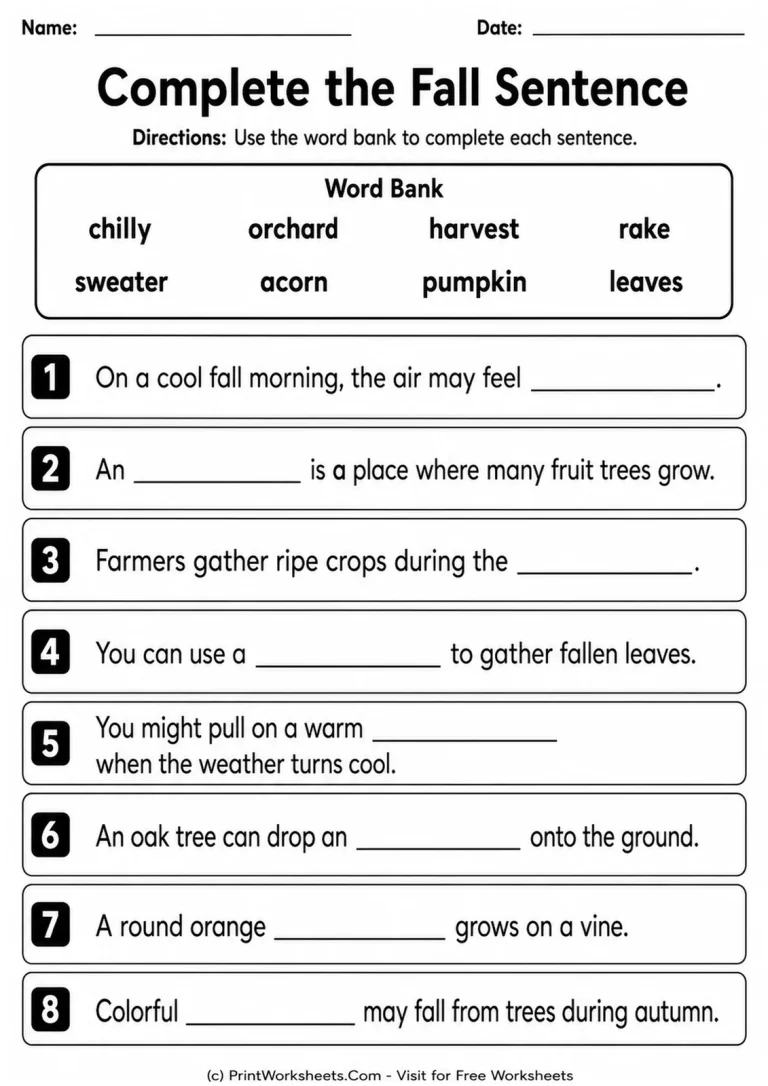
The second worksheet shifts from recognition to sentence completion. A word bank includes chilly, orchard, harvest, rake, sweater, acorn, pumpkin, and leaves. Students use meaning clues in sentences such as a cool morning, fruit trees growing in one place, farmers gathering ripe crops, and a tool used to collect fallen leaves. This format encourages children to connect vocabulary with sentence meaning instead of memorizing isolated definitions.
From Definitions to Context Clues
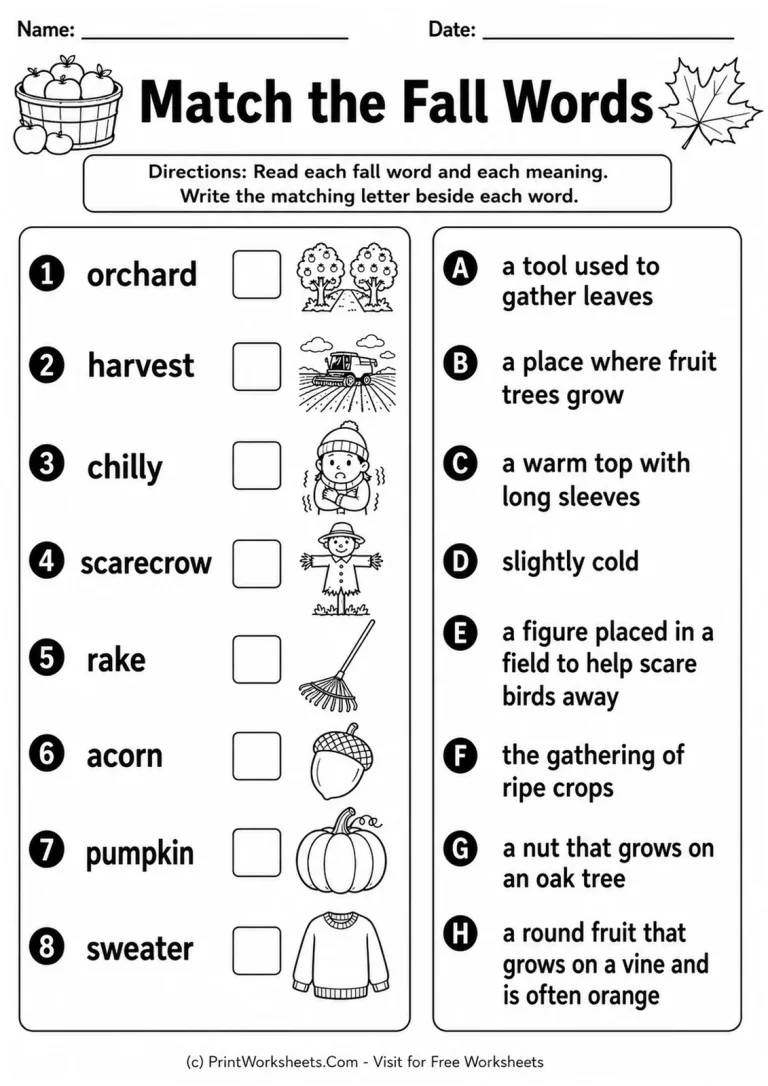
The third page asks students to match eight fall words with their definitions. Orchard is connected to a place where fruit trees grow, harvest to the gathering of ripe crops, chilly to slightly cold, and scarecrow to a figure placed in a field to help scare birds away. Students also match rake, acorn, pumpkin, and sweater with clear child-friendly meanings. Small illustrations beside the words provide an additional visual cue without replacing the need to read and understand each definition.
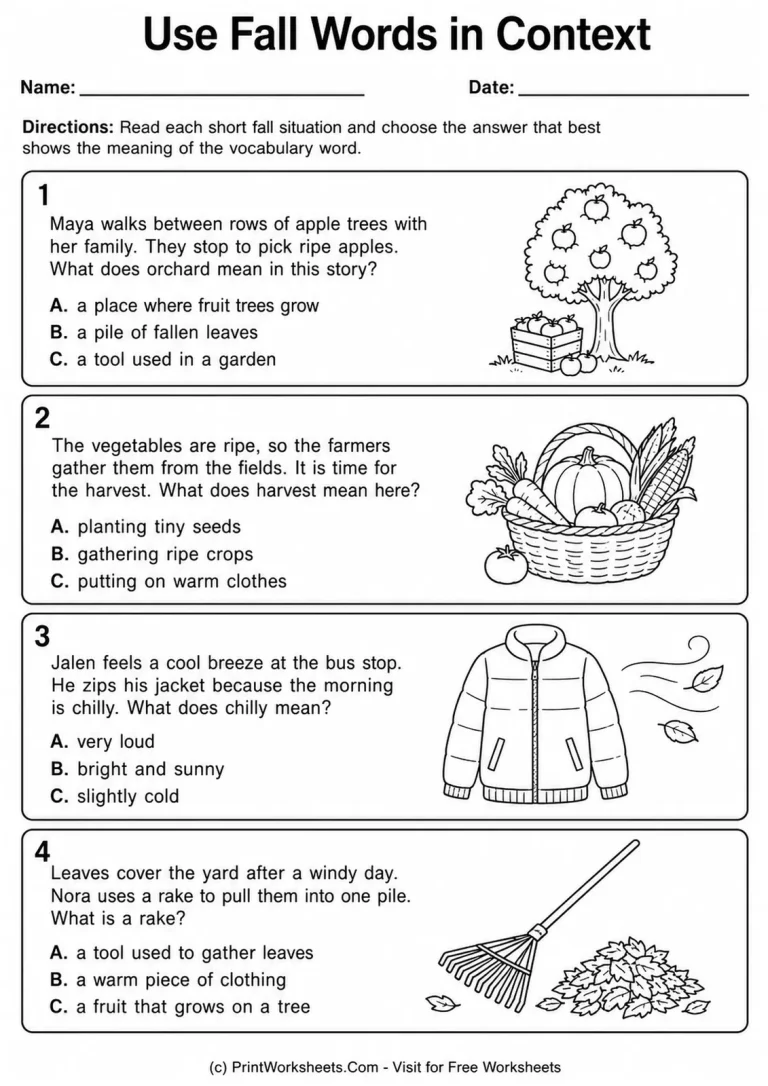
The fourth page provides the most contextualized practice in the set. Students read four short fall situations and choose the meaning of a target word. One passage describes a family walking between rows of apple trees and picking ripe apples to show the meaning of orchard. Another describes farmers gathering ripe vegetables to clarify harvest. A cool breeze and zipped jacket support the meaning of chilly, while a yard covered with leaves shows how a rake is used. These mini-scenarios give early readers a gentle introduction to using context clues.
Skills Practiced Across the Printable Set
These worksheets combine several vocabulary skills that are especially useful in first- and second-grade classrooms. Students practice matching pictures to words, reading common seasonal nouns, connecting words to simple definitions, completing meaningful sentences, and choosing word meanings from short passages. The sequence can also help teachers see where a student needs support. A child who succeeds with pictures but struggles with the definition or context pages may need more oral language practice before working independently.
Ways to Use the Fall Vocabulary Practice
Use the pages as a short seasonal vocabulary unit, literacy-center rotation, morning work, homework, or review before a fall-themed writing activity. The first page is a natural starting point for Grade 1 or for students who benefit from picture support. The sentence-completion and matching pages work well after the words have been introduced aloud. The context page is a strong follow-up for Grade 2 students who are beginning to explain how details in a sentence or short passage reveal meaning.
For partner practice, have students say each answer aloud and explain the clue that helped them decide. For a simple oral-language extension, ask children to use orchard, harvest, chilly, rake, acorn, pumpkin, or sweater in a new sentence. Students can also sort the words into categories such as places, objects, clothing, foods, and describing words. This adds another layer of meaning without changing the vocabulary list.
Differentiation, Review, and Quick Checks
Students who need extra support can preview the word bank with a teacher or parent and point to matching pictures before writing. More confident readers can cover the illustrations on the matching page and rely only on definitions. As an extension, ask students to write two original fall sentences using different target words or to explain the difference between an acorn and a pumpkin using details they learned from the worksheets.
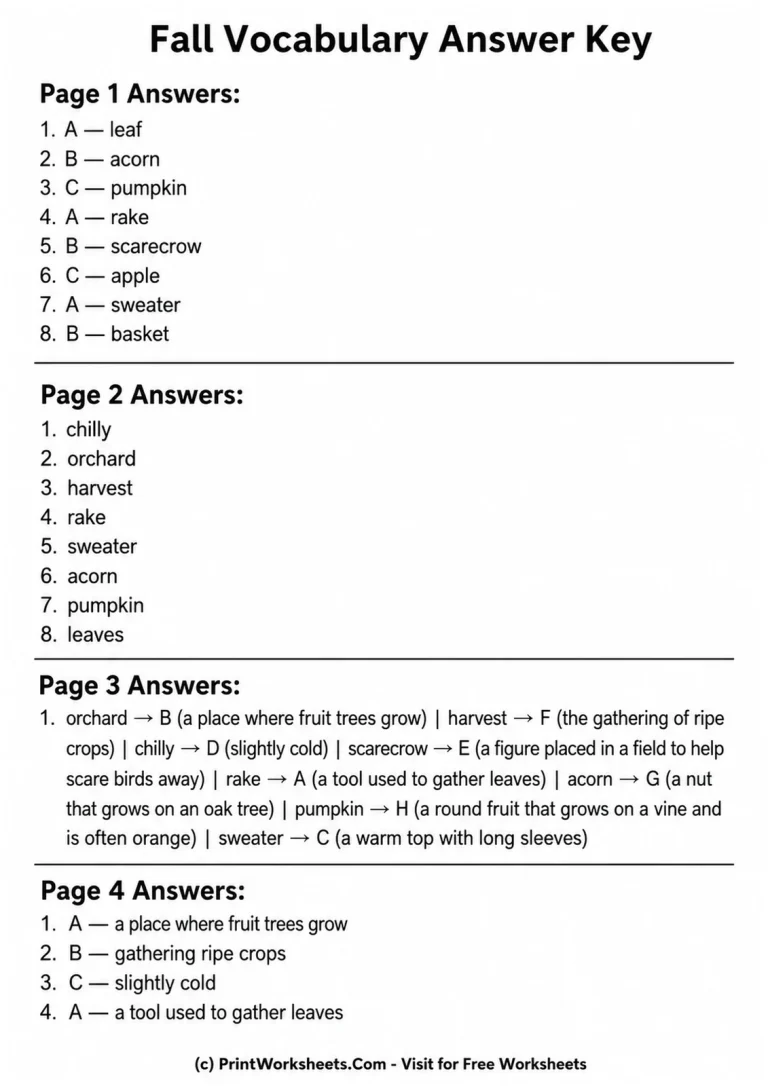
A quick exit ticket can be as simple as asking students to define one word and use another in a sentence. The included answer key makes the objective items easy to check after independent or small-group work. With four distinct student activities, the set provides a practical progression from visual recognition to meaning in context while keeping the theme consistent and age-appropriate for Grades 1 and 2.