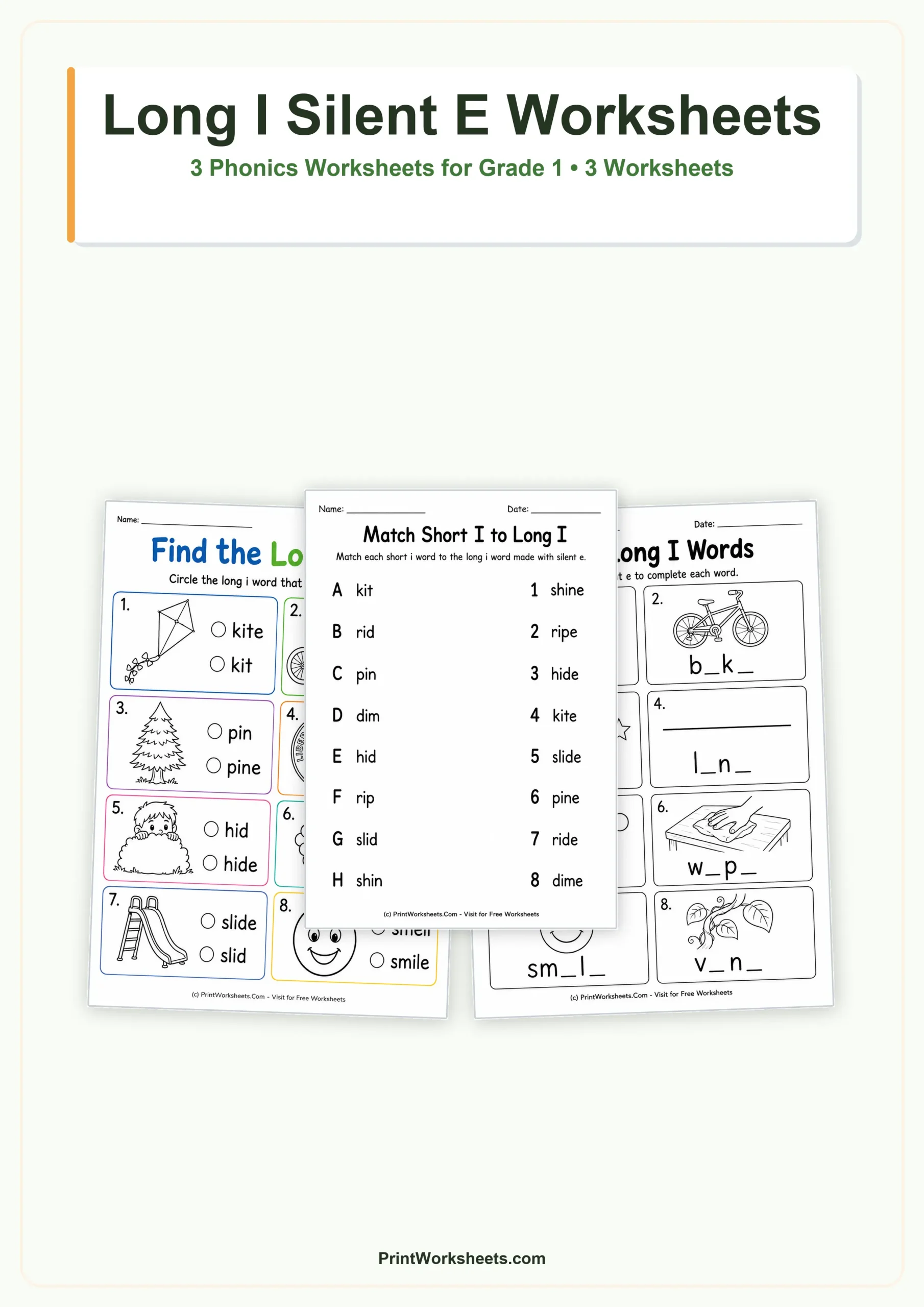
These long i silent e worksheets give first grade students focused practice with words in which a final silent e changes the short i sound into long i. Across three printable activities, children work with familiar examples such as kite, bike, pine, dime, hide, ripe, slide, smile, five, line, nine, wipe, shine, and vine. The set combines picture clues, word comparisons, and missing-letter practice so students can notice how the vowel sound changes and then apply the pattern themselves.
Long I Silent E Worksheets for Grade 1
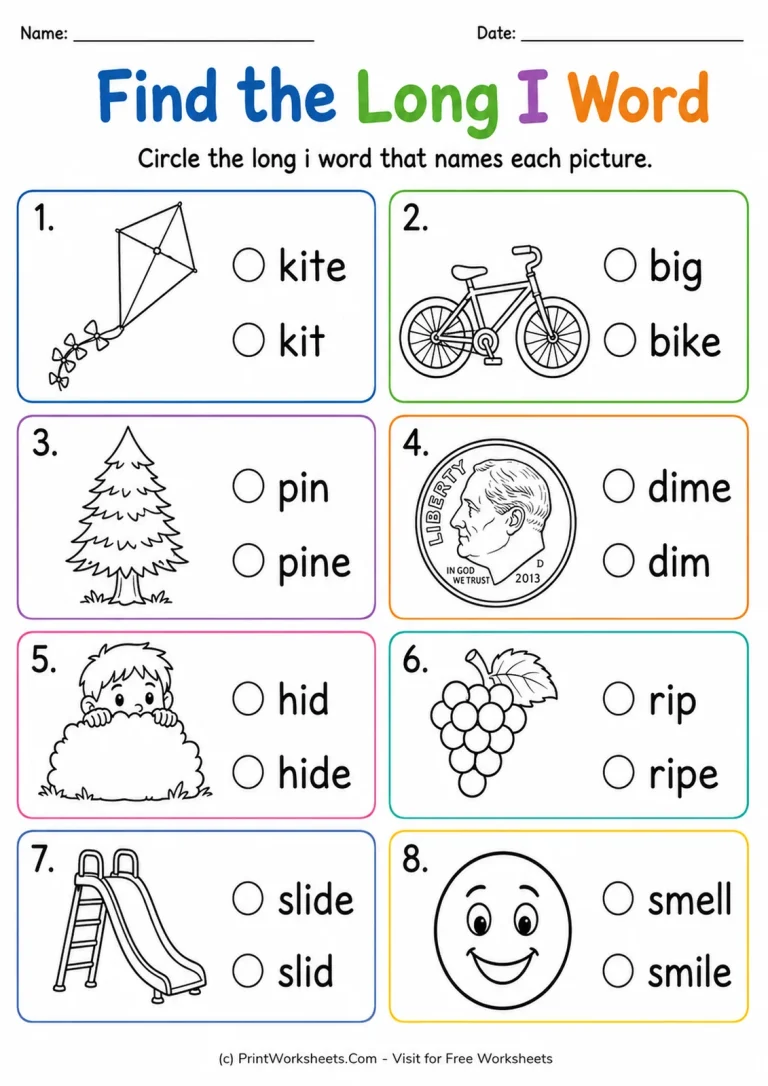
The first worksheet, Find the Long I Word, uses pictures to make phonics practice concrete. Students look at eight images and circle the long i word that correctly names each picture. Each target is paired with a contrasting word, helping children pay attention to both meaning and spelling. Examples include kite versus kit, bike versus big, pine versus pin, and dime versus dim. Additional targets such as hide, ripe, slide, and smile expand practice beyond the simplest three-letter word families.
This format is useful for students who are beginning to recognize the silent-e pattern but still benefit from visual support. Instead of reading a list of isolated words, children connect each spelling to a recognizable object or action. The picture clues also reduce guessing and let teachers observe whether students are attending to the long vowel pattern.
Compare Short I and Long I Word Forms
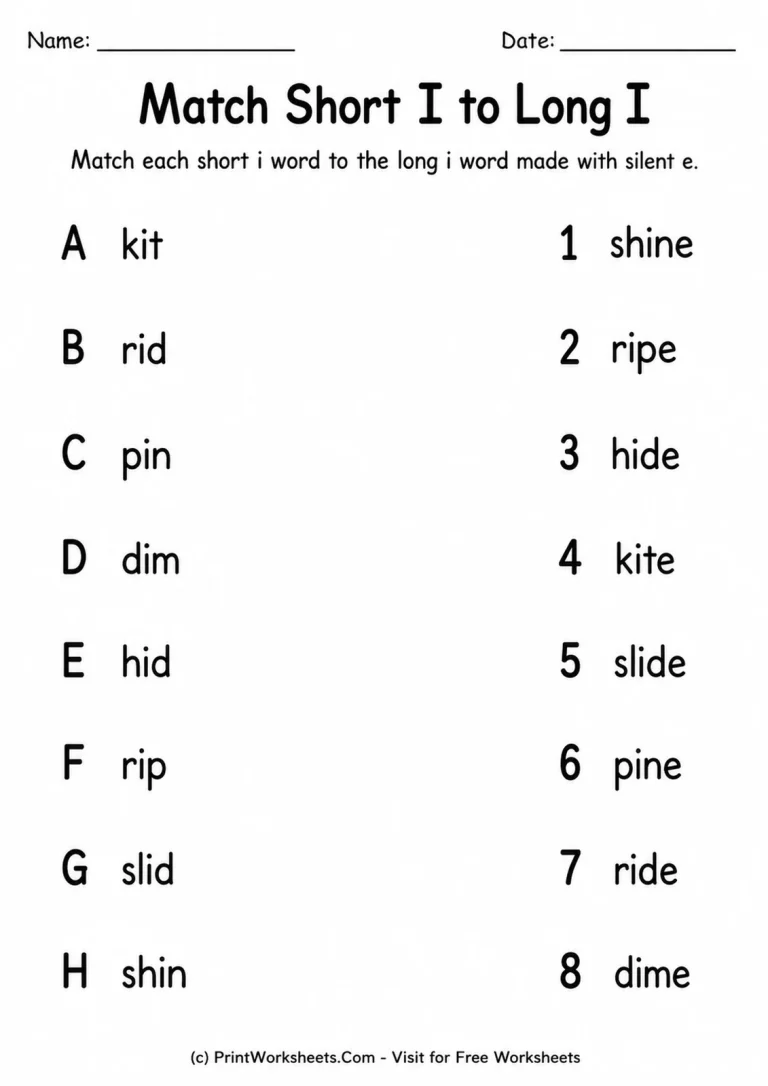
The second worksheet, Match Short I to Long I, makes the effect of silent e especially clear. Students match eight short i words to the corresponding long i forms. The pairs include kit/kite, rid/ride, pin/pine, dim/dime, hid/hide, rip/ripe, slid/slide, and shin/shine. Seeing each pair side by side helps students notice that adding a final e can change both the pronunciation and the word.
This comparison activity supports an important Grade 1 phonics habit: looking closely at the full spelling rather than relying only on the beginning sound. Students can read the short form first, locate its silent-e partner, and then say both words aloud to hear the contrast. Teachers and parents can also use the pairs for quick oral review by asking children what changes when the final e is added.
Build Long I Words with I and Silent E
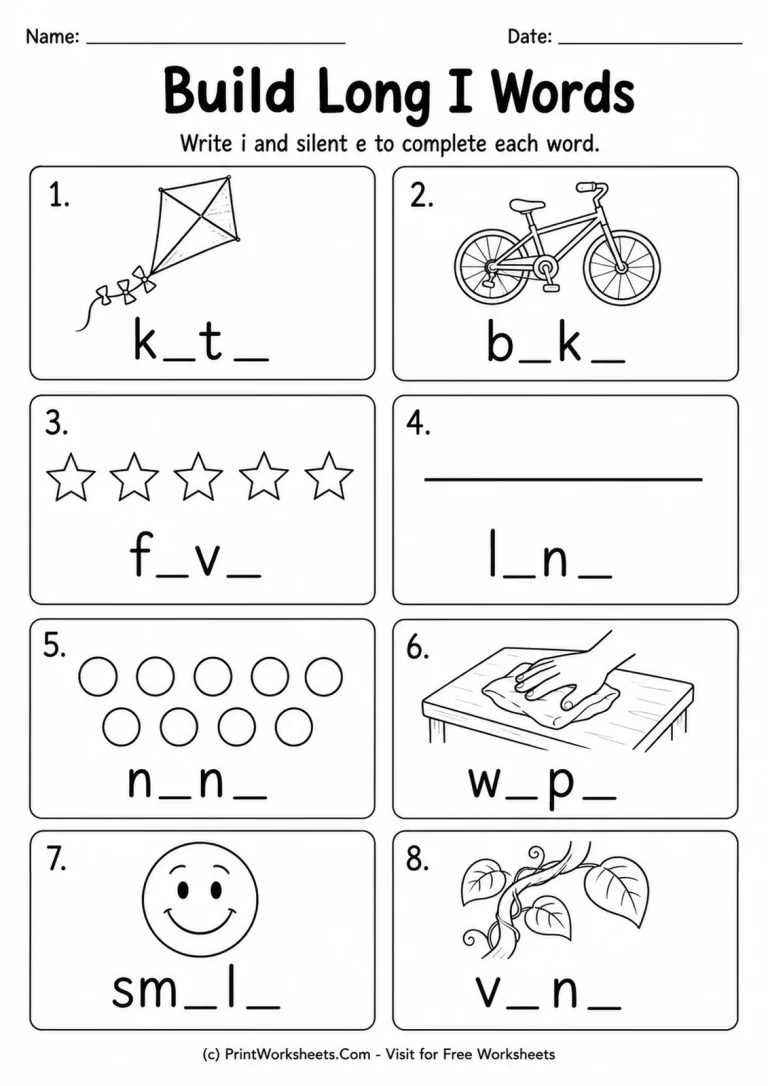
The third worksheet moves from recognition to word construction. In Build Long I Words, students complete picture-supported words by supplying the missing i and final silent e. The completed words are kite, bike, five, line, nine, wipe, smile, and vine. Because students must add the letters themselves, this page checks whether they can reproduce the spelling pattern rather than simply recognize it among choices.
The activity also reinforces the idea that silent e is part of a spelling pattern, not a sound students pronounce separately. Children can look at the picture, say the word, identify the long i sound, and complete the word with the letters needed to create the VCe form. This makes the page appropriate for guided phonics lessons, literacy centers, independent practice, or a short homework assignment.
Ways to Use These Printable Phonics Pages
The three worksheets can be used separately or as a compact skill sequence. A teacher may begin with the picture-based identification page to check recognition, use the matching page to highlight the difference between short i and long i, and then assign the word-building page to see whether students can apply the pattern without seeing the whole word first. Parents can use the same progression for extra reading practice at home.
Students who need additional support can read each word aloud and underline the i before circling or matching an answer. For stronger readers, ask them to use selected words such as kite, ride, shine, smile, or vine in an oral sentence after completing the worksheet. This adds vocabulary and fluency practice while keeping the phonics target clear.
Practice the Silent E Pattern with Familiar Long I Words
Because the set uses recognizable words and three different task types, it gives first graders repeated exposure without making every page feel the same. Students identify long i words from pictures, compare short and long vowel spellings, and complete long i words by adding the missing letters. The result is focused practice with the silent-e pattern that can fit easily into a phonics lesson, review session, literacy station, or at-home learning routine.