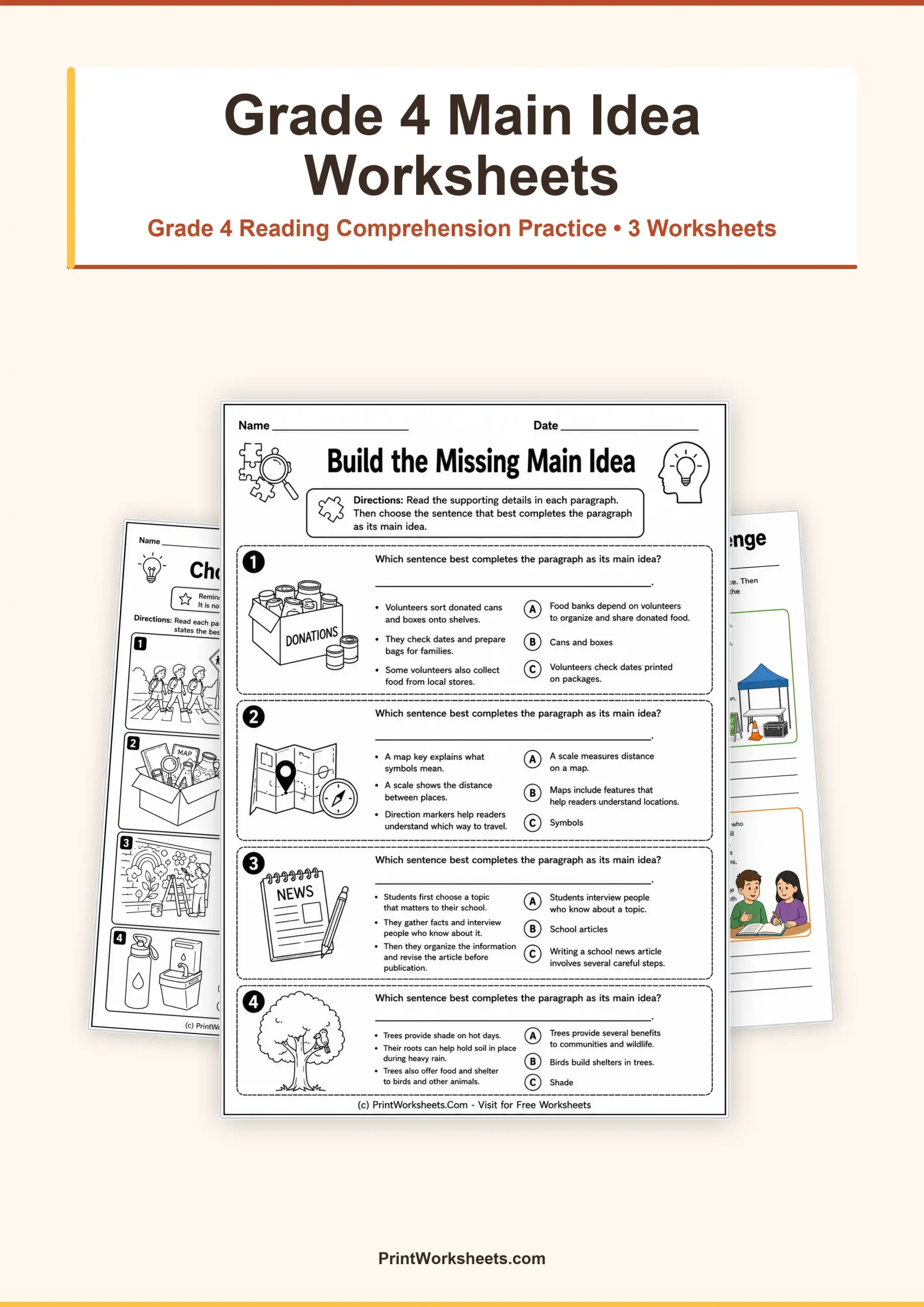
These Grade 4 main idea worksheets give students three different ways to practice understanding what a nonfiction passage is mostly about. Instead of repeating one question format, the set moves from choosing a main idea, to building one from supporting details, to writing a complete-sentence main idea and selecting evidence. The passages use concrete school and community topics, so students can focus on the reading skill while working with meaningful informational text.
Main idea worksheets with three levels of thinking
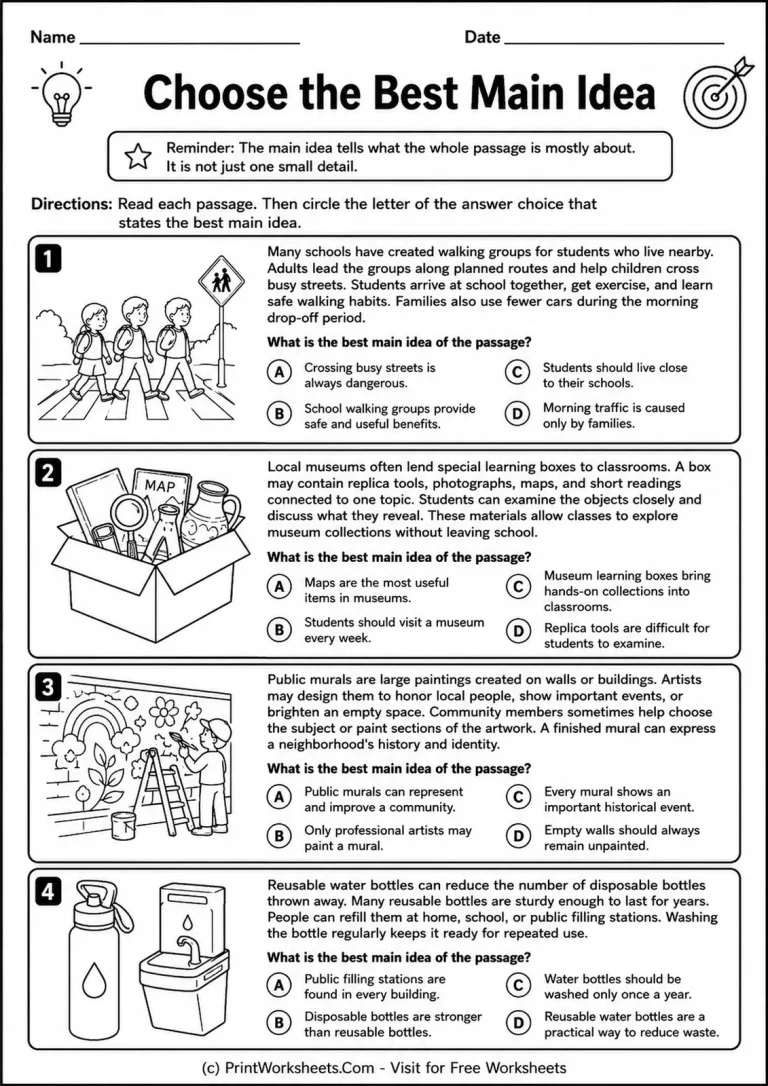
The first activity asks students to choose the best main idea from four answer choices after reading short nonfiction passages. One passage explains how school walking groups can improve safety, exercise, and morning traffic. Another describes museum learning boxes that bring replica tools, photographs, maps, and short readings into classrooms. Students also read about public murals that represent a community and reusable water bottles that can reduce disposable waste. The correct choice must cover the whole passage, while the distractors focus on a small detail or make a claim the text does not support.
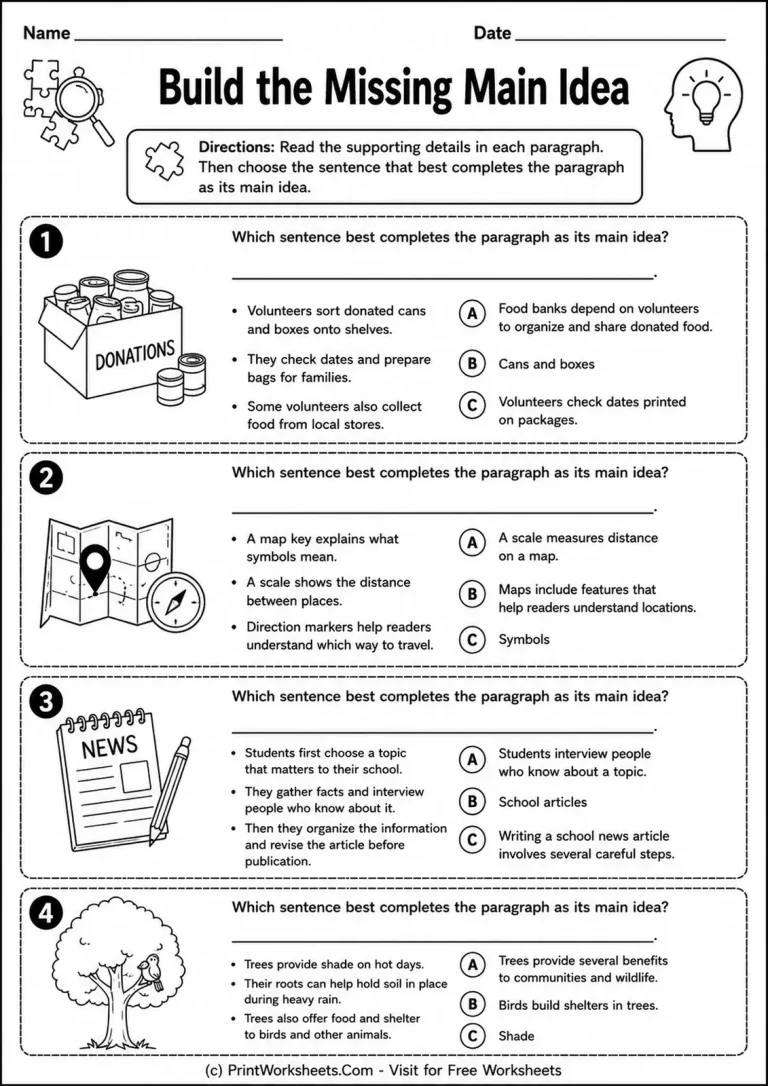
The next worksheet changes the direction of the task. Students see supporting details first and decide which sentence best completes the paragraph as its main idea. The topics include food-bank volunteers who sort donations and prepare food for families, map features such as keys, scales, and direction markers, the steps involved in writing a school news article, and the benefits trees provide to communities and wildlife. This format helps students practice grouping several details under one broader statement rather than simply locating a topic sentence.
From recognizing the main idea to supporting it with evidence
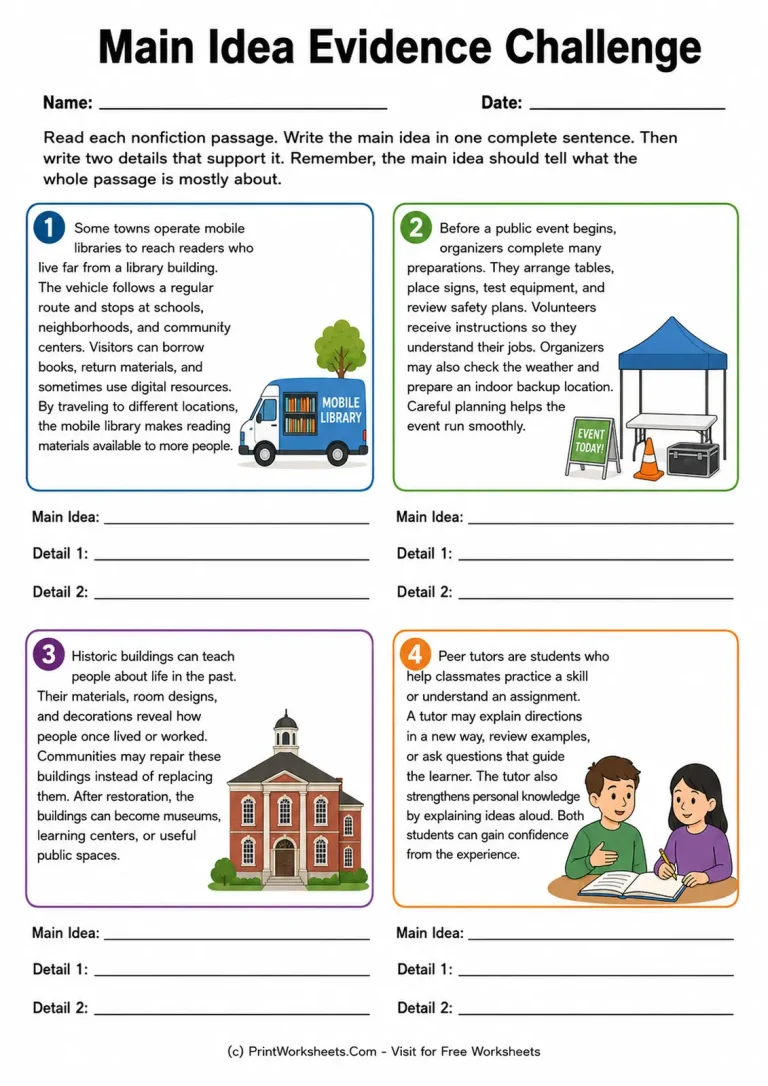
The final activity is an open-response challenge. Students read four nonfiction passages and write the main idea in one complete sentence, then record two details that support it. The passages feature mobile libraries that bring reading materials to different locations, the planning needed before a public event, historic buildings that teach people about the past and can be restored for new uses, and peer tutors who help classmates while strengthening their own understanding. Because students must generate their own wording, this worksheet provides a useful check of whether they can move beyond selecting an answer and explain the passage independently.
What students practice
Across the set, students work on distinguishing a broad main idea from a narrow supporting detail, connecting multiple facts to one central statement, and choosing evidence that directly supports what they write. They also practice reading short informational passages about community life, school activities, environmental choices, maps, museums, and public resources. These varied topics keep the skill consistent while preventing practice from becoming tied to one subject area.
Ways to use these Grade 4 nonfiction passages
Teachers can use the multiple-choice page for guided practice, the missing-main-idea page for partner work, and the open-response page as independent practice or a quick formative assessment. For students who need more support, ask them to underline two or three details that seem connected before they choose or write the main idea. A simple prompt such as What do all of these details have in common? can help them move from individual facts to a broader statement.
For students ready for a challenge, have them explain why an incorrect answer is too narrow, too broad, or unsupported. On the open-response page, students can compare two possible main-idea sentences and decide which one better represents the whole passage. They can also highlight the exact details that justify their choice, strengthening the link between comprehension and evidence-based responses.
Build a progression in reading comprehension
This set works well after students have had some experience finding a topic and key details. If learners need an earlier step, the Grade 3 finding the main idea worksheets provide related practice at a lower grade level. The Grade 4 set then raises the demand by asking students to infer a missing central statement and eventually write one themselves.
Use the three worksheets in sequence or select the format that matches your lesson goal. Together, they offer a focused way to practice main idea in nonfiction while also requiring students to notice how supporting details, examples, and explanations work together to communicate what a passage is mostly about.