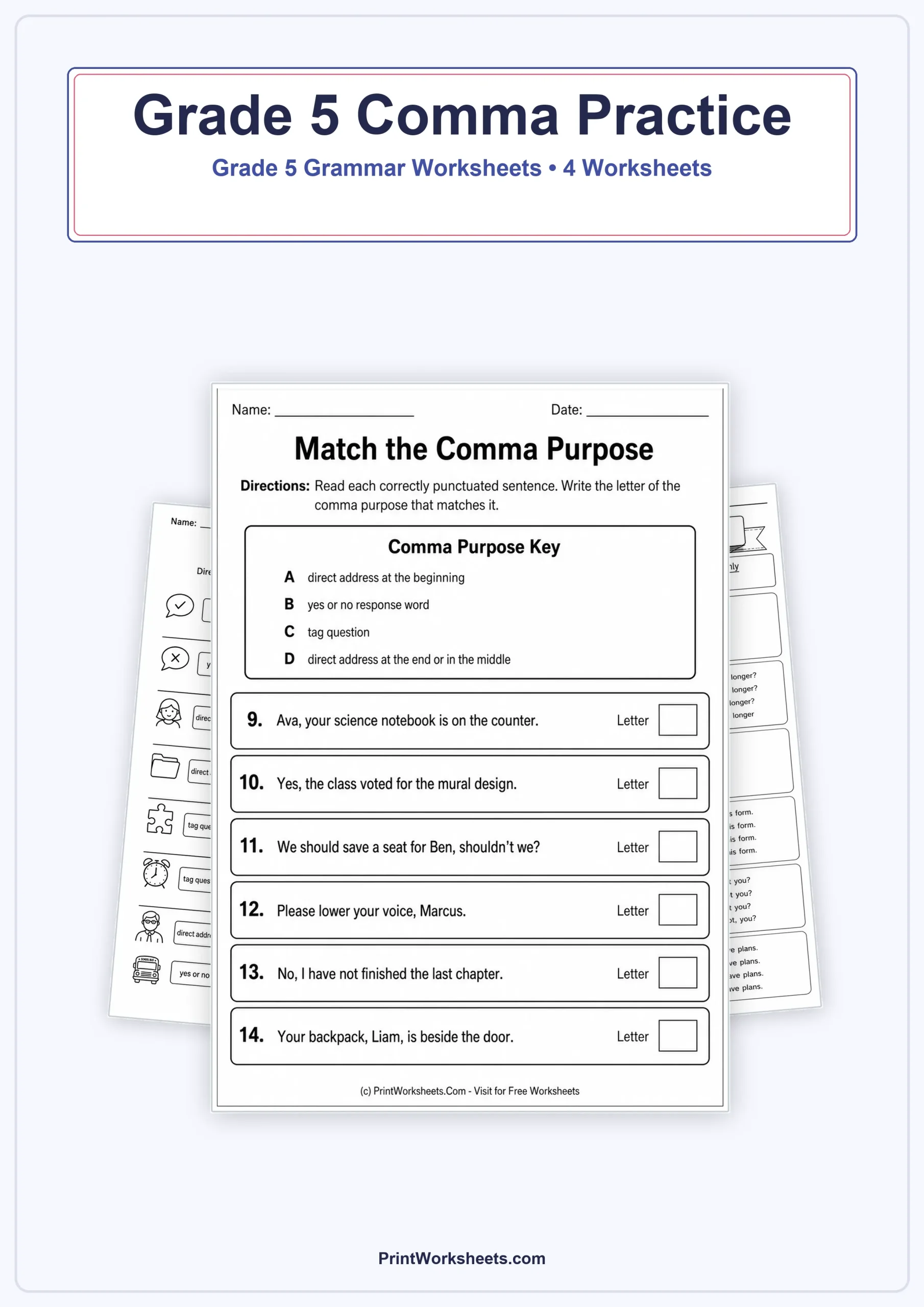
These commas to set off elements worksheets give Grade 5 students focused practice with three punctuation situations that often appear in real sentences: yes or no response words, direct address, and tag questions. Across four printable activities, students move beyond simply adding a comma. They identify why a comma is needed, compare possible edits, and apply more than one comma rule while revising short everyday messages.
Practice Commas to Set Off Elements in Different Sentence Positions
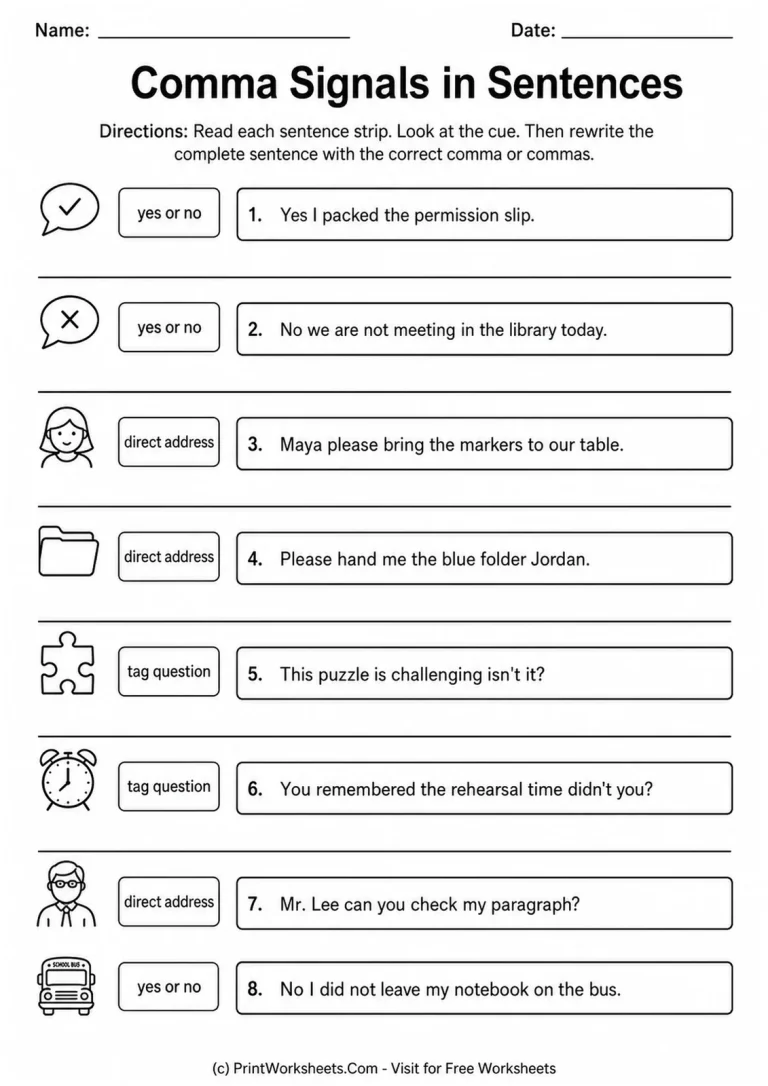
The first worksheet, Comma Signals in Sentences, provides direct practice with eight sentences. Each item includes a clue such as yes or no, direct address, or tag question. Students rewrite the sentence with the required comma or commas. This format helps them connect a visible grammar signal with the correct punctuation pattern.
The examples cover several placements instead of repeating one sentence structure. Students practice putting a comma after an opening Yes or No, setting off a person’s name or title at the beginning of a sentence, separating direct address at the end of a sentence, and using two commas when direct address appears in the middle. Tag questions are also included so students see how a short ending such as isn’t it, didn’t you, shouldn’t we, or aren’t they is separated from the main statement.
Identify the Purpose of Each Comma
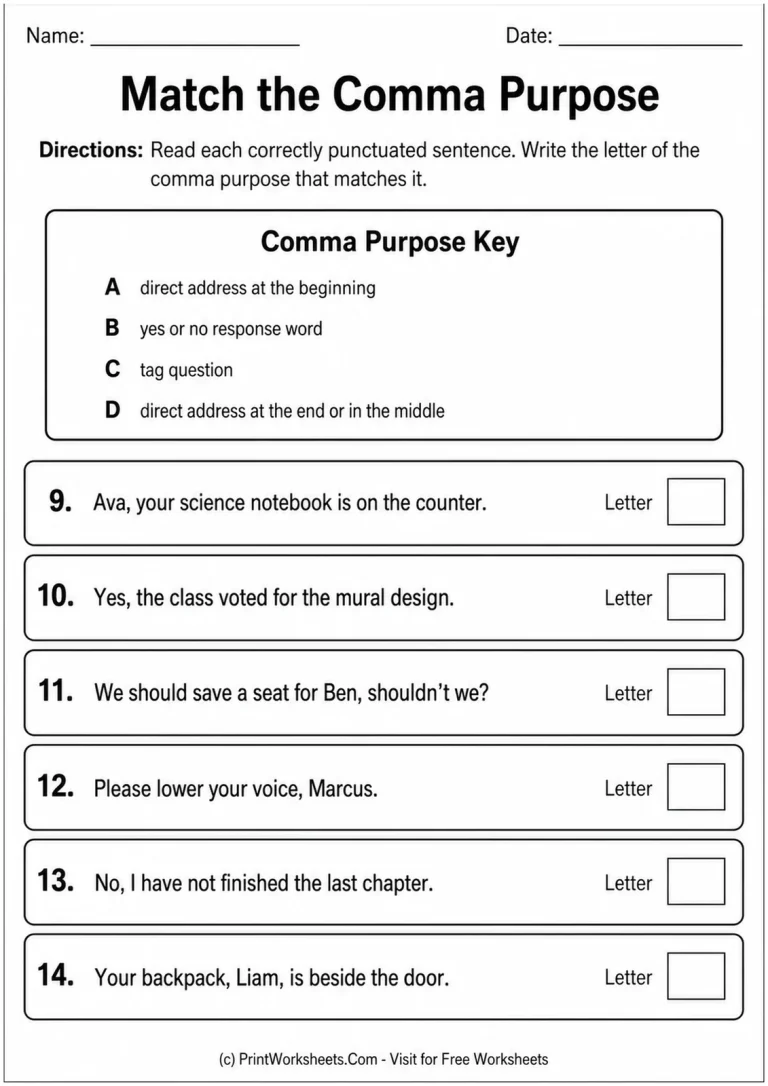
The second page changes the task from producing punctuation to explaining its function. In Match the Comma Purpose, students read correctly punctuated sentences and use an A-D key to decide why the comma is present. Categories include opening direct address, a yes or no response word, a tag question, and direct address placed later in the sentence.
This classification work is useful because students cannot rely only on where they see a comma. They must look at the role of the words around it. A comma after Yes serves a different purpose from a comma after a person’s name, even when both appear near the beginning of a sentence. Making that distinction strengthens punctuation understanding and supports later editing work.
Choose the Correct Comma Edit
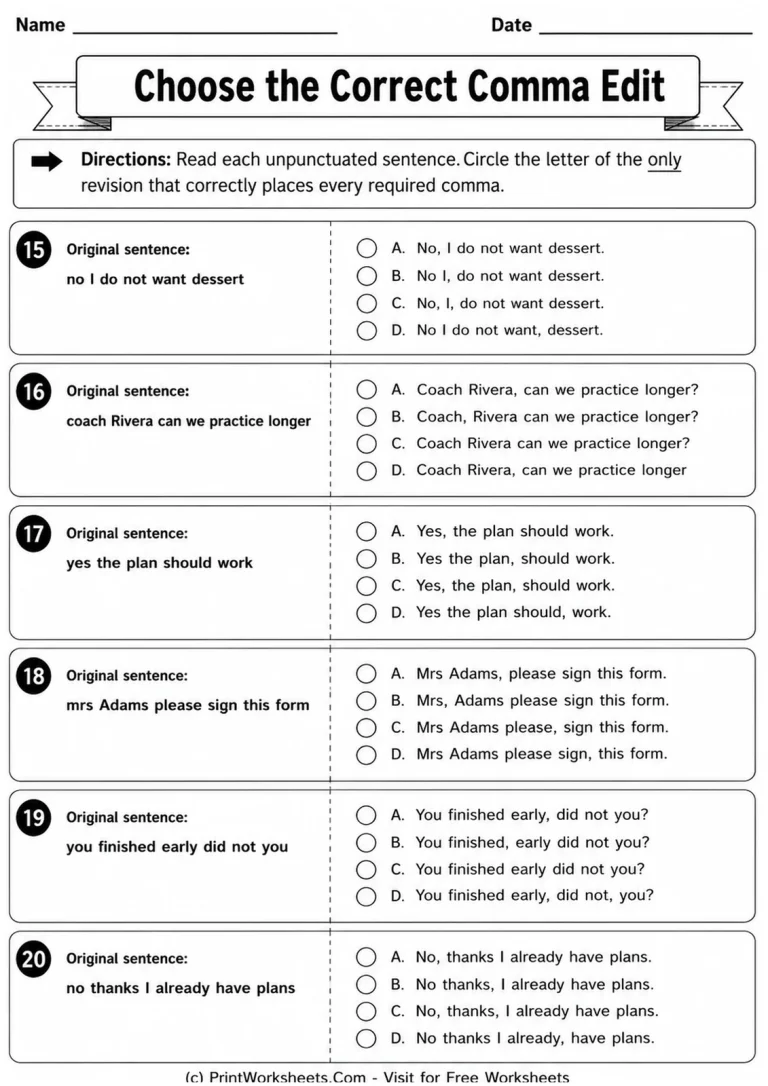
The third worksheet asks students to act as editors. Six multiple-choice items present an unpunctuated sentence followed by four possible revisions. Students select the option in which all necessary commas are placed correctly. The sentences again use yes or no responses, direct address, and tag questions, but the decision-making format adds a new challenge: students must notice both missing commas and commas placed in the wrong location.
This activity is especially helpful for learners who can recognize a correct sentence more easily than they can produce one from scratch. It also encourages careful comparison. Students need to check the entire sentence rather than stopping after they find one comma that looks reasonable.
Edit Everyday Messages with More Than One Comma Rule
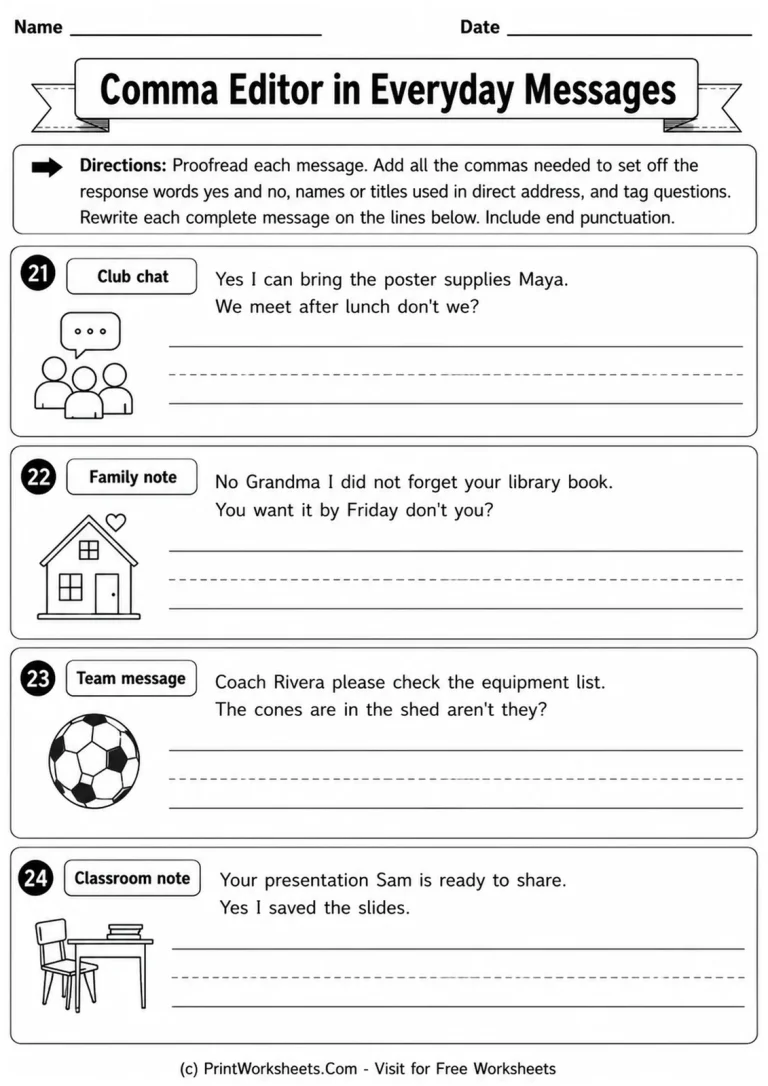
The final worksheet, Comma Editor in Everyday Messages, places the skill in familiar communication. Students revise four short examples presented as a club chat, family note, team message, and classroom note. These messages combine response words, names or titles used in direct address, and tag questions, so students may need to apply more than one punctuation rule in the same item.
Because the punctuation appears in message-style contexts, students can see that comma rules are not limited to isolated grammar exercises. A quick note can begin with Yes, speak directly to someone by name, and finish with a tag question. Editing these examples gives students practice reading for meaning before deciding where punctuation belongs.
How Teachers and Families Can Use This Grade 5 Set
The four worksheets can be used in sequence or separately. Start with the clue-supported rewriting page when students are learning the rules. Follow with the purpose-matching activity to check whether they understand what each comma is doing. The multiple-choice editing page works well for guided review, small-group practice, or independent work. The everyday-message activity can be saved for later practice because it asks students to combine several punctuation decisions within one context.
This progression makes the set suitable for grammar lessons, literacy centers, homework, tutoring, and extra practice at home. By working through several task types, Grade 5 students practice not only where commas belong but also why they are needed when yes and no response words, direct address, and tag questions are set off from the rest of a sentence.