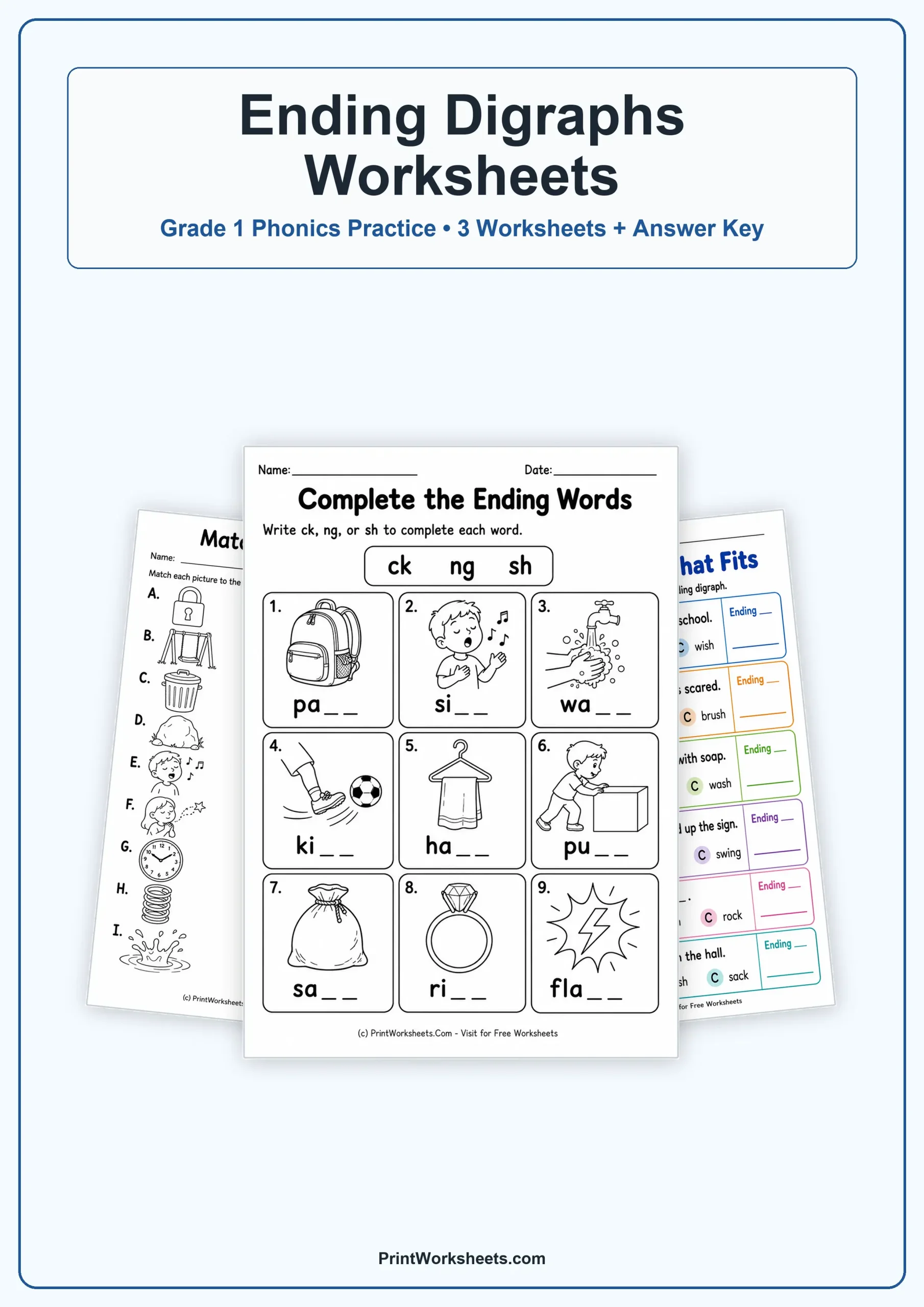
These ending digraph worksheets give first grade students focused practice with the final letter patterns -ck, -ng, and -sh. Instead of working with the sounds in only one format, children move through picture-to-word matching, picture-supported word completion, and short sentence choices. The progression helps students notice how the same ending patterns appear in familiar words such as lock, spring, wish, pack, ring, flash, snack, long, and rush.
Ending Digraph Worksheets for -ck, -ng, and -sh
The printable set concentrates on three common word endings that beginning readers often meet in early phonics work. Students repeatedly see and use -ck, -ng, and -sh while the task changes from page to page. This keeps the target skill consistent without asking children to complete the same type of exercise over and over.
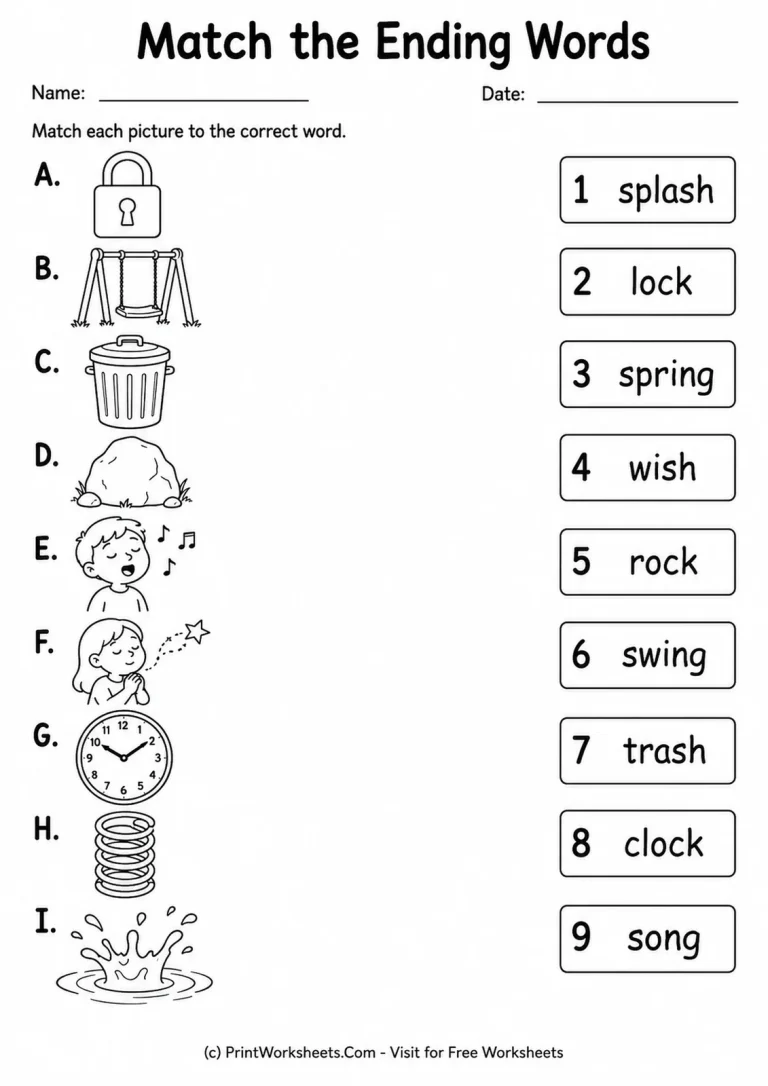
The first activity, Match the Ending Words, uses nine pictures and nine written words. Students match pictures labeled A through I with the numbered words splash, lock, spring, wish, rock, swing, trash, clock, and song. The pictures provide concrete clues while the written choices encourage children to look closely at the final spelling pattern in each word.
Move from picture clues to spelling completion
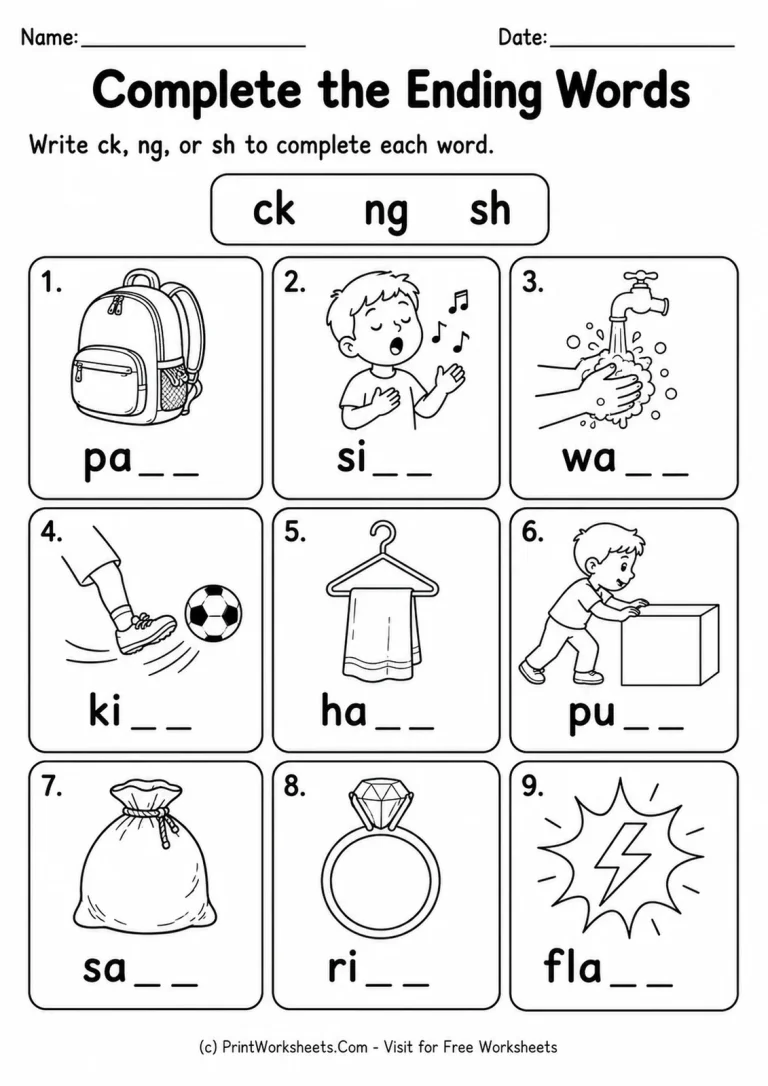
After recognizing complete words, students work with missing endings in Complete the Ending Words. Each item includes a picture and a partially completed word. Children choose from ck, ng, or sh to finish the spelling. The target words are pack, sing, wash, kick, hang, push, sack, ring, and flash.
This page gives useful repeated contrast among the three endings. Pack, kick, and sack reinforce -ck. Sing, hang, and ring reinforce -ng. Wash, push, and flash reinforce -sh. Because the choices are limited to the same three digraphs throughout the page, students can concentrate on the ending sound and spelling relationship rather than searching through a large group of unrelated letter patterns.
Use ending digraphs in sentence meaning
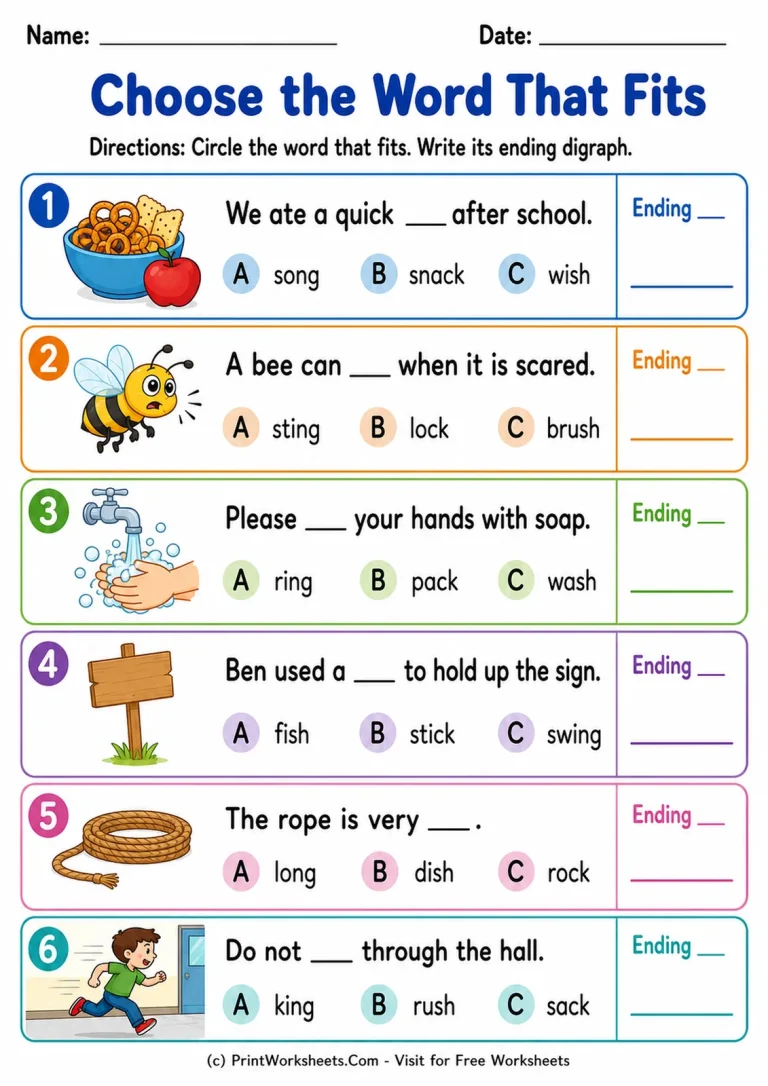
The final student page changes the challenge from isolated words to short contexts. In Choose the Word That Fits, students read each sentence and choose the word that makes sense from three options. They then write the ending digraph found in the selected word. The six target answers include snack, sting, wash, stick, long, and rush.
This two-part task adds an important layer to phonics practice. Students first use sentence meaning to identify the correct word and then inspect its ending to name the letter pattern. That combination connects decoding, vocabulary, spelling, and simple reading comprehension in one manageable activity. It also gives teachers a quick way to see whether a student can recognize -ck, -ng, and -sh beyond picture-based practice.
How to Use These Grade 1 Phonics Pages
The three worksheets can be used in sequence during a phonics lesson, but they also work well independently. A teacher might begin with the matching page during guided practice, move to the completion page for individual work, and use the sentence page as a follow-up check. Parents can use the same progression for short home practice without introducing a large number of new rules at once.
Students who need more support can say each pictured word aloud before matching or completing it. Drawing attention to the final sound can make the spelling choice easier: children can compare the end of pack with kick and sack, or the end of sing with hang and ring. Students who are ready for an extra challenge can read the completed words aloud and sort them verbally by -ck, -ng, or -sh.
Useful words for repeated phonics practice
The vocabulary in this set is short and accessible for early readers, while still giving varied examples of the three target endings. Words such as lock, rock, clock, spring, swing, song, wish, trash, and splash help students see that an ending pattern can appear in many different words. The later activities extend that practice with pack, kick, sack, sing, hang, ring, wash, push, flash, snack, sting, stick, long, and rush.
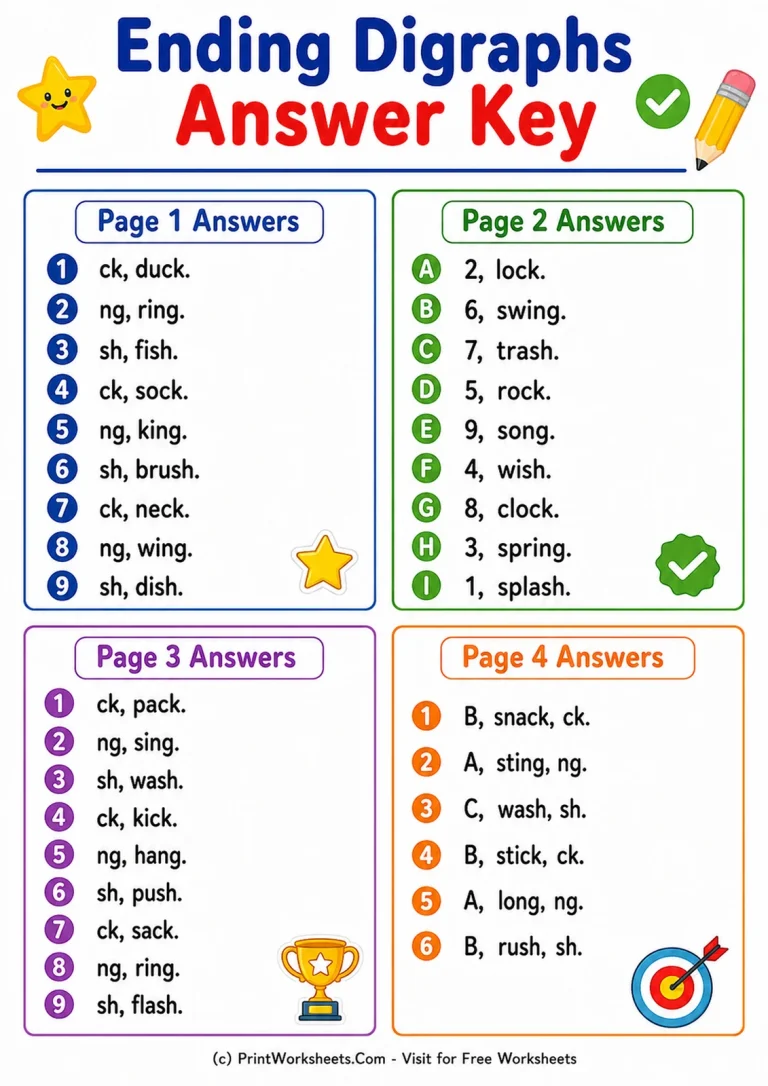
An answer key is included for checking the picture matches, ending completions, and sentence selections. That makes the printable set practical for classroom centers, independent phonics practice, homework, intervention groups, or a quick review of final digraph patterns. By moving from visual recognition to spelling completion and then to sentence-level application, the worksheets give first graders several meaningful chances to recognize and use -ck, -ng, and -sh at the ends of words.