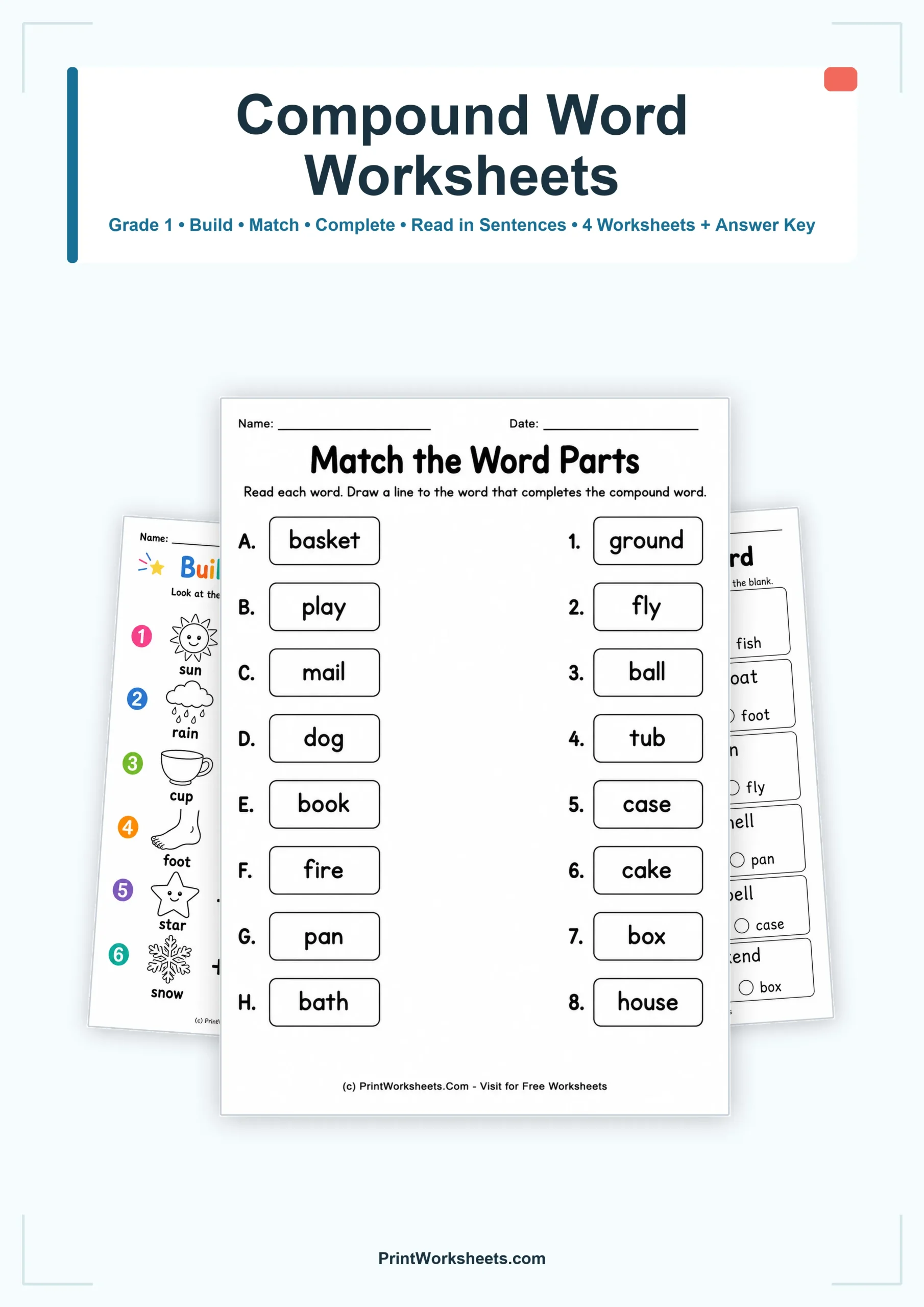
These compound word worksheets give first-grade early readers four different ways to understand how two smaller words can join to make one new word. The activities begin with clear picture-supported word pairs, then move into matching word parts, finding a missing word, and finally using compound words inside short sentences. This progression helps children notice both the structure and meaning of familiar words while keeping each task manageable for beginning readers.
Compound Word Worksheets for Grade 1 Early Readers
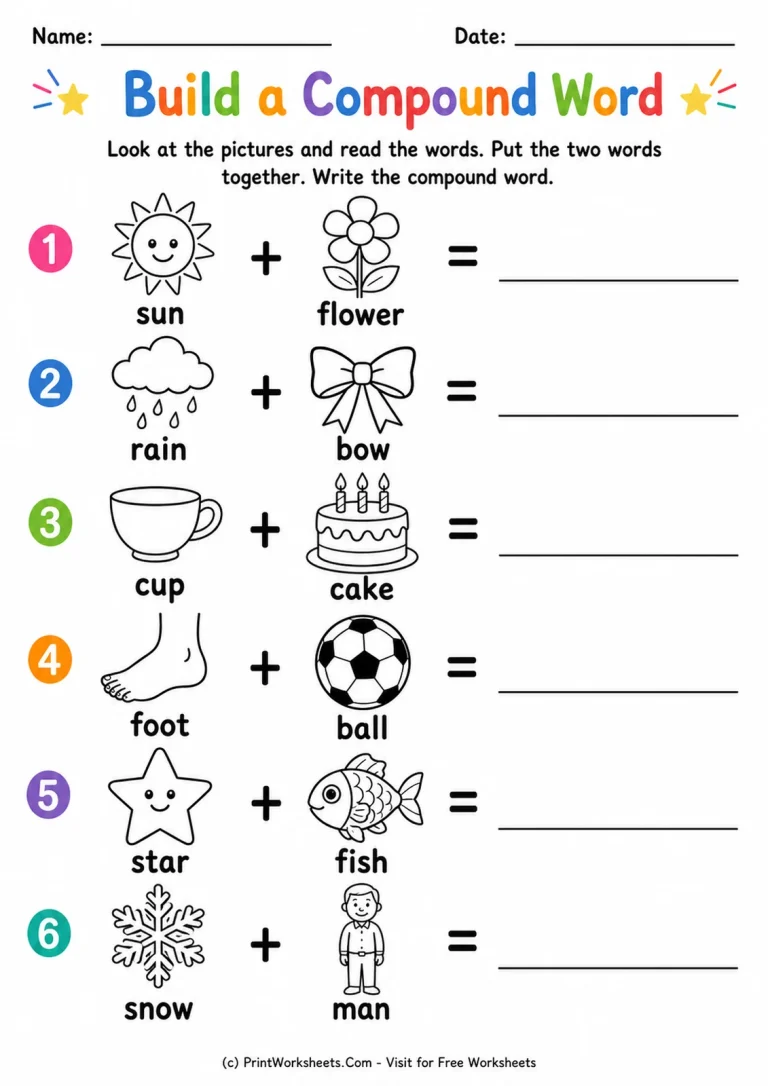
The first page, Build a Compound Word, introduces the idea in a highly visual format. Students see two labeled pictures and combine the two written words to make a complete compound word. The six examples include sun + flower, rain + bow, cup + cake, foot + ball, star + fish, and snow + man. Because both pictures and printed words are visible, children can connect meaning, vocabulary, and word structure before they are asked to work with fewer clues.
This page can work especially well as the introduction to a compound-word lesson. A teacher or parent can read the two smaller words aloud, ask the child to say them together, and then have the child write the new word. Students can also point to each picture while blending the words orally. That simple routine reinforces the idea that a compound word is made from two complete smaller words rather than from isolated letters or sounds.
Match and Complete Familiar Compound Words
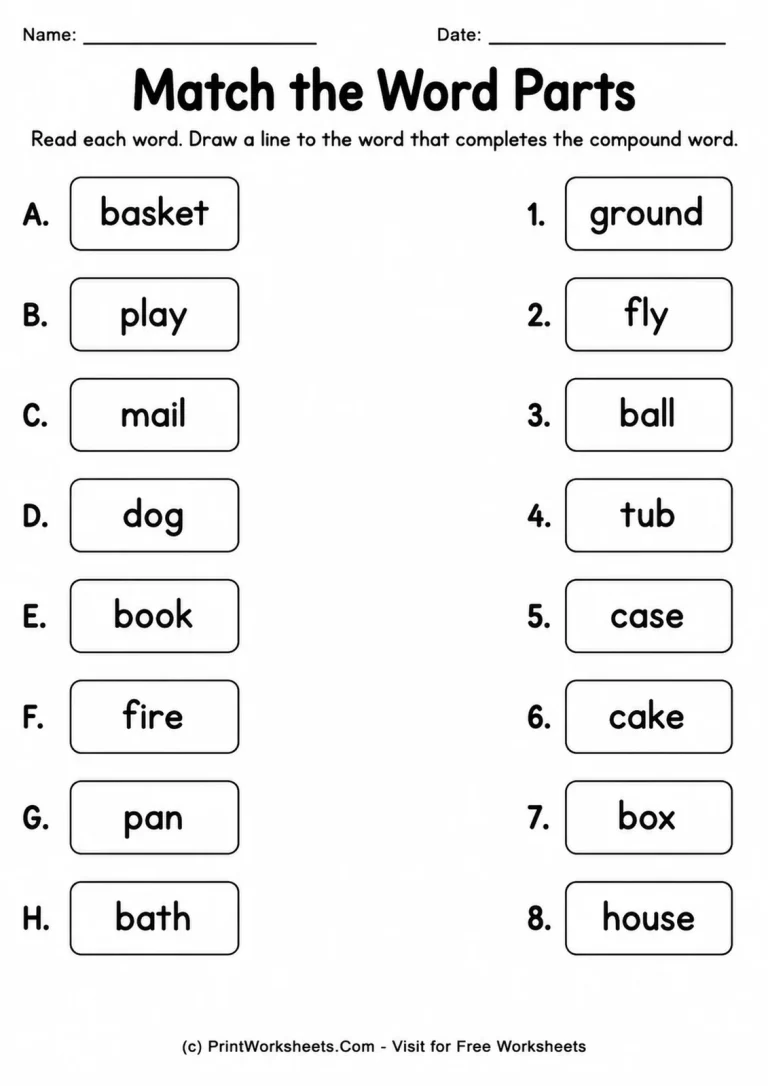
The second worksheet, Match the Word Parts, removes the paired-picture format and asks students to connect first words with the correct second words. The activity includes eight targets: basketball, playground, mailbox, doghouse, bookcase, firefly, pancake, and bathtub. Students must look across the two columns, decide which parts belong together, and draw matching lines to create meaningful words.
This task adds a useful level of independence because students are no longer simply copying an obvious combination. They must consider which word partnership makes sense. It can be used for guided practice, literacy centers, homework, or a quick review after compound words have been introduced.
Find the Missing Part of Each Compound Word
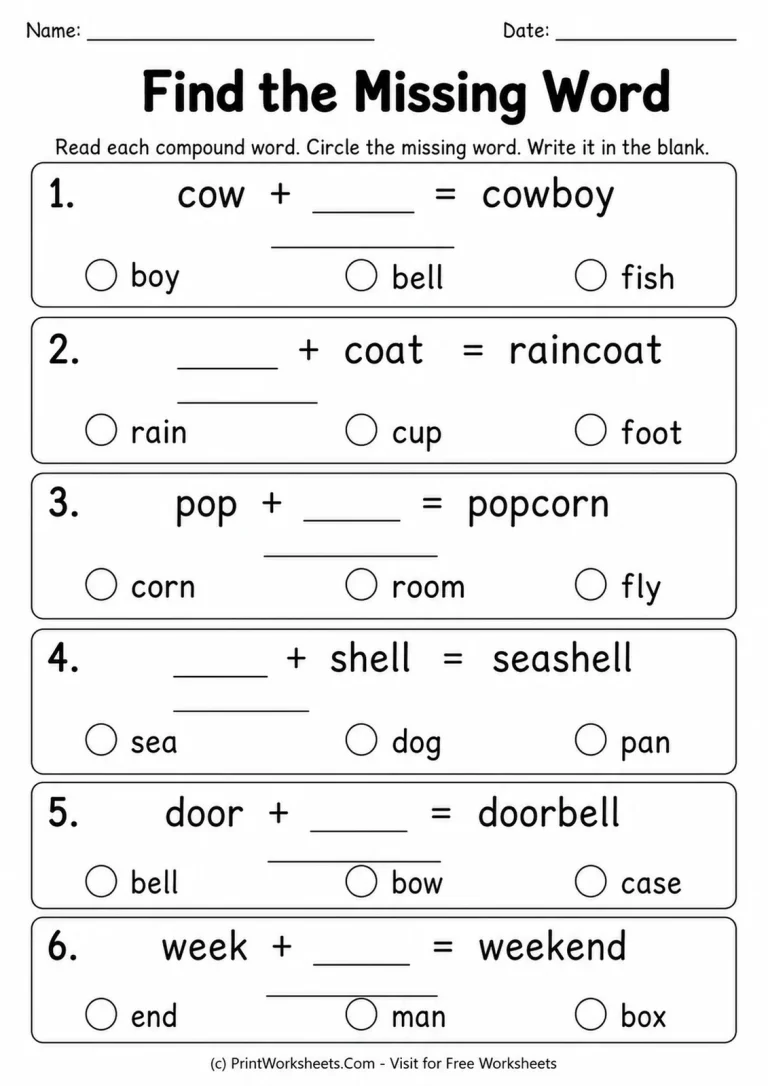
On the third page, Find the Missing Word, students work backward from a completed compound word. Each problem shows a target word with one smaller word missing. Children choose the missing part from three options, circle the correct choice, and write it in the blank. The examples include cowboy, raincoat, popcorn, seashell, doorbell, and weekend.
This format checks whether students can recognize how a familiar compound word is built instead of relying only on matching. The three-choice structure keeps the activity accessible for Grade 1 while still requiring careful reading. Asking students to say the completed word aloud after filling the blank can add useful oral-reading practice without changing the worksheet itself.
Use Compound Words in Sentences
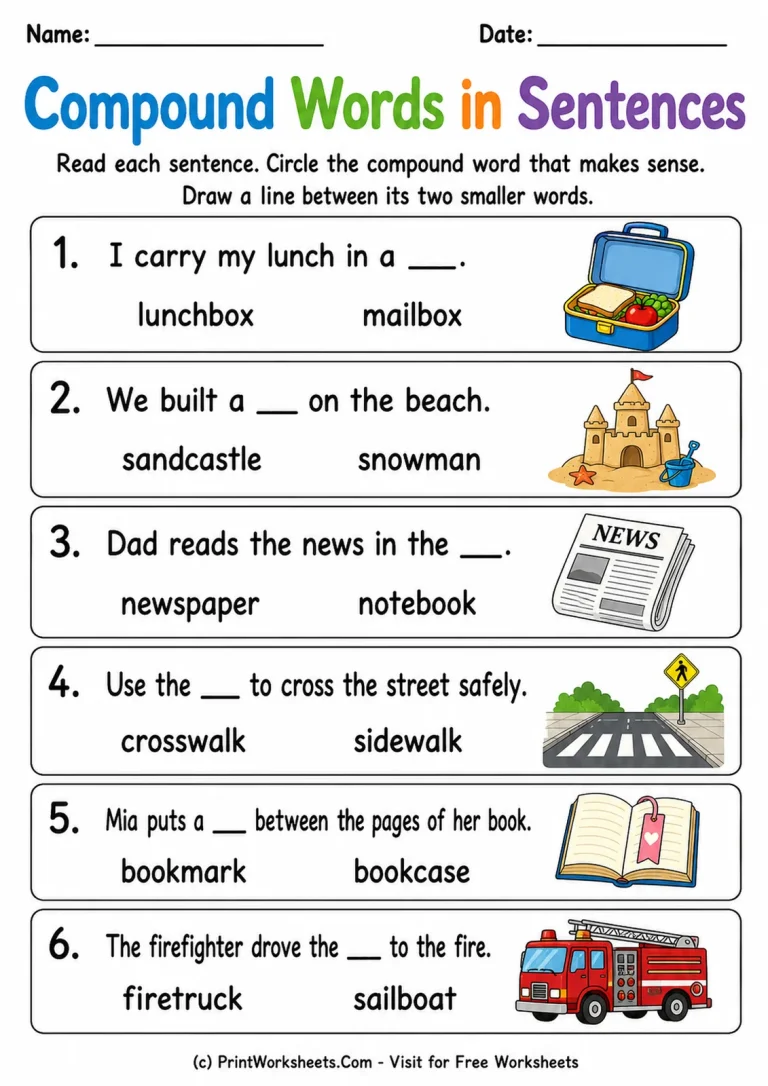
The fourth activity, Compound Words in Sentences, moves the skill into short everyday contexts. For each sentence, students choose between two compound-word options, circle the word that makes sense, and then place a line between the two smaller words that form it. The sentence contexts include lunchbox, sandcastle, newspaper, crosswalk, bookmark, and firetruck.
This final student page combines vocabulary, reading comprehension, and word analysis. Children have to use the meaning of the sentence to select the correct word, then show that they understand its internal structure. It is a useful follow-up for students who can already build simple compound words but need practice recognizing them during connected reading.
Ways to Use This Printable Set
The four student pages can be taught in order as a short mini-unit or selected individually for review. Page 1 is well suited to teacher-led introduction because of its picture cues. Page 2 works well for partner or center practice. Page 3 provides a compact independent check of word-part recognition, while Page 4 is useful when students are ready to apply the skill in sentence context.
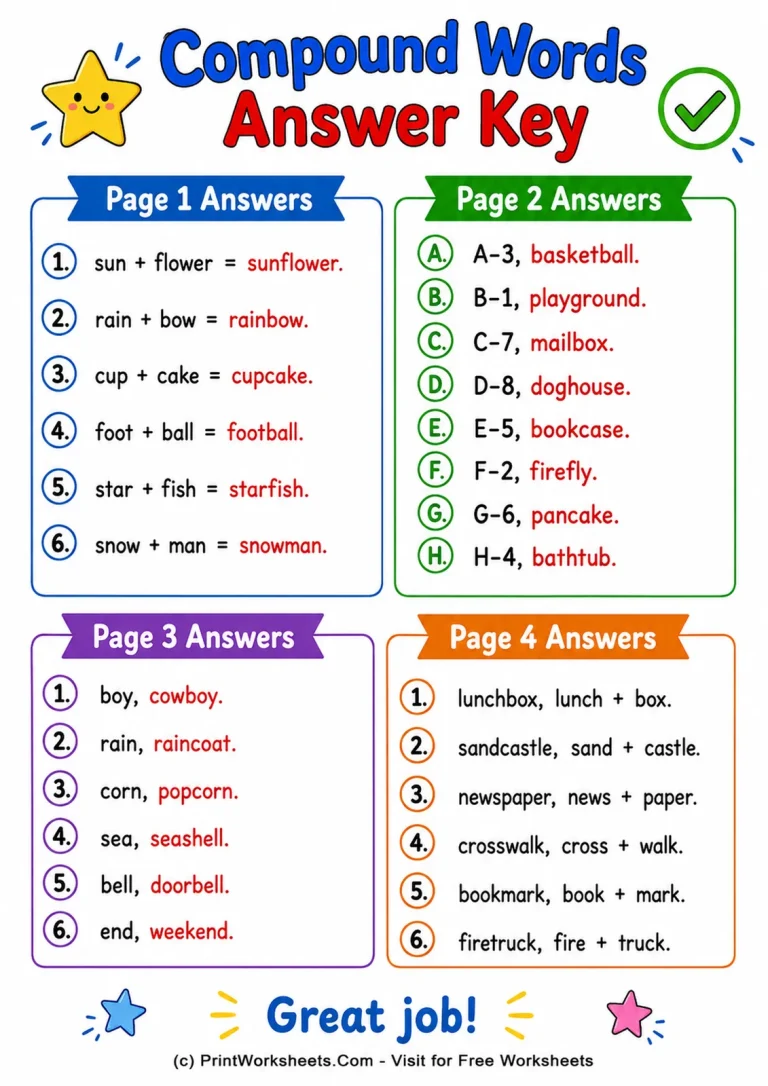
A complete answer key is included for all four activities, allowing teachers and families to check work quickly. The varied formats also make the set useful for morning work, phonics stations, intervention practice, take-home review, or a brief informal assessment. Instead of repeating one exercise style, students meet compound words through building, matching, completing, reading, and segmenting tasks.
Build Stronger Word Awareness One Step at a Time
For early readers, familiar compound words provide a concrete way to see how known words can combine to create new meaning. This printable set keeps that idea visible across several types of practice while gradually reducing support. Students begin with labeled pictures and finish by interpreting compound words inside sentences, giving them repeated opportunities to connect word parts with meaning and use.