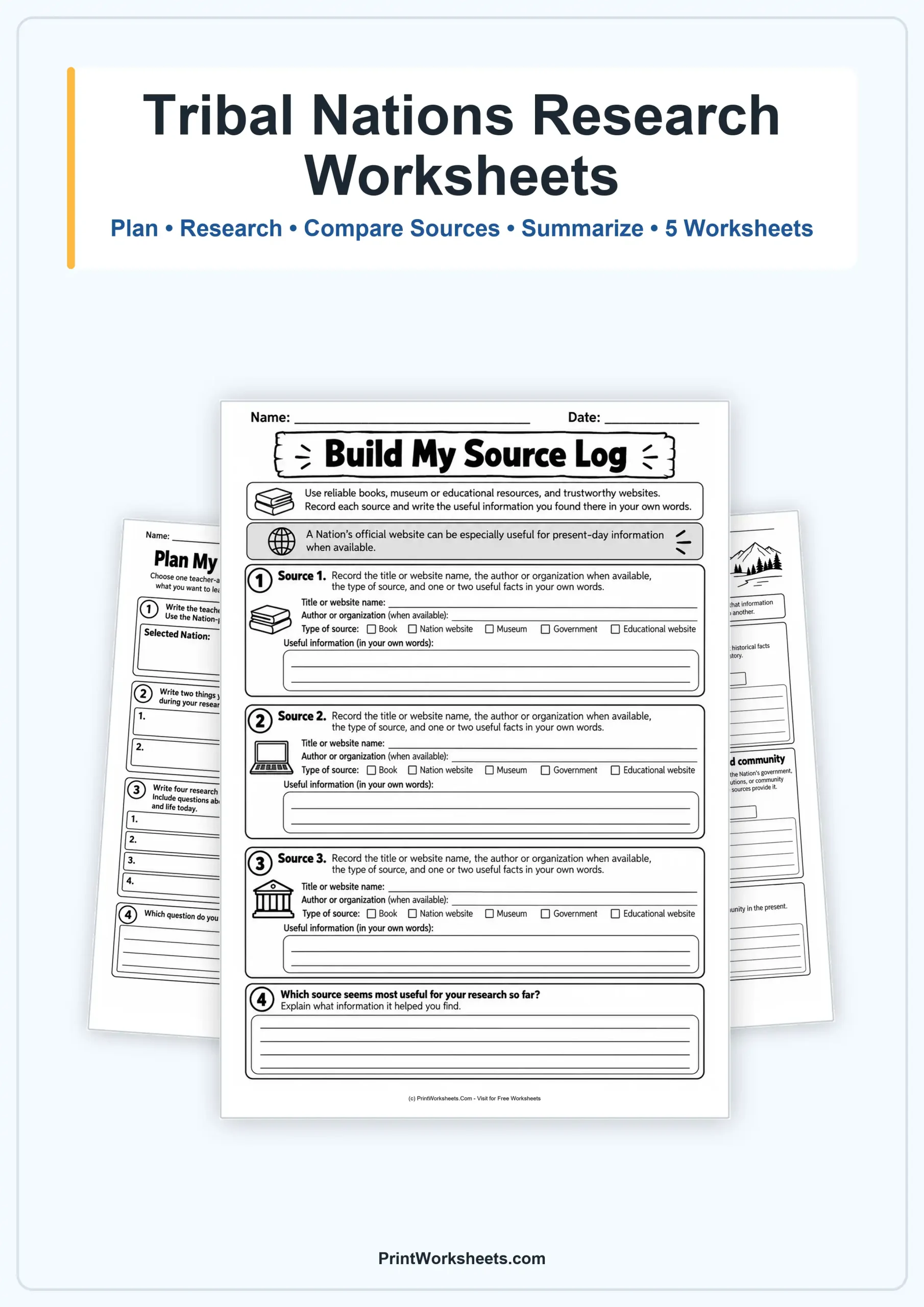
These Tribal Nations research worksheets give students a structured way to move from an initial research idea to a short, evidence-based report or presentation. Across five printable pages, students choose a teacher-approved Tribal Nation or Native Nation, develop research questions, record reliable sources, organize what they learn, compare evidence across sources, and prepare a final summary in their own words. The sequence is especially useful when students need more guidance than a single blank research organizer can provide.
Tribal Nations Research Worksheets for a Complete Research Process
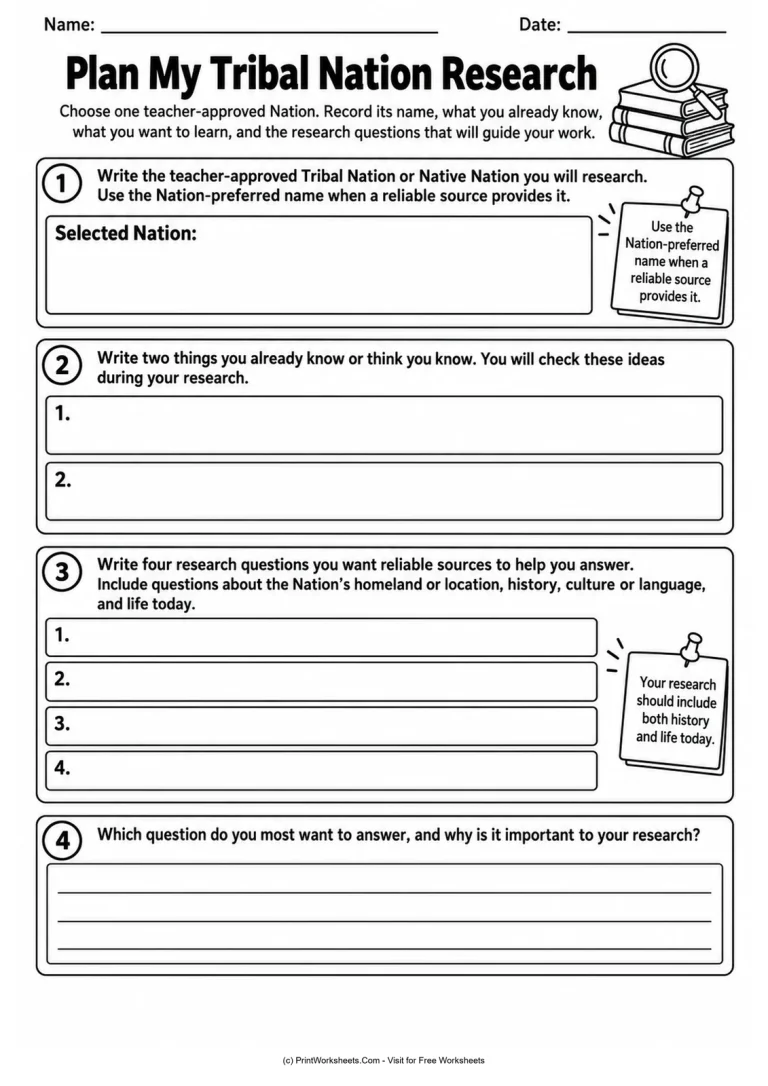
The first worksheet helps students begin with a clear and respectful research focus. Students record the Nation they will research and are reminded to use the Nation-preferred name when a reliable source provides it. They then write two things they already know or think they know, with the understanding that those ideas should be checked during research. Four research questions guide the next steps, including questions connected to homeland or location, history, culture or language, and life today.
This opening page also asks students to identify the question they most want to answer and explain why it matters to their research. That extra reflection turns a list of questions into a more purposeful research plan.
Build a Reliable Source Log
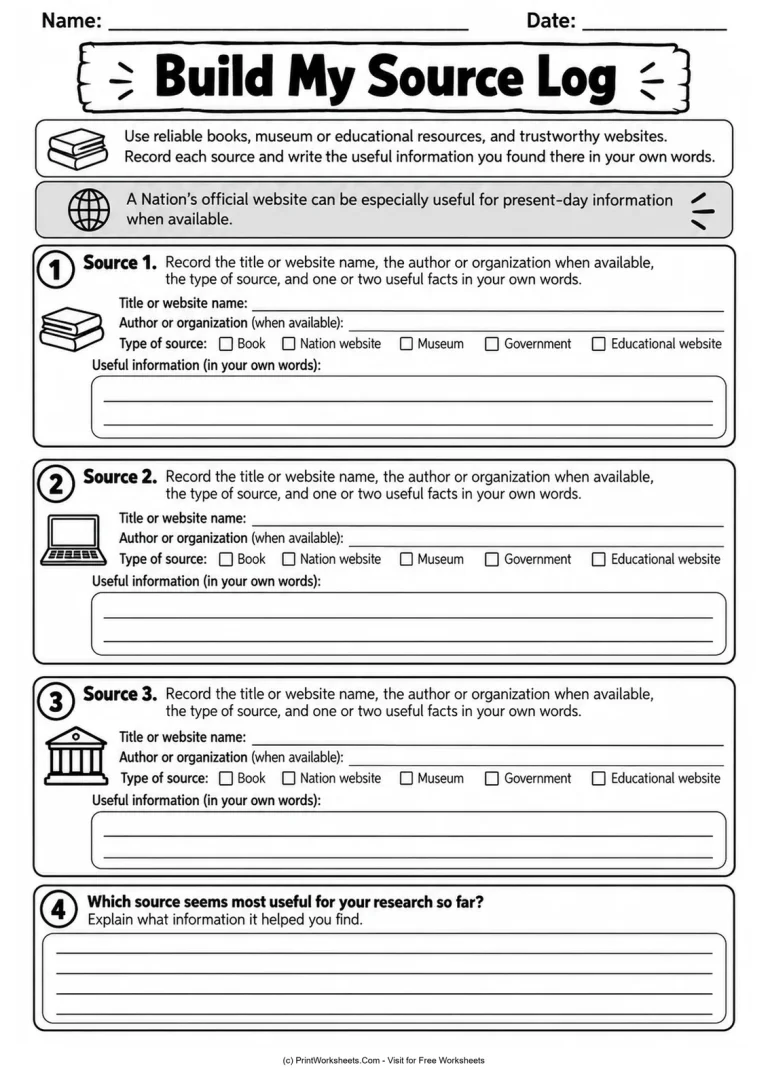
The second page is designed for source tracking. Students can record three sources, including a title or website name, an author or organization when available, and the type of source. Visible choices include books, Nation websites, museums, government sources, and educational websites. Each source entry also includes space for students to write useful information in their own words.
A reminder points out that an official Nation website can be especially useful for present-day information when one is available. At the bottom of the page, students decide which source has been most useful so far and explain what information it helped them find. This encourages students to think about source usefulness instead of simply collecting links or titles.
Organize Research Notes by Topic
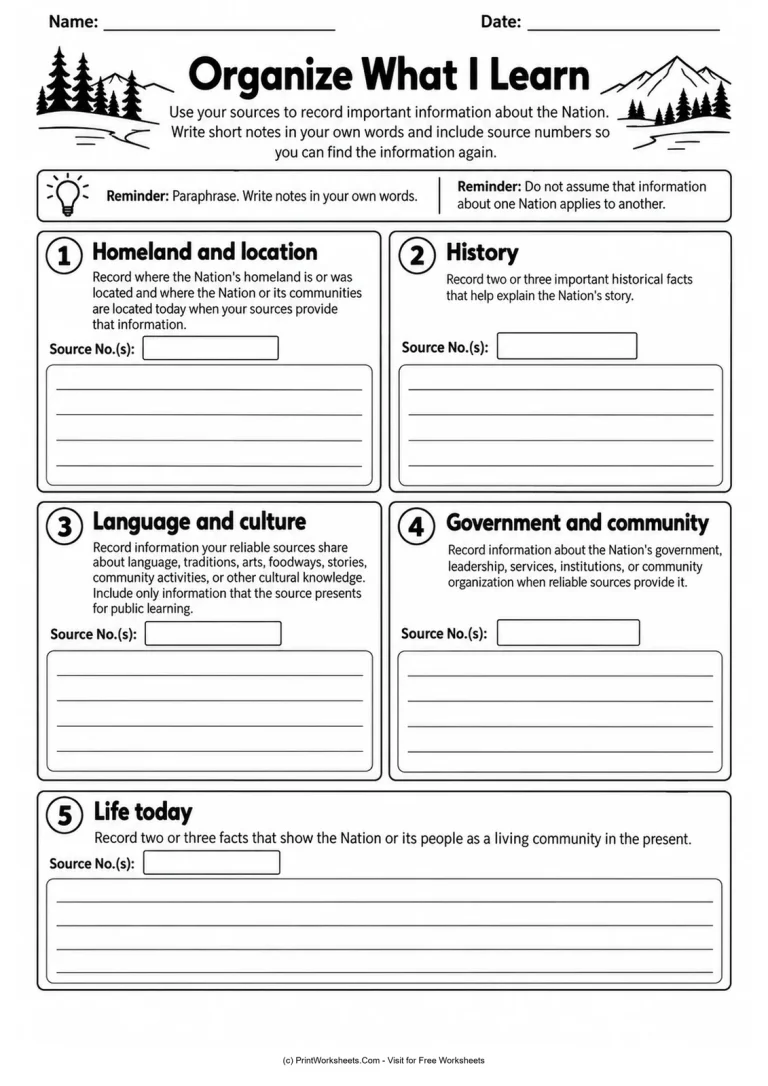
The third worksheet turns scattered research notes into five clear categories: homeland and location, history, language and culture, government and community, and life today. Students also record source numbers so they can trace information back to the sources listed in their source log.
The page reinforces two important research habits. Students are reminded to paraphrase rather than copy, and they are cautioned not to assume that information about one Nation applies to another. The culture section also directs students to include only information that a source presents for public learning, helping keep the activity focused on respectful, source-supported research.
Compare and Connect Evidence Across Sources
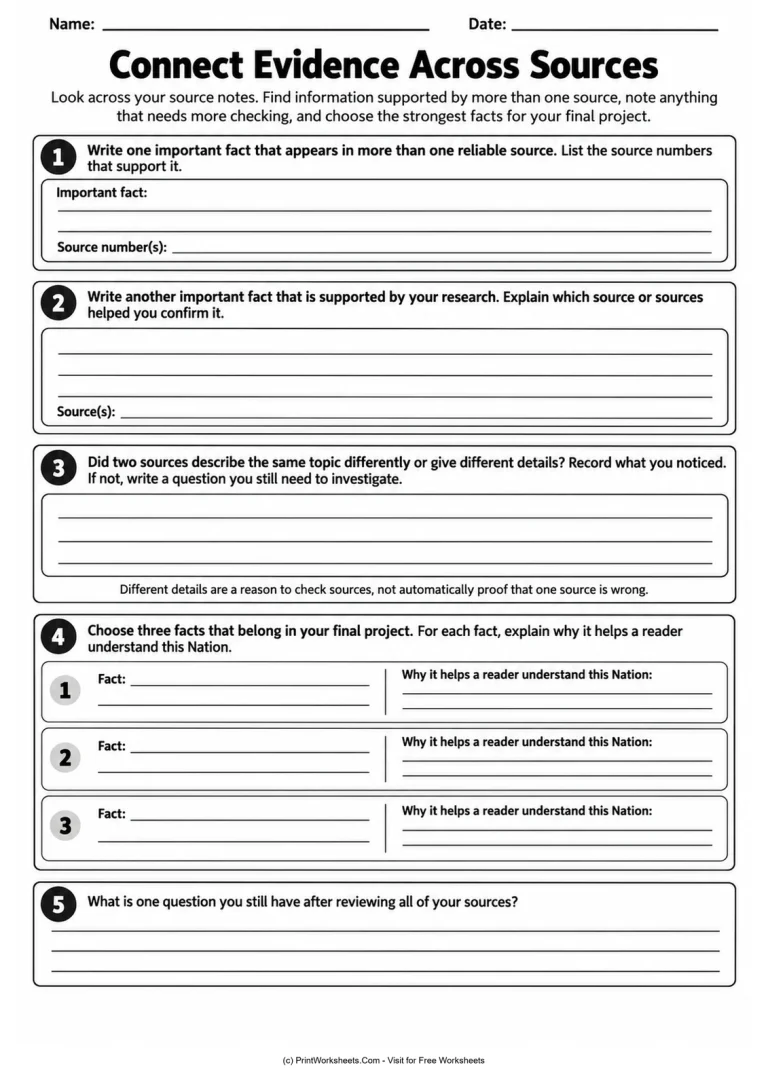
The fourth page moves beyond note collection into evidence checking. Students identify an important fact that appears in more than one reliable source and list the source numbers that support it. They then record another research-supported fact and explain which source or sources helped confirm it.
Students are also asked whether two sources described the same topic differently or supplied different details. A visible reminder explains that different details are a reason to check sources, not automatic proof that one source is wrong. This is a useful introduction to the idea that researchers may need to compare context, purpose, date, and level of detail before drawing conclusions.
The page finishes by asking students to select three facts for their final project and explain why each fact helps a reader understand the Nation. That step helps students distinguish between information that is merely interesting and information that supports a clear final product.
Prepare a Research Summary in Students’ Own Words
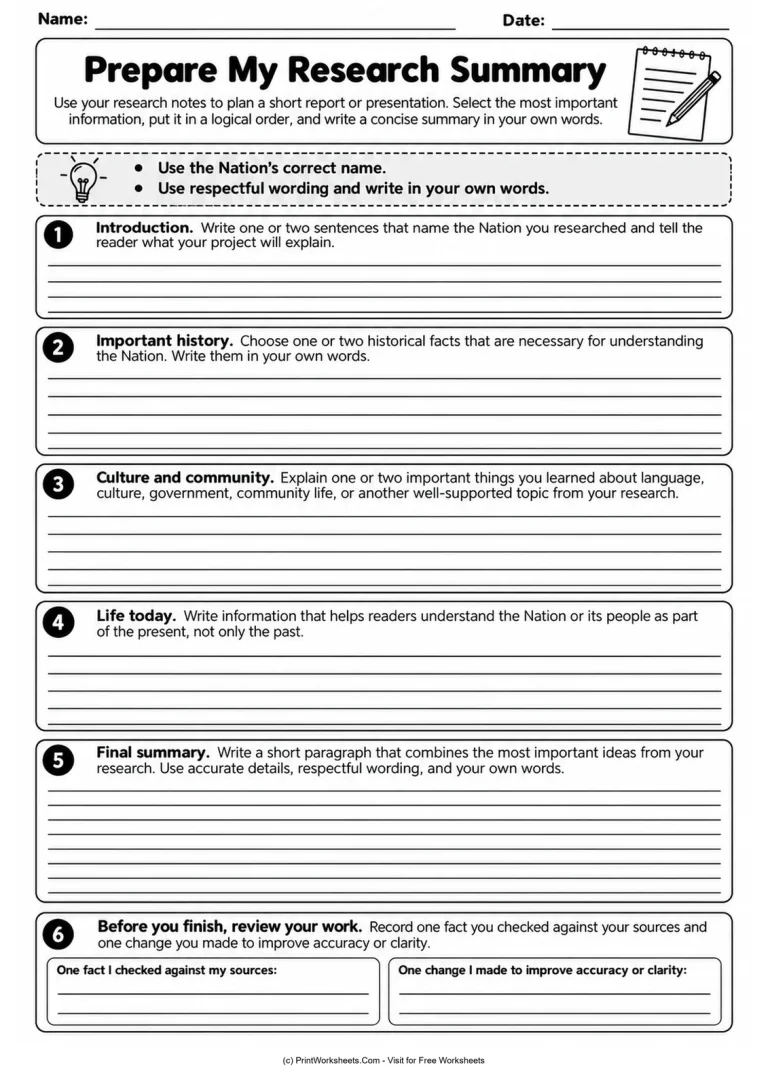
The final worksheet provides a planning structure for a short report or presentation. Students draft an introduction, choose important historical information, explain key ideas about culture and community, include information about life today, and then combine their strongest ideas into a final summary.
The page emphasizes correct naming, respectful wording, accurate details, and writing in the student’s own words. Before finishing, students record one fact they checked against their sources and one change they made to improve accuracy or clarity. This final self-check makes revision part of the research process rather than an optional last step.
A Useful Five-Page Research Organizer for Upper Elementary
Teachers and parents can use the full set as a guided sequence or assign individual pages as students reach different stages of a research project. Because the worksheets move from question development to source logging, note organization, evidence comparison, synthesis, and revision, students have a visible path through a multi-step research task. The result is a practical organizer set for helping upper elementary students research a Tribal Nation or Native Nation with greater care, source awareness, and attention to both history and present-day community life.