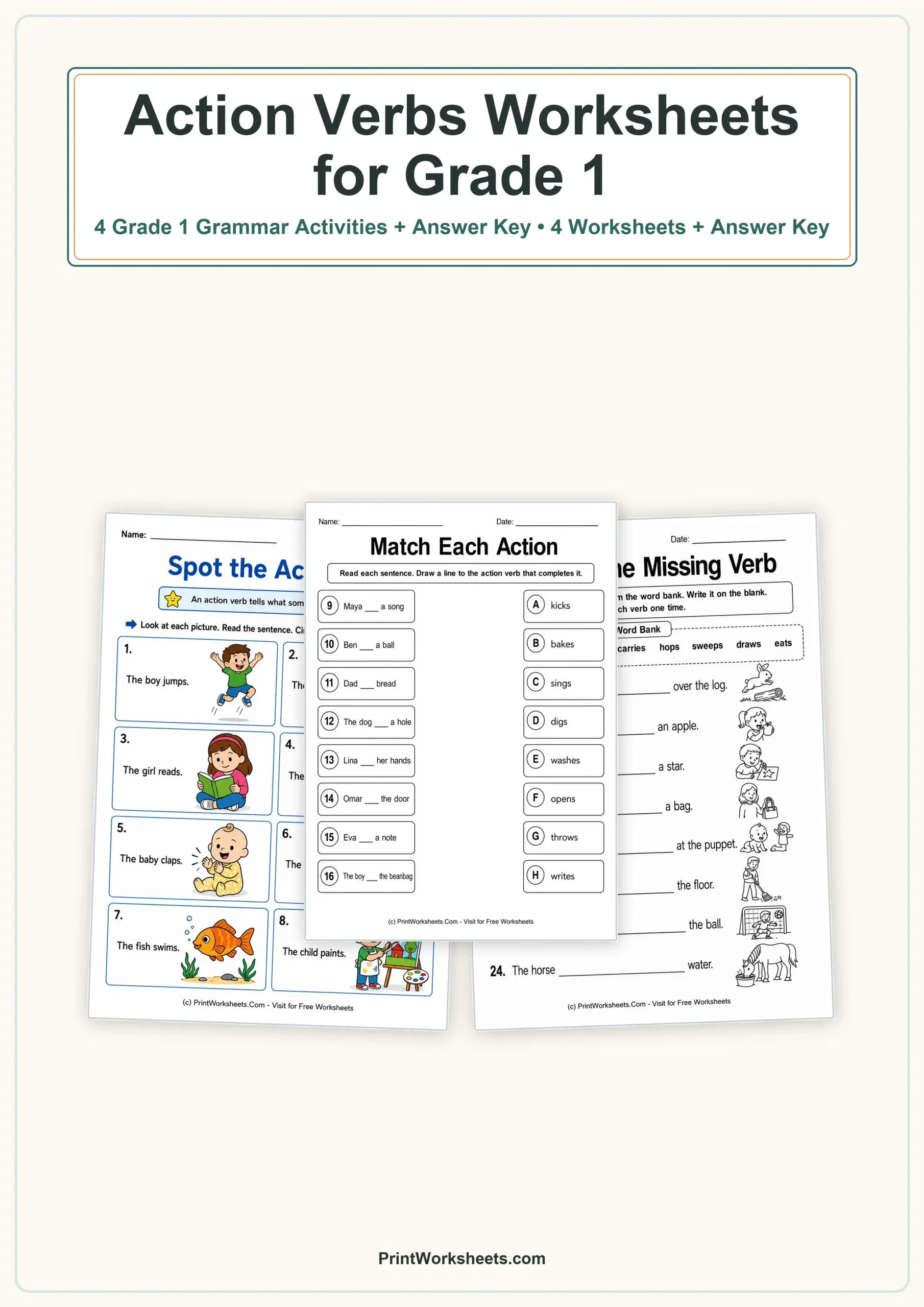
These action verbs worksheets give first graders repeated practice with words that show what a person, animal, or thing is doing. Instead of asking children to memorize a definition and stop there, the four-page set moves through several kinds of sentence work. Students begin with clear picture-supported examples, then match sentences to verbs, complete sentences from a word bank, and finish by choosing the best action verb for familiar daily situations. Across the set, children work through 30 numbered items, while the illustrations and short sentences keep the reading load manageable for early readers.
Action Verbs Worksheets for Step-by-Step Grade 1 Practice
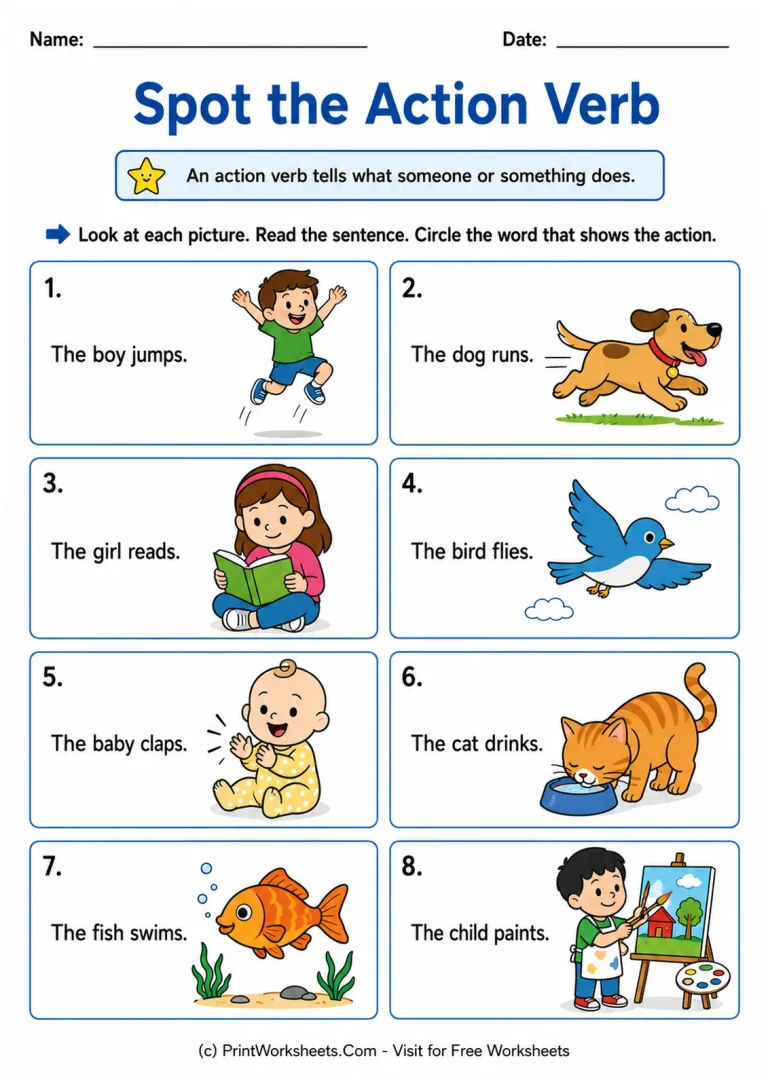
The first worksheet, Spot the Action Verb, introduces the skill through eight complete sentences. Students read each sentence and circle the word that shows the action. The pictures reinforce familiar verbs such as jumping, running, reading, flying, clapping, drinking, swimming, and painting. This page is especially useful when children are still learning that an action verb tells what someone or something does.
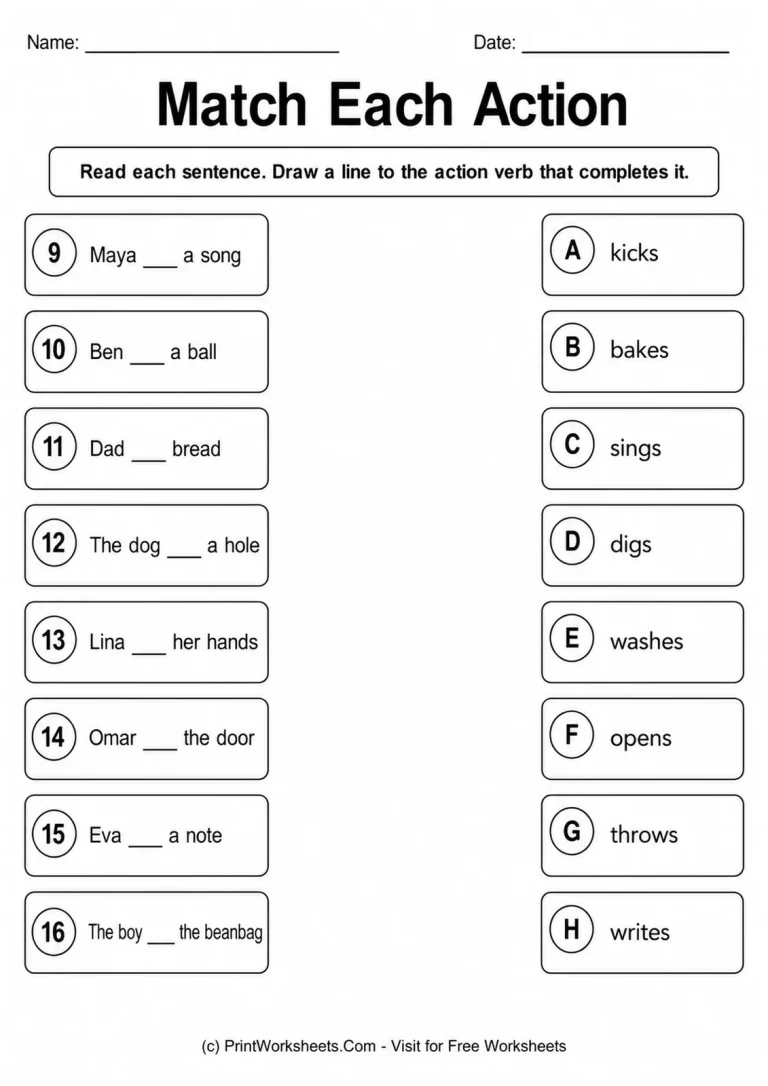
The second worksheet, Match Each Action, increases the challenge by removing the verb from each sentence. Students work with items 9–16 and draw lines from incomplete sentences to eight labeled action verbs. The contexts are concrete and child-friendly, including singing a song, kicking a ball, baking bread, digging a hole, washing hands, opening a door, writing a note, and throwing a beanbag. Because each verb has a clear sentence match, students can use meaning rather than guessing from isolated vocabulary.
Build Sentence Meaning with a Verb Word Bank
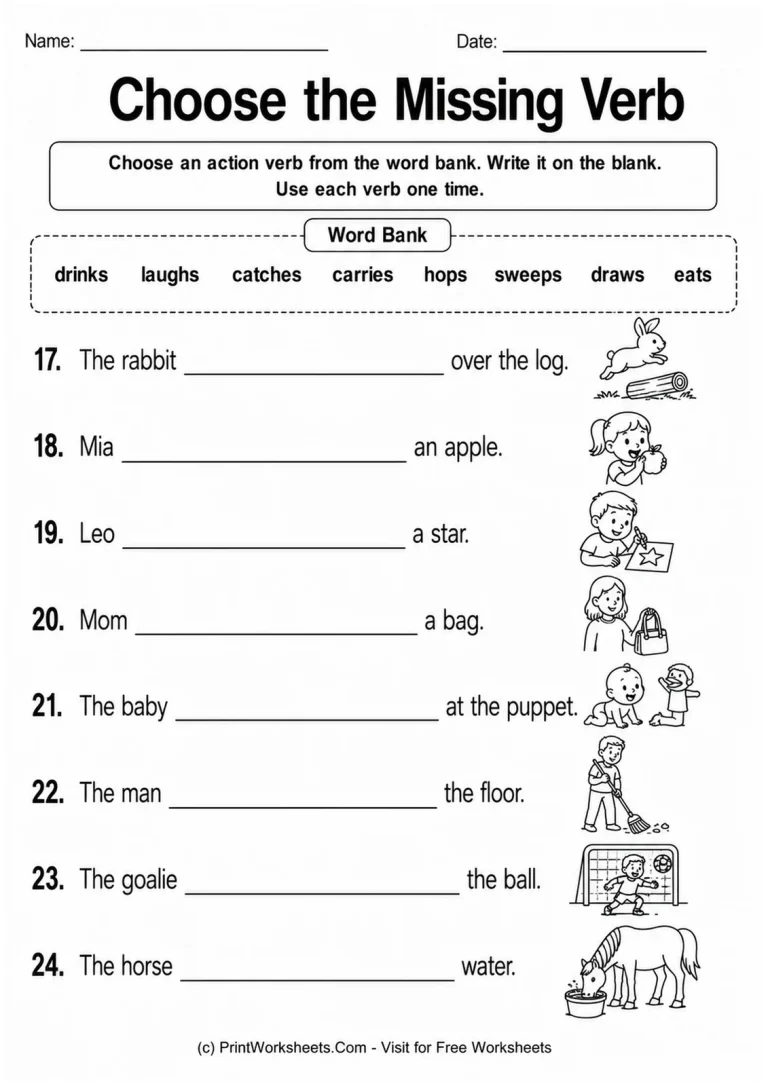
On Choose the Missing Verb, students use a word bank containing drinks, laughs, catches, carries, hops, sweeps, draws, and eats. Each verb is used once across items 17–24. Children must read the sentence, study the illustration, and decide which verb makes the sentence complete. Supporting pictures include a rabbit hopping over a log, a child eating, a goalie catching a ball, and a horse drinking water. This combination of sentence clues and visual clues helps students connect grammar with meaning while also practicing careful word-bank use.
Practice Action Verbs in Everyday Sentences
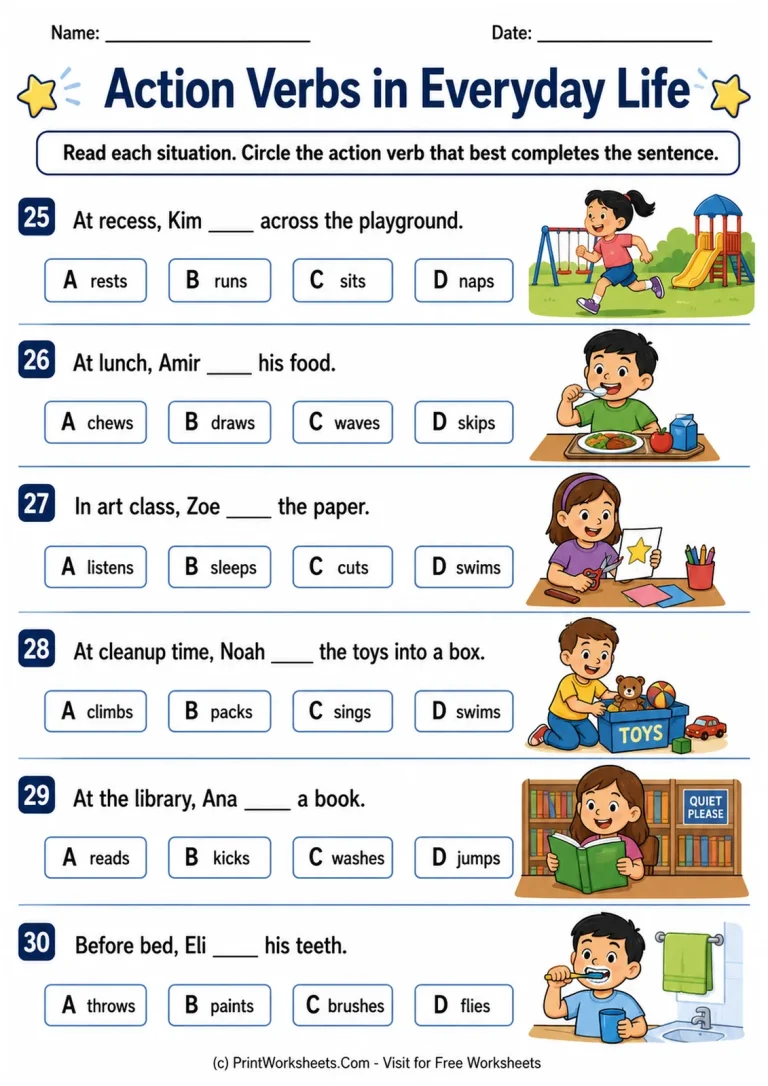
The fourth worksheet, Action Verbs in Everyday Life, shifts the skill into six familiar situations. Students circle the best action verb from four choices for sentences about recess, lunch, art class, cleanup time, the library, and brushing teeth before bed. By this point, students are no longer simply locating an obvious verb in a finished sentence. They are comparing choices and deciding which action best fits the full context, making the final page a useful check of whether the skill transfers to new examples.
Teachers who want an earlier grammar comparison activity can also use the identifying nouns and verbs worksheets. That resource asks students to distinguish naming words from action words, while this Grade 1 set gives more focused practice with action verbs alone. For students who later move into more advanced verb study, the regular and irregular verbs worksheets provide a natural next step at a higher level.
Ways to Use This Printable Verb Pack
The pages can be used in a whole-group grammar lesson, a literacy center, morning work, homework, or a short review sequence across several days. One practical approach is to teach the first page together, assign the matching and word-bank pages for guided or independent practice, and use the everyday-life page as a final check. Since the tasks change from page to page, students repeat the same core skill without completing the same exercise format four times.
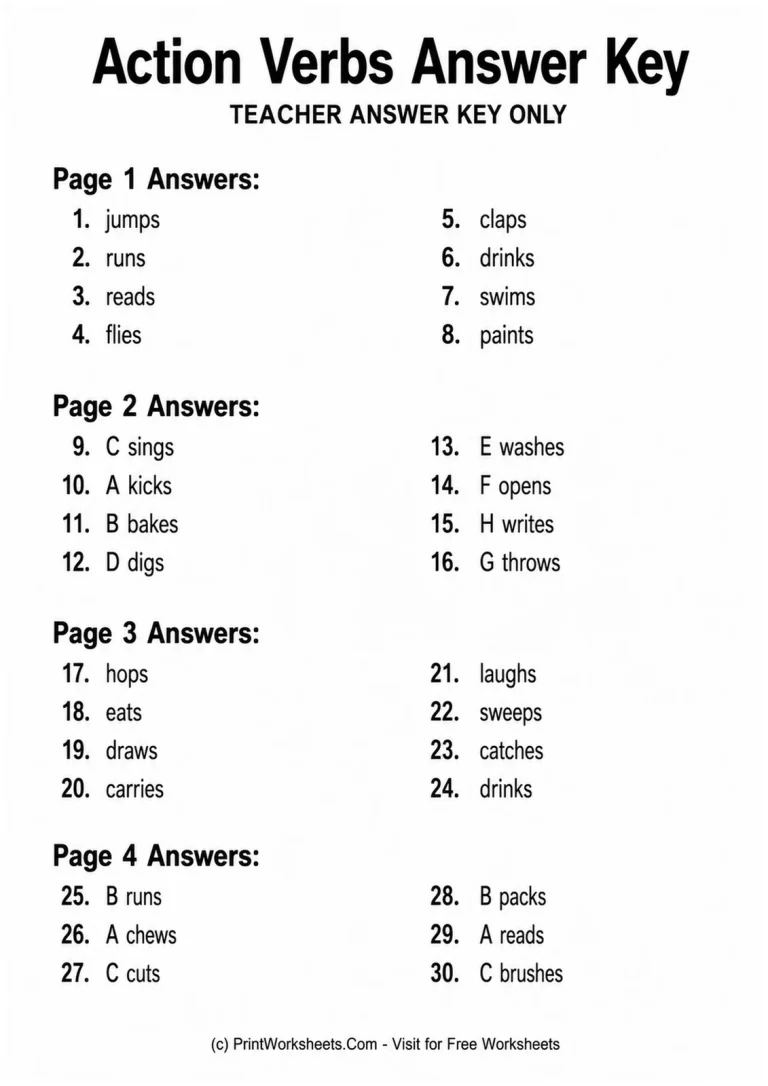
The complete answer key covers all four student worksheets and all 30 numbered items, including the letter-plus-verb responses used on the matching page. That makes the set easy to check after independent work or to send home for additional practice. Print the full packet for a short Grade 1 grammar unit, or select individual pages when students need extra work identifying and choosing action verbs in sentences.