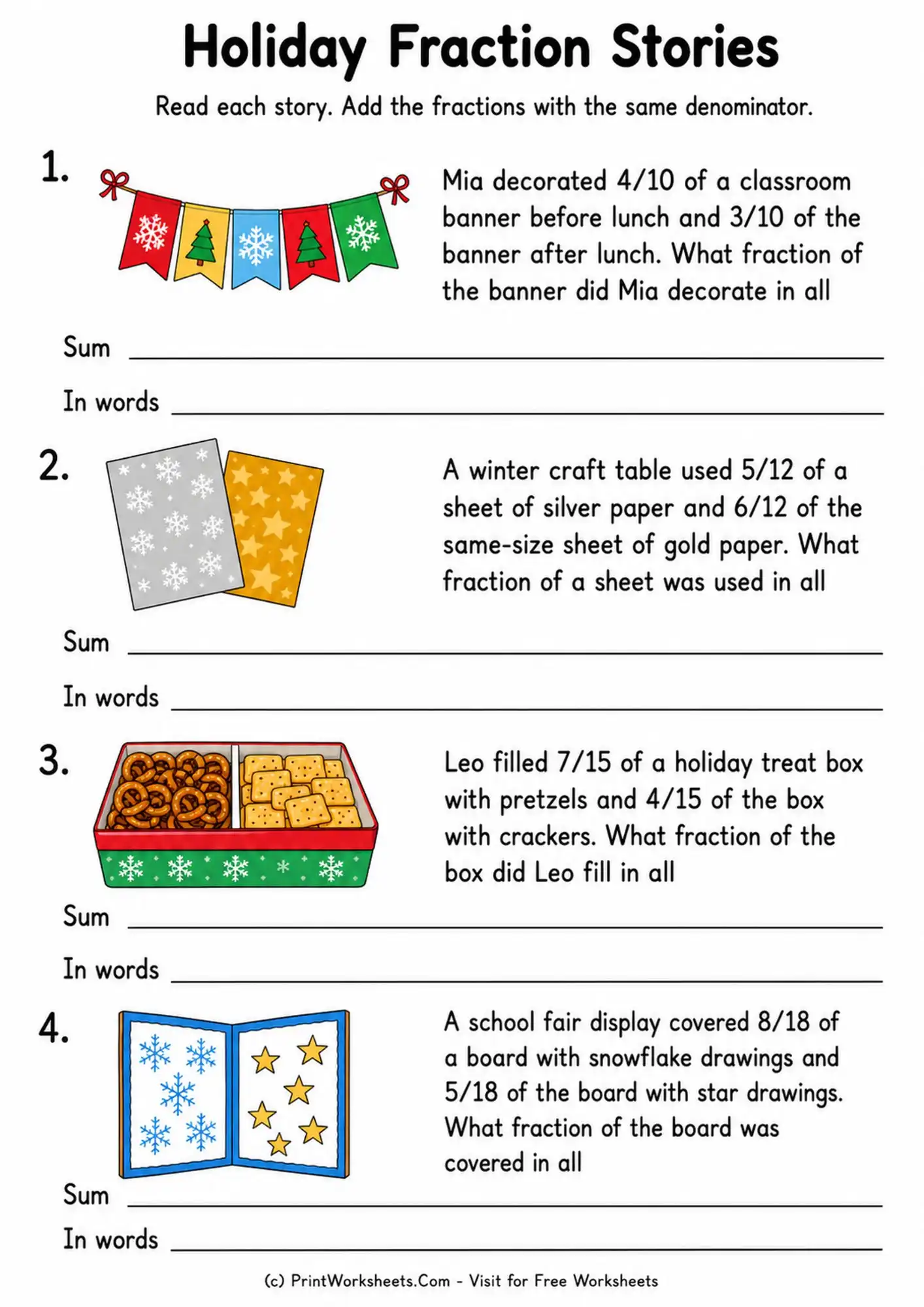
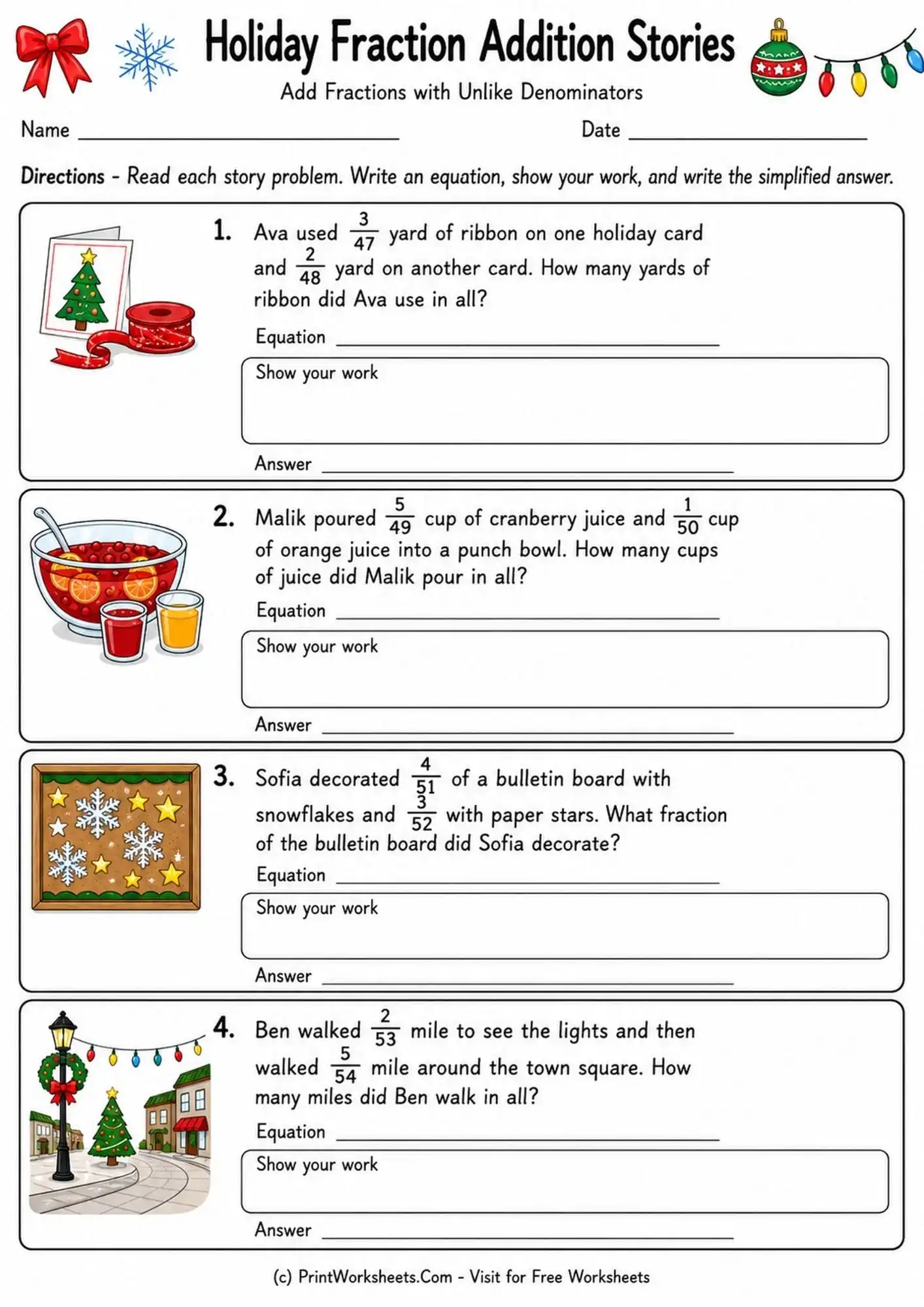
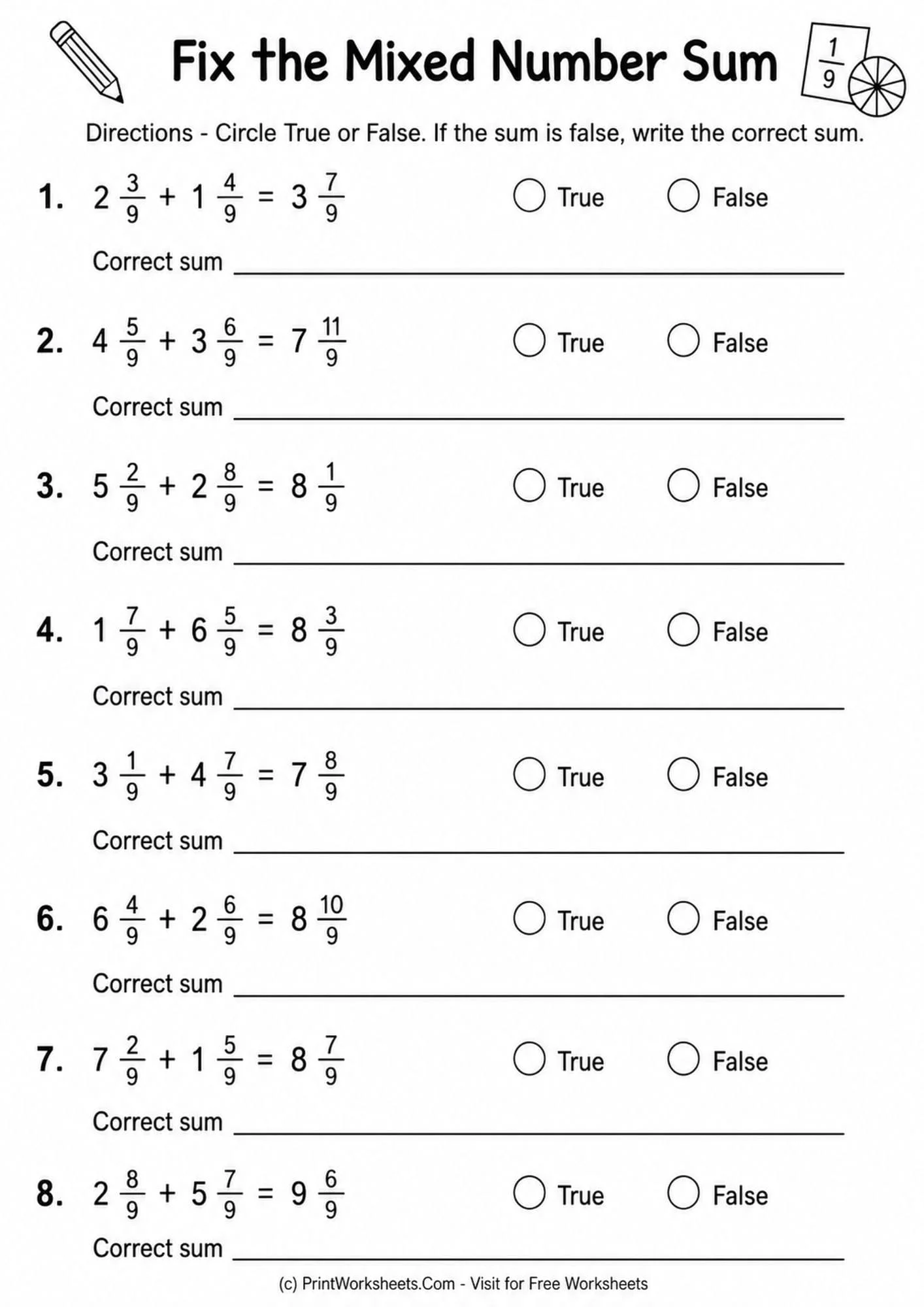
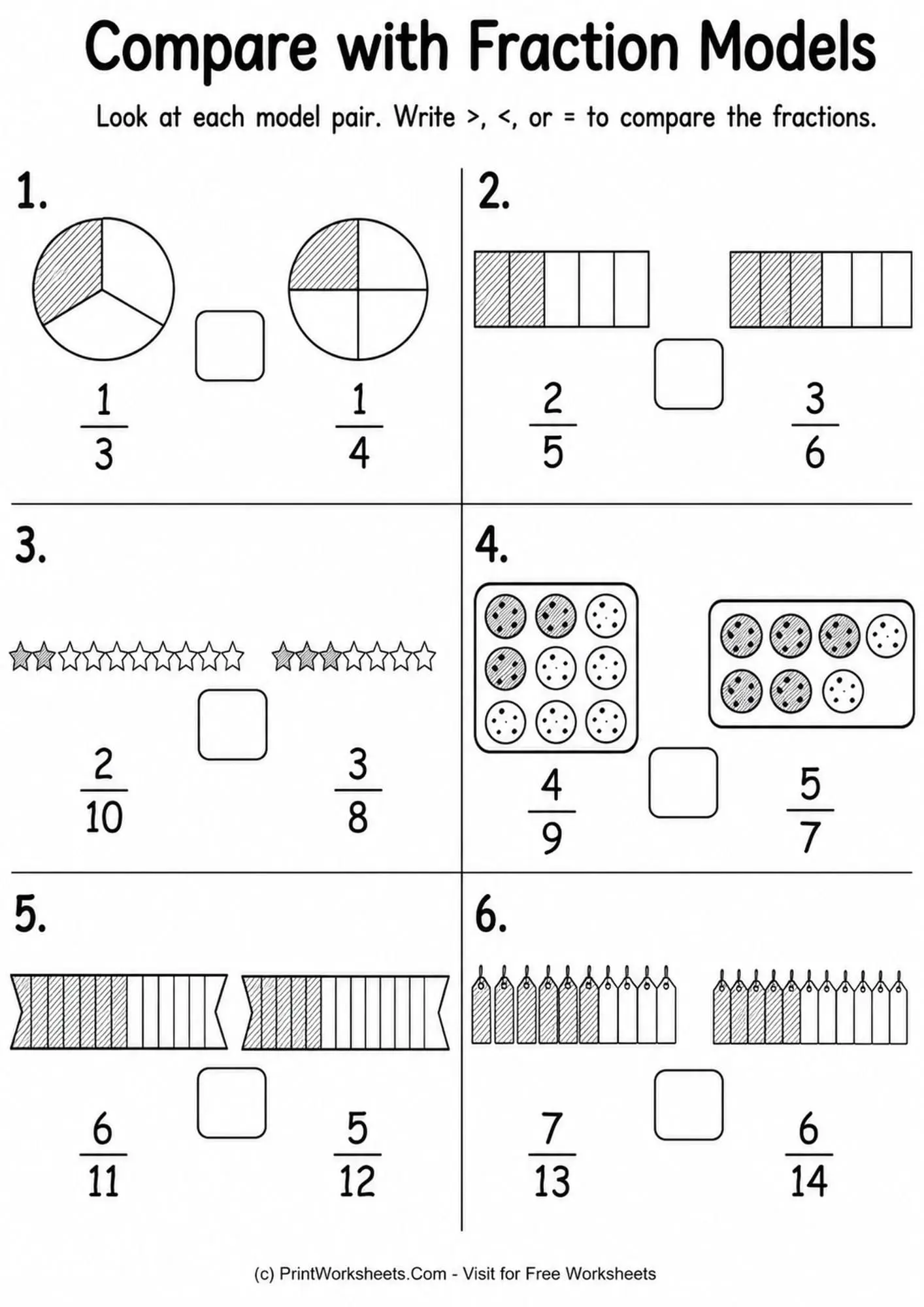
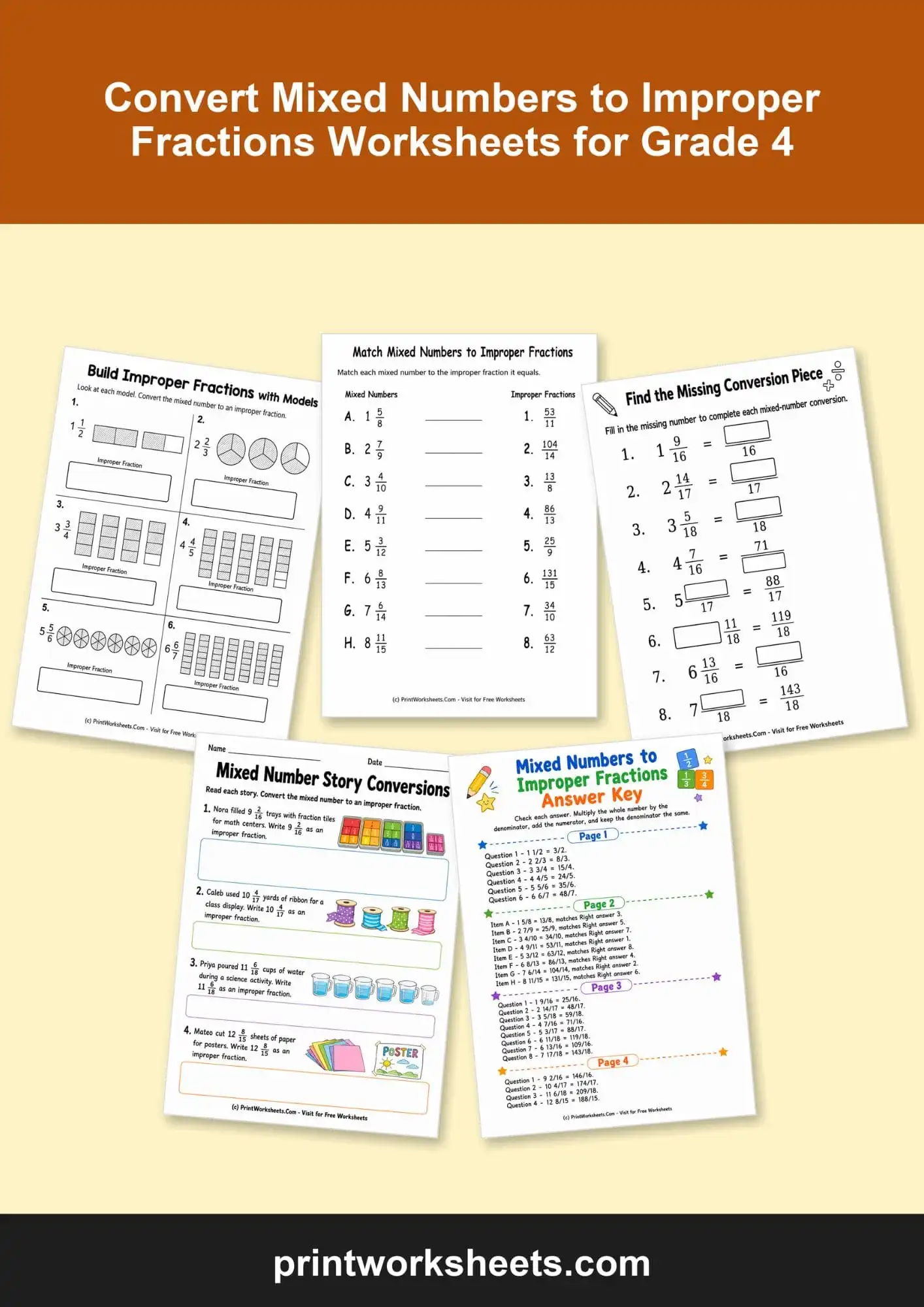
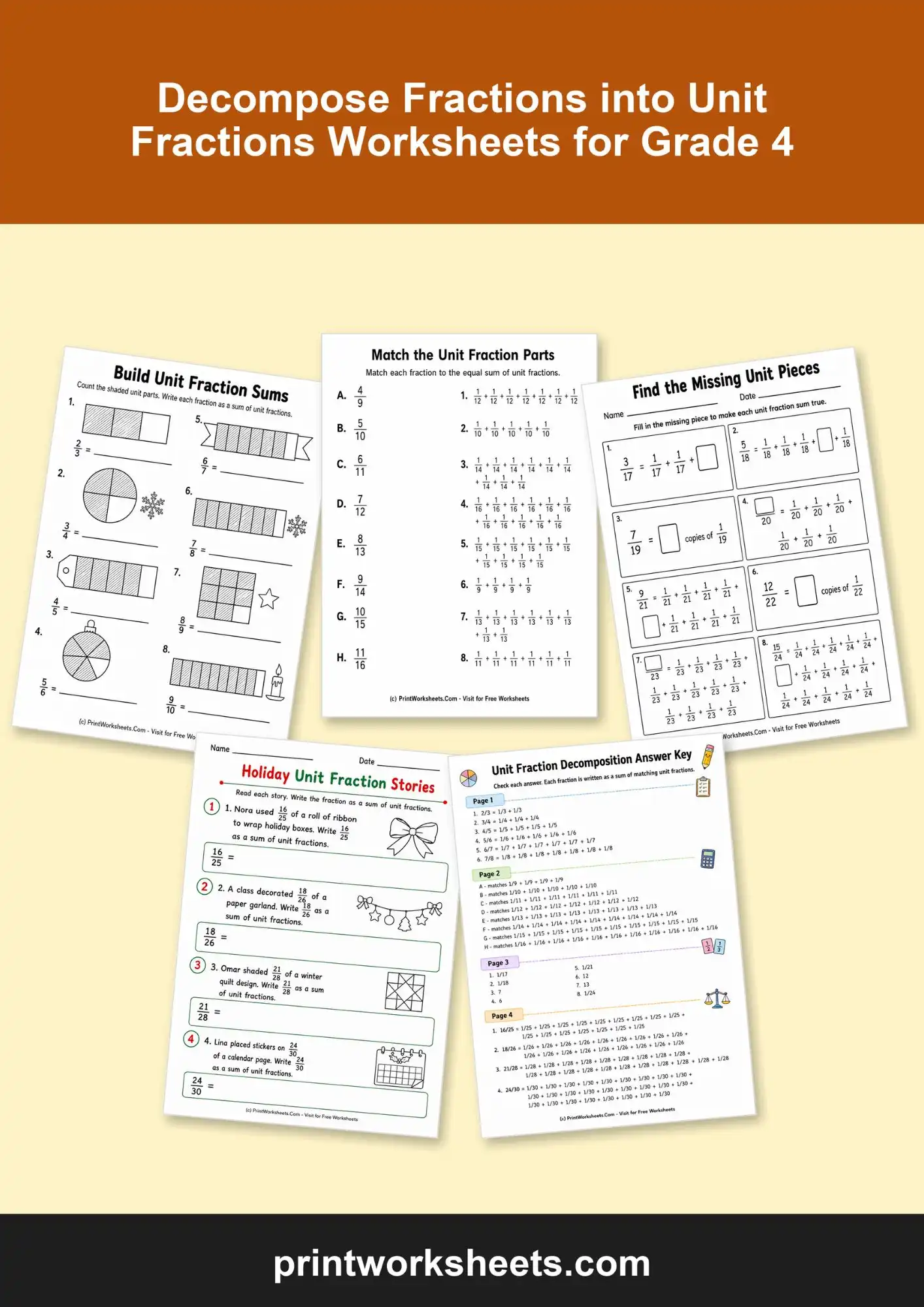
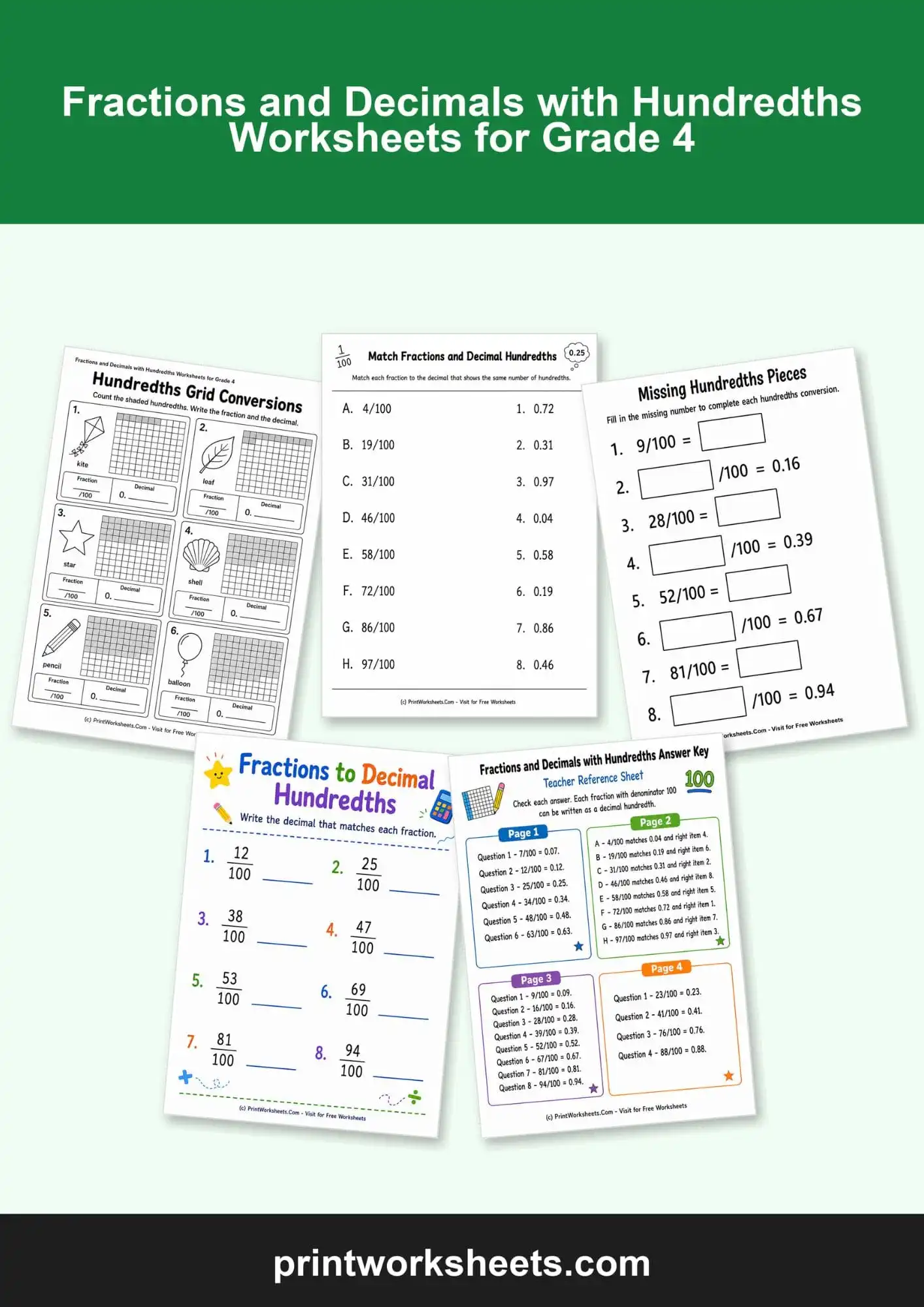
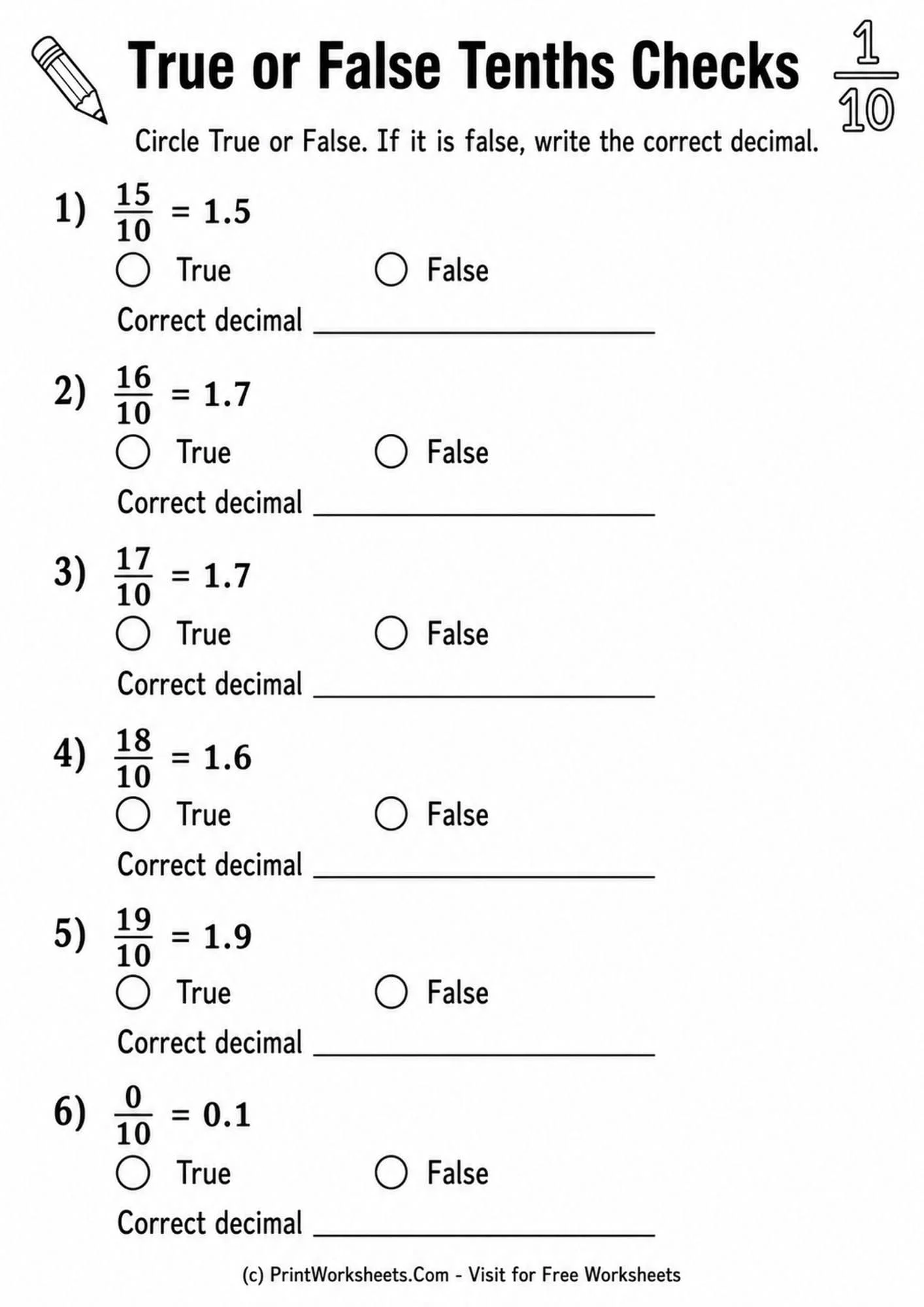
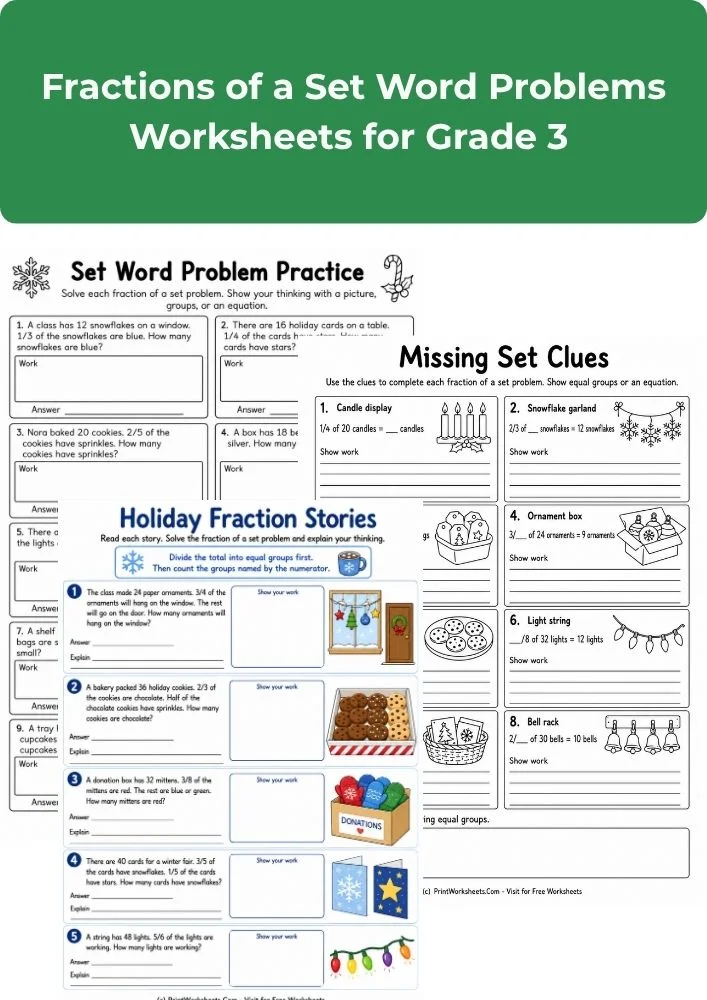
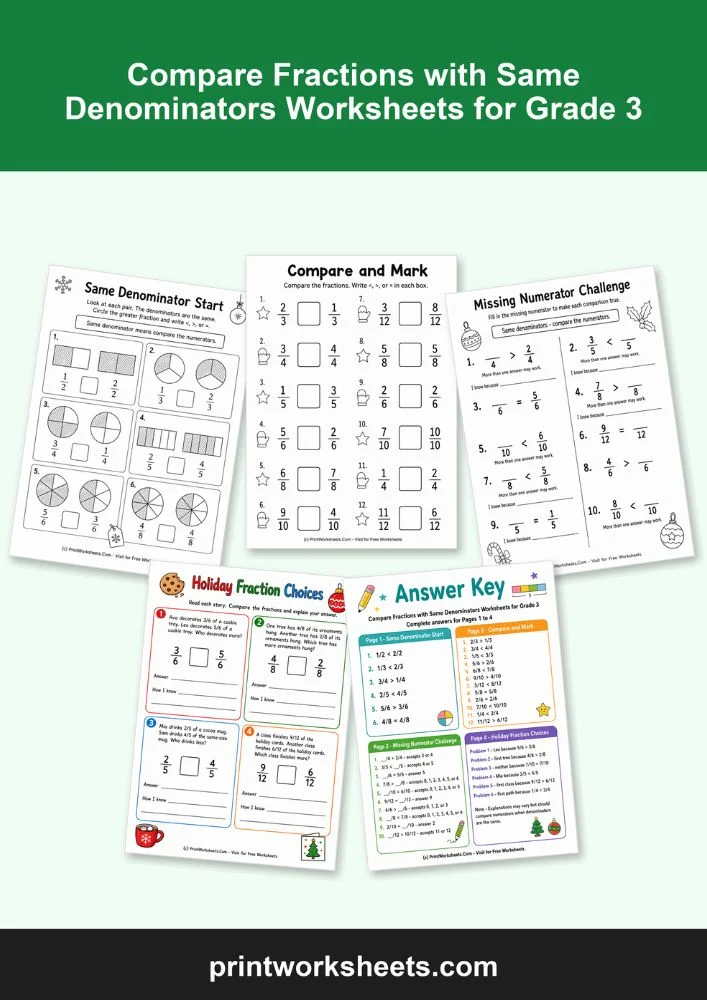
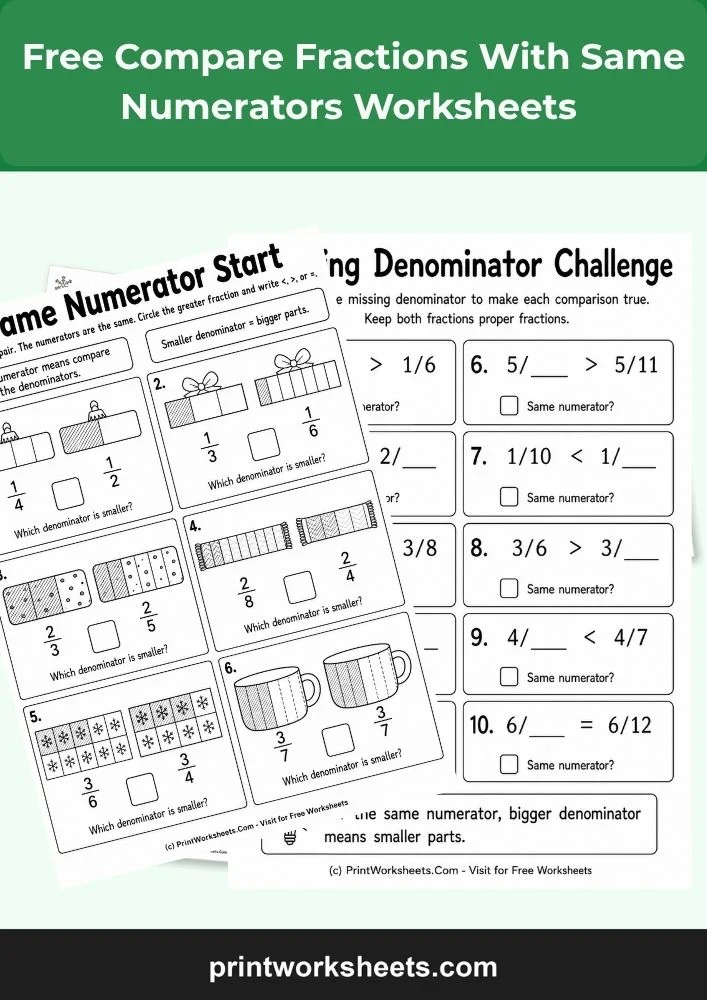
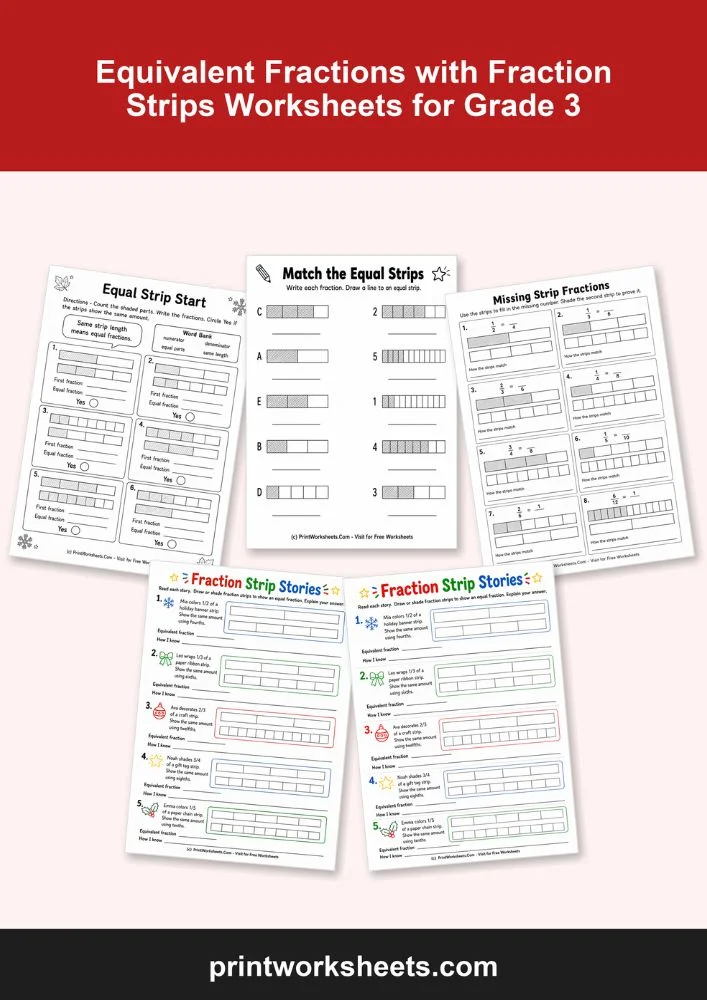
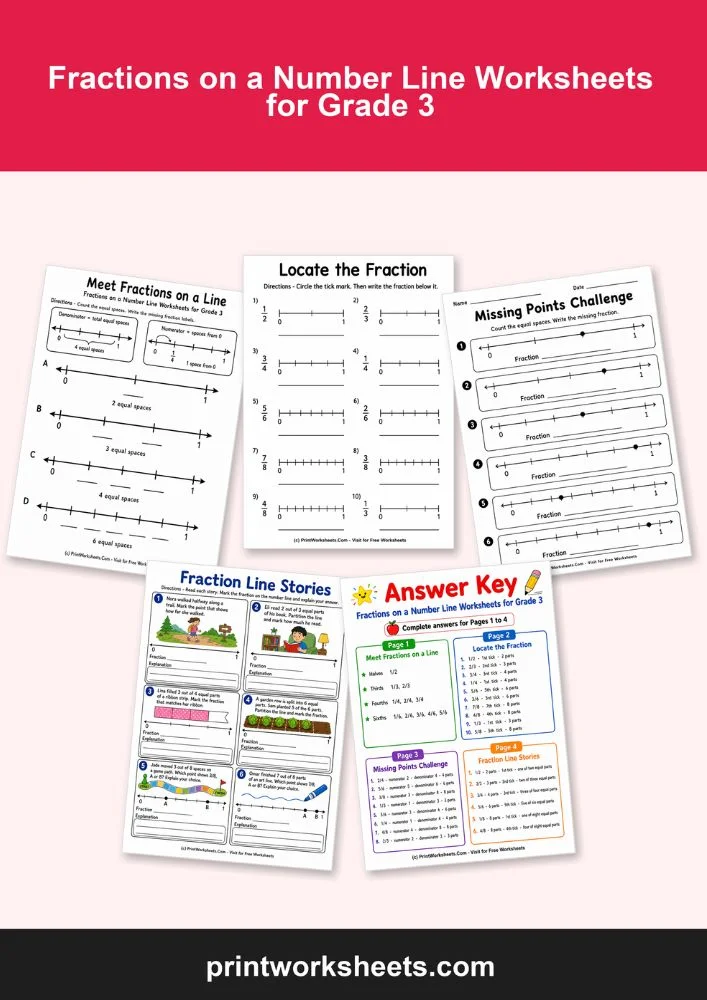
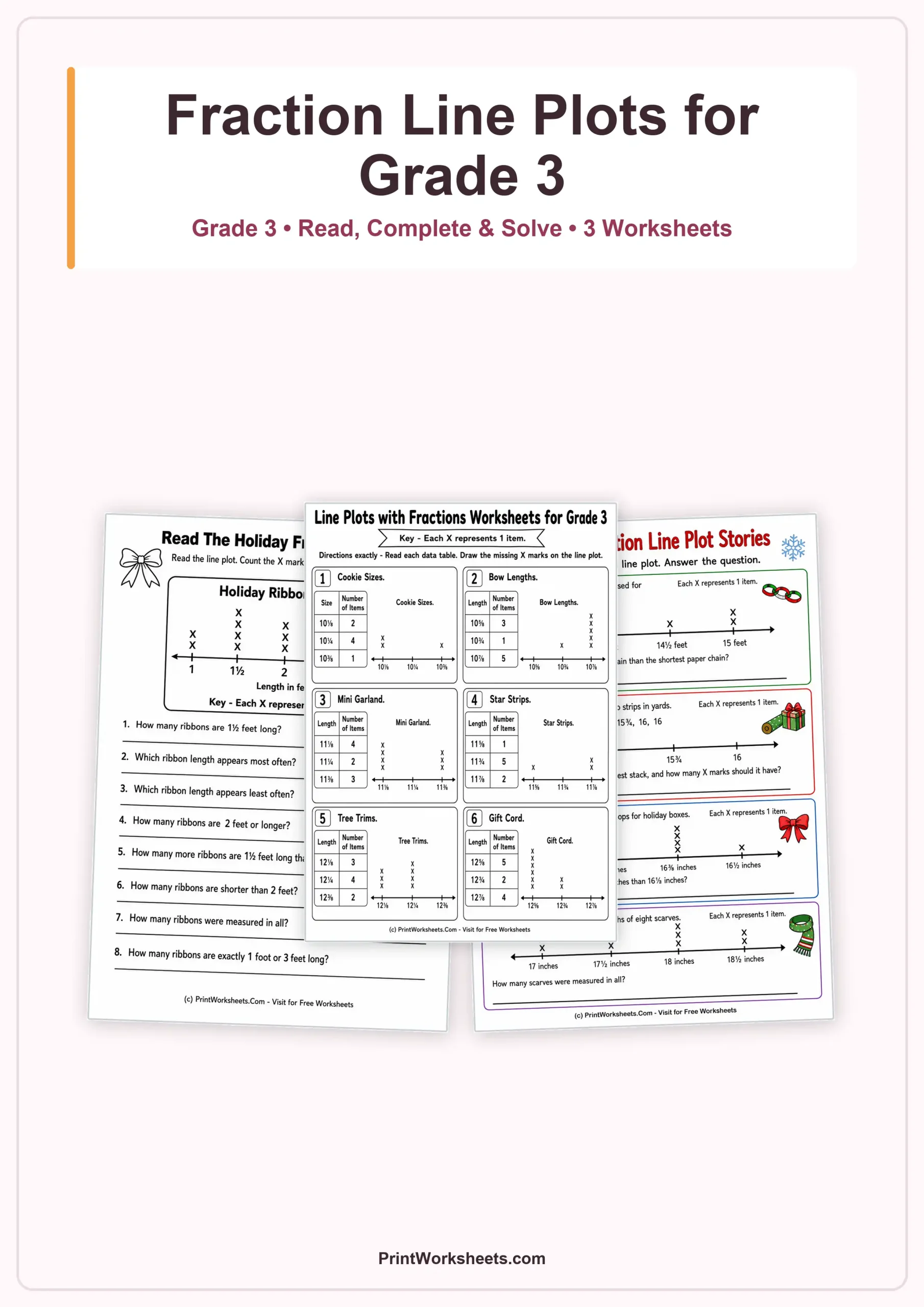
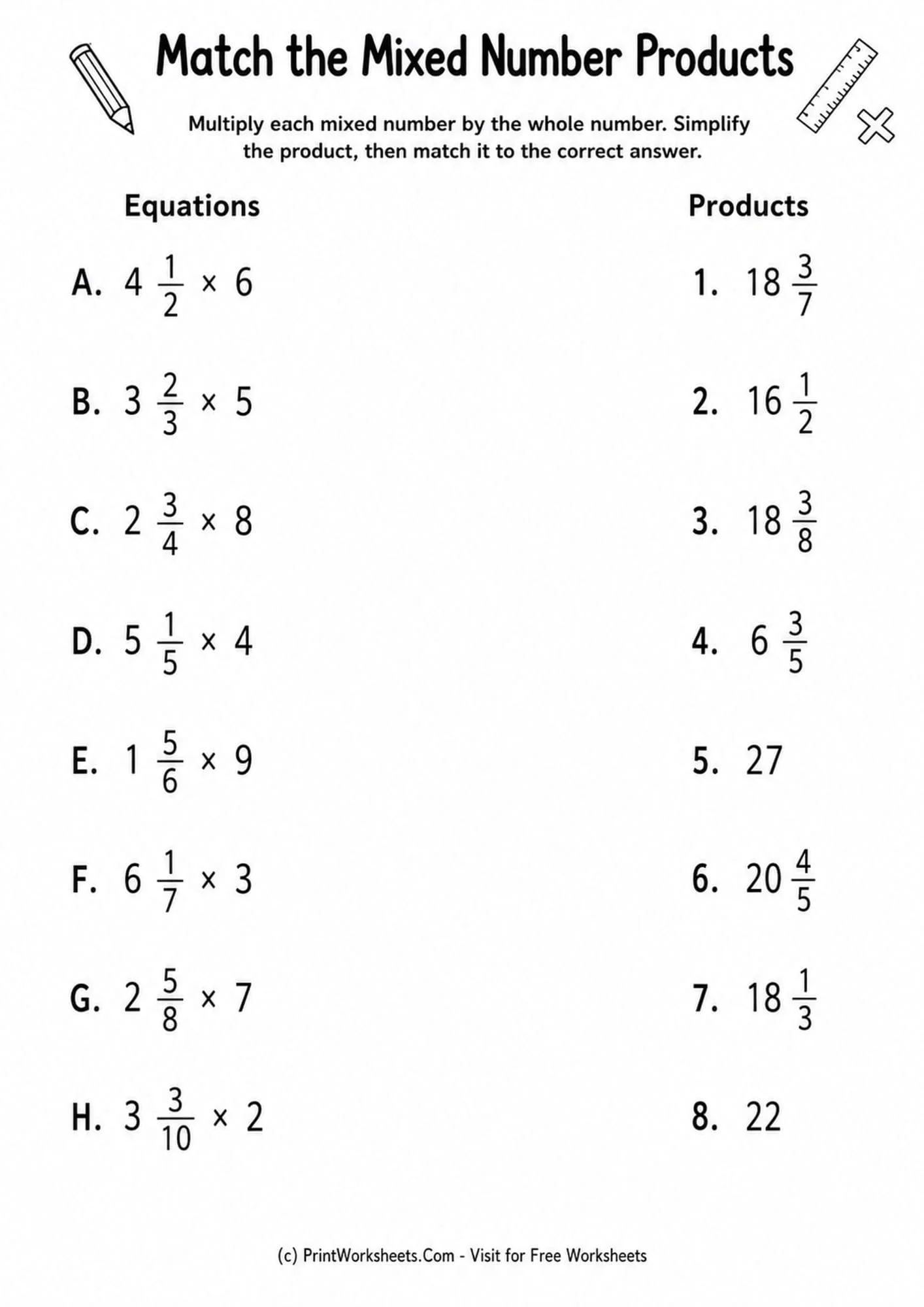
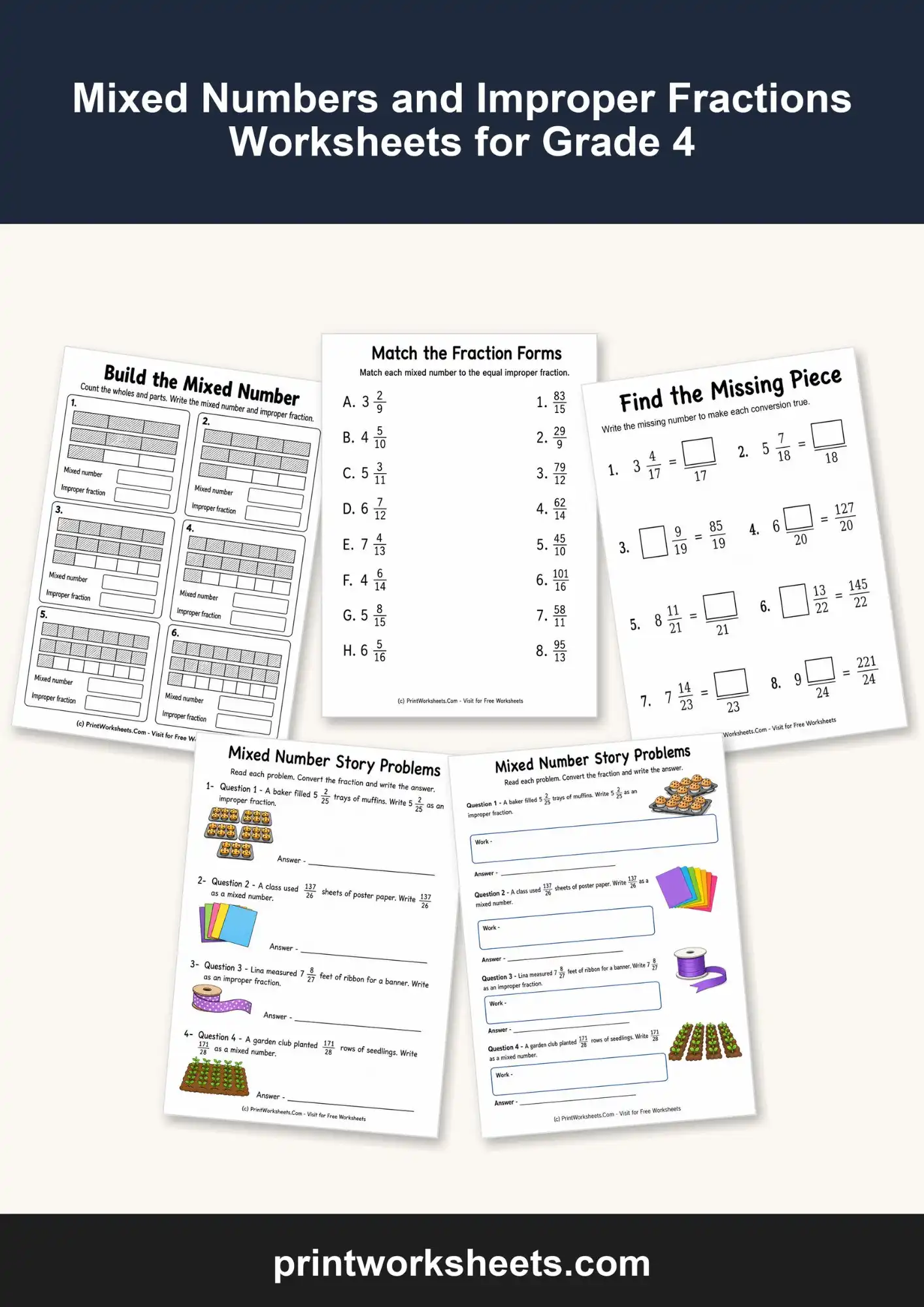
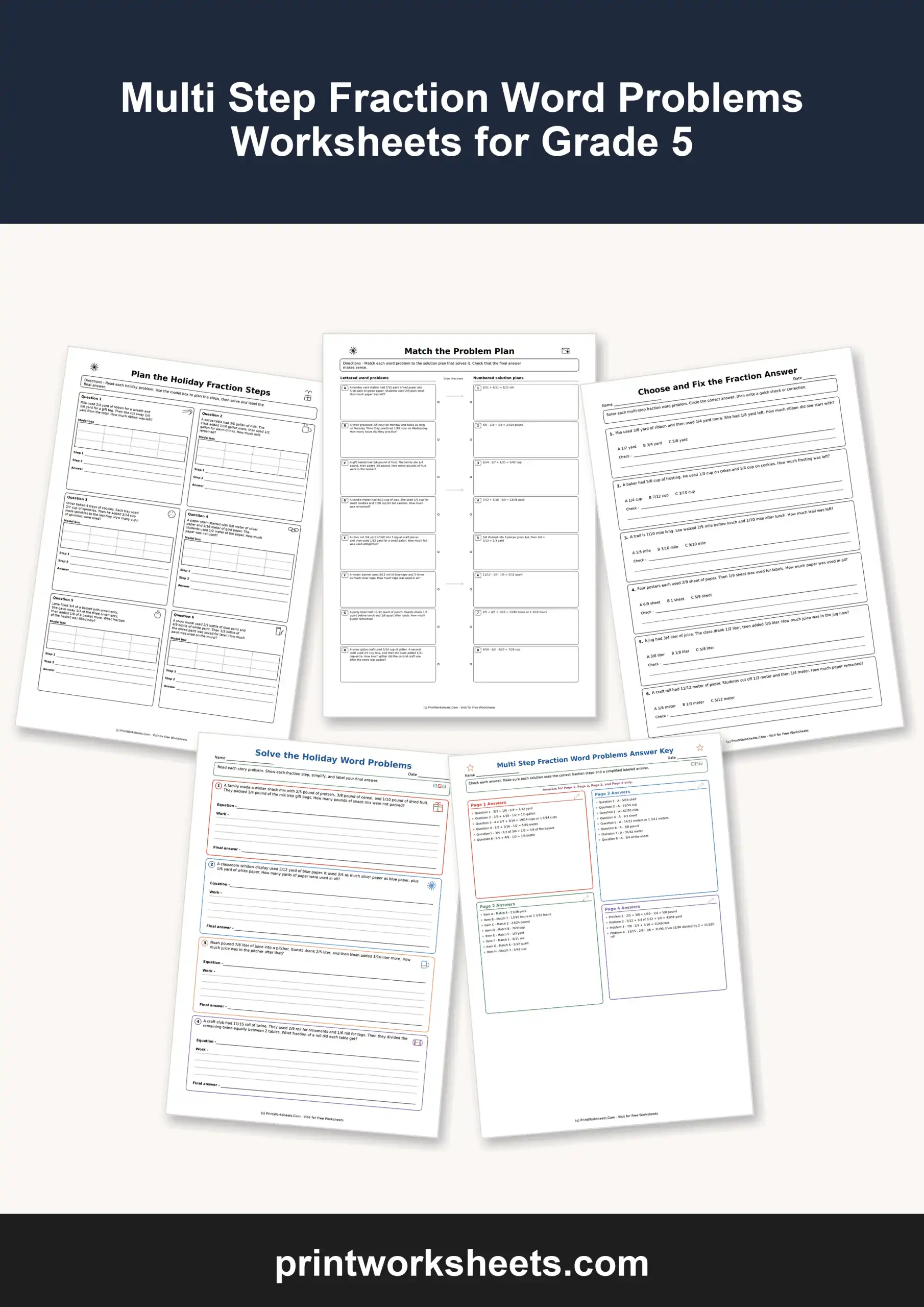
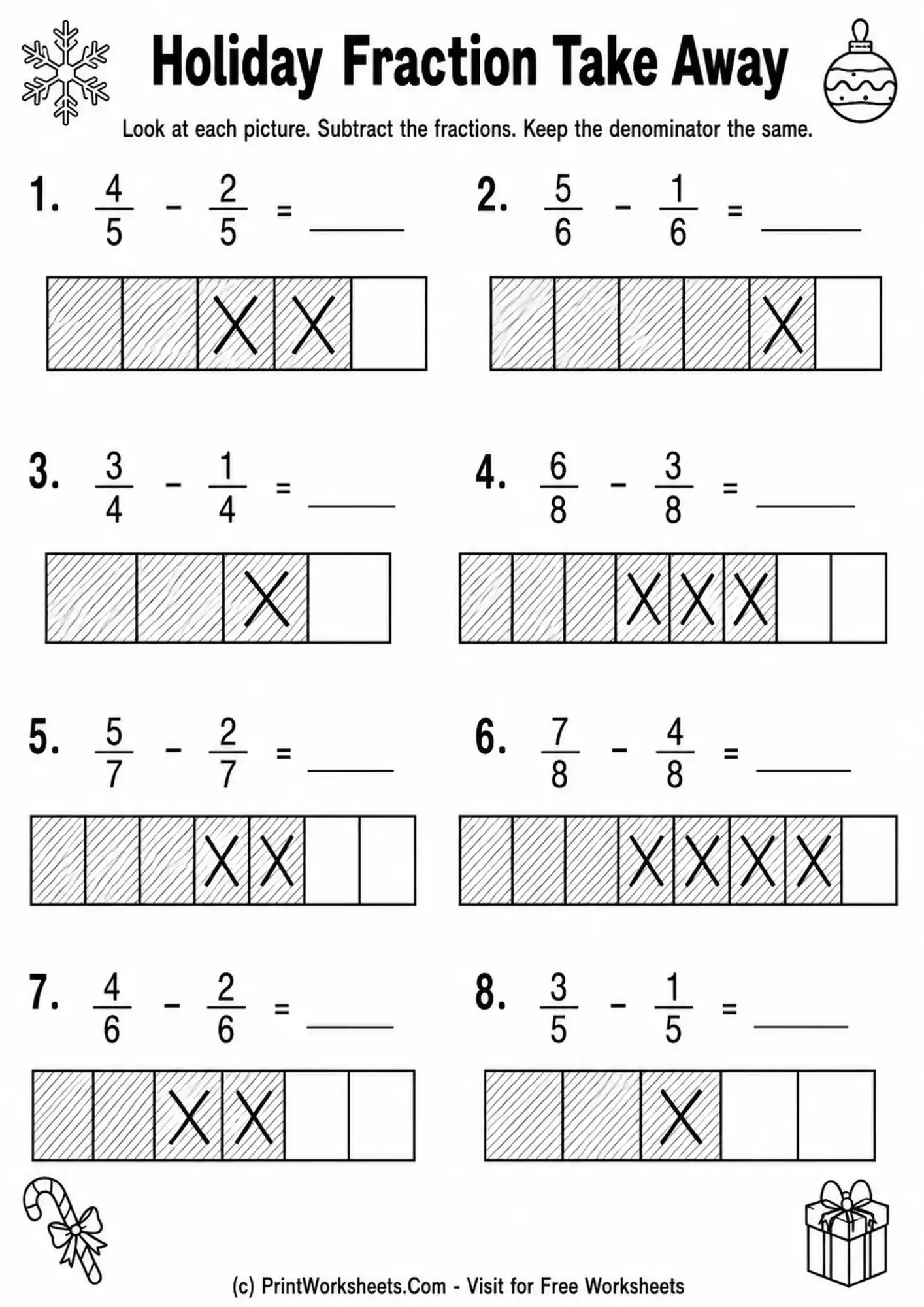
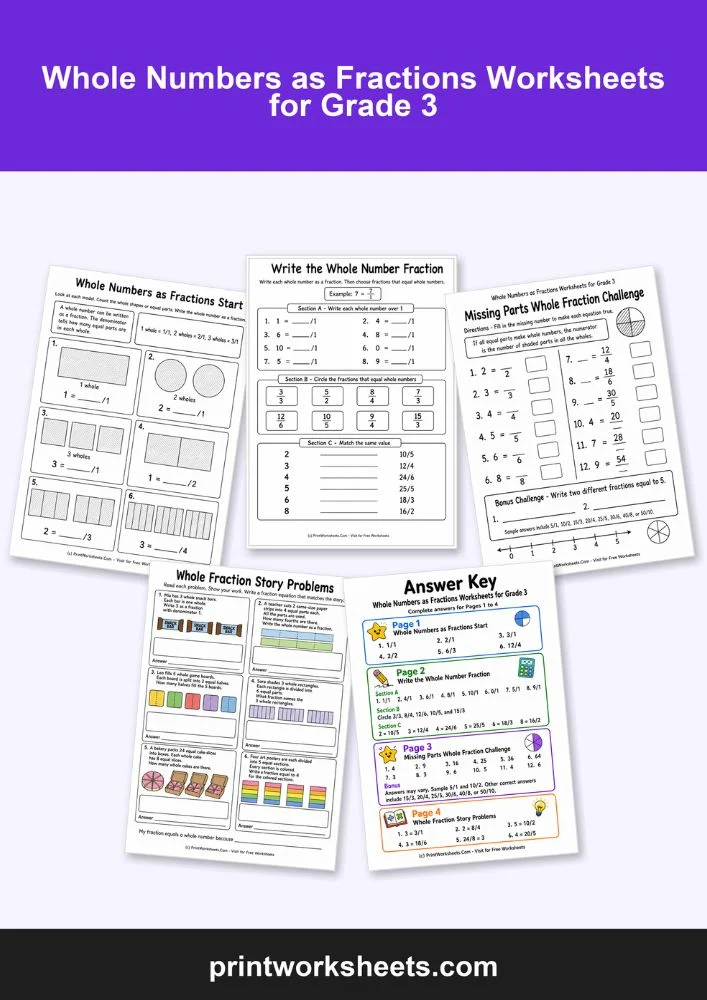
What are fractions worksheets? Fractions worksheets are comprehensive, printable mathematical resources engineered to help elementary and middle school students transition from whole-number arithmetic to complex rational number reasoning. Mathematics educators and homeschool parents utilize these highly structured printables to teach children how to visualize, partition, compare, and compute parts of a whole. By systematically engaging with these targeted math centers, students dismantle the psychological "whole-number bias" and learn to accurately manipulate numerators and denominators. Browse our complete library below to download free fractions worksheets directly from PrintWorksheets.Com, establishing rigorous, standards-aligned math stations in your classroom.
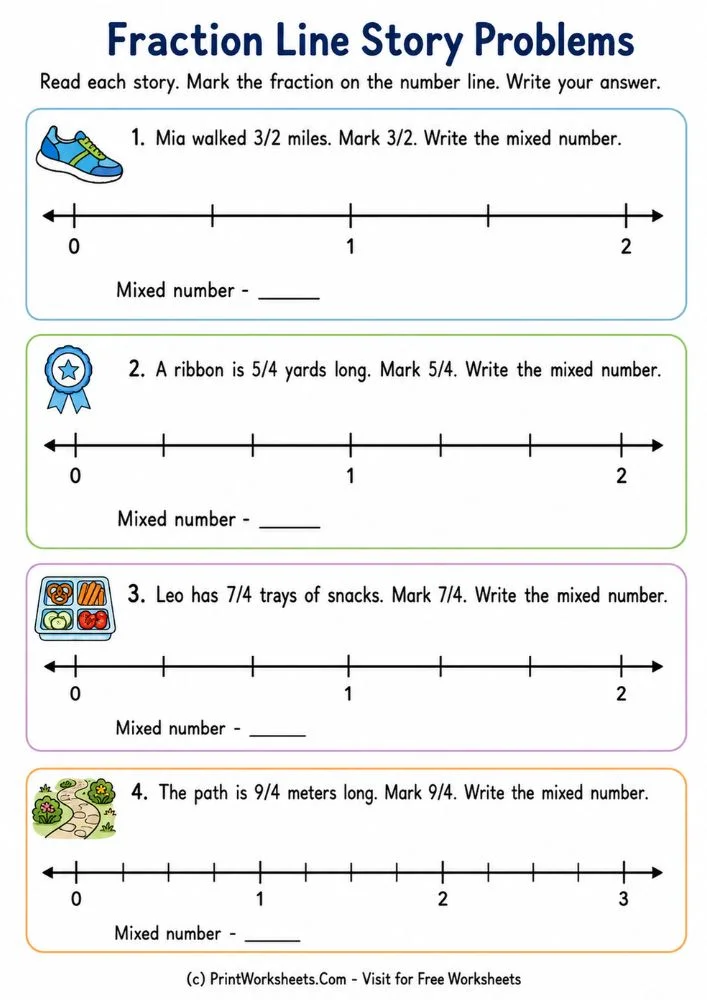
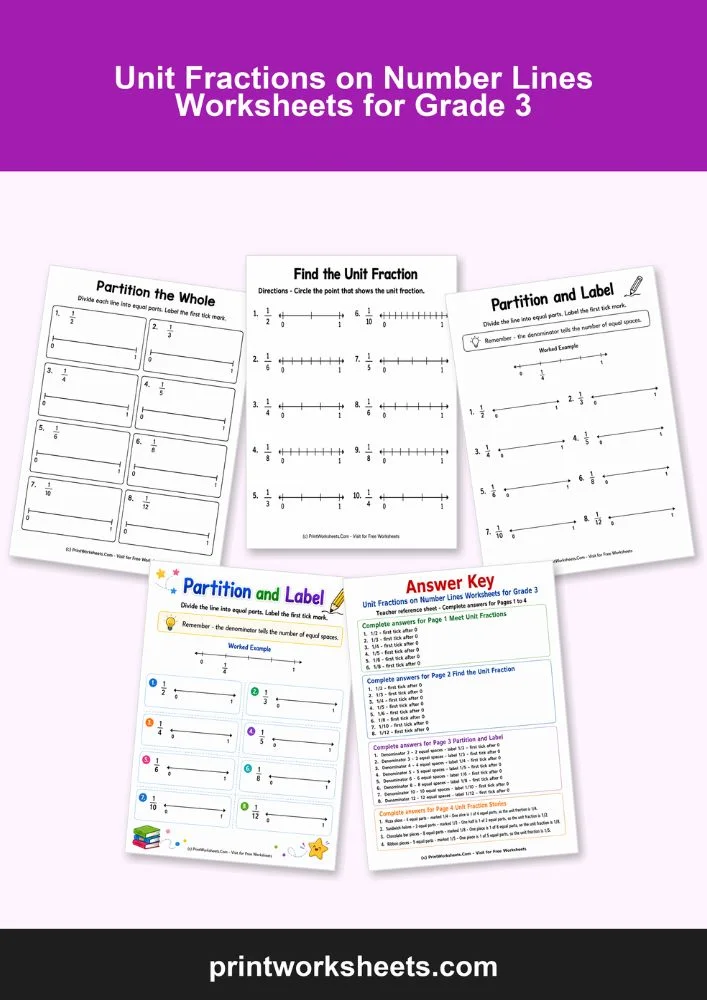
Mastering rational numbers requires students to interact with multiple mathematical representations. A robust fractional curriculum seamlessly transitions learners from physical area models (like shaded pie charts) to continuous linear models. For instance, once students understand basic shading, they must immediately progress to locating unit fractions on number lines to develop advanced spatial measurement skills.
The Progression of Fractional Fluency
Teaching fractions is not a singular event; it is a multi-year cognitive progression. Our categorized printables are explicitly designed to guide students through this complex developmental sequence, ensuring no conceptual gaps remain before moving to algebraic operations.
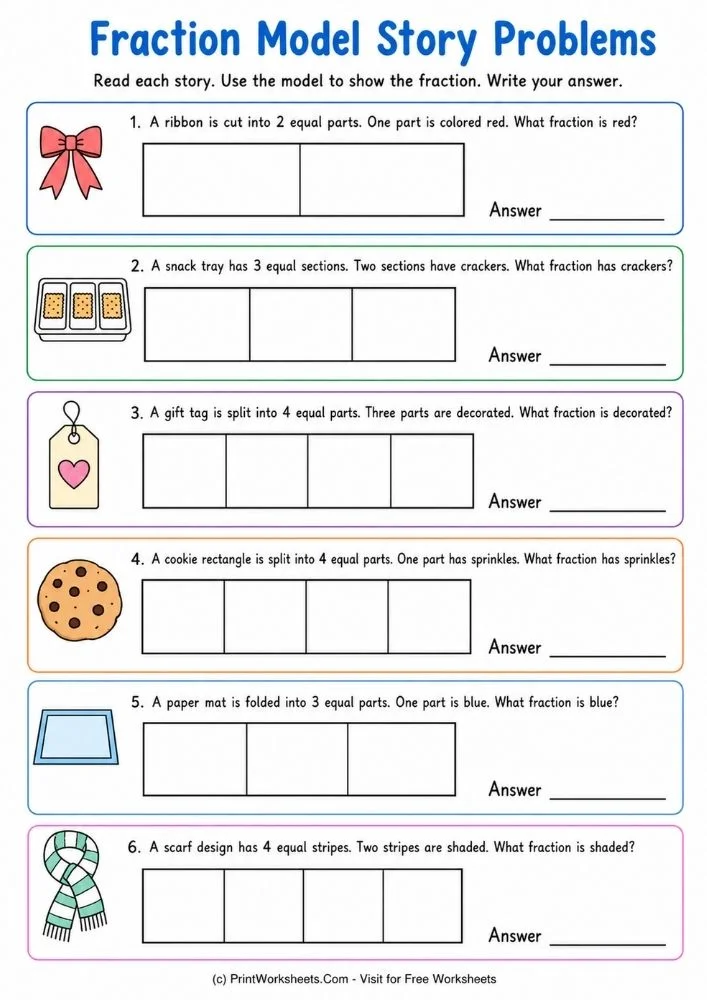
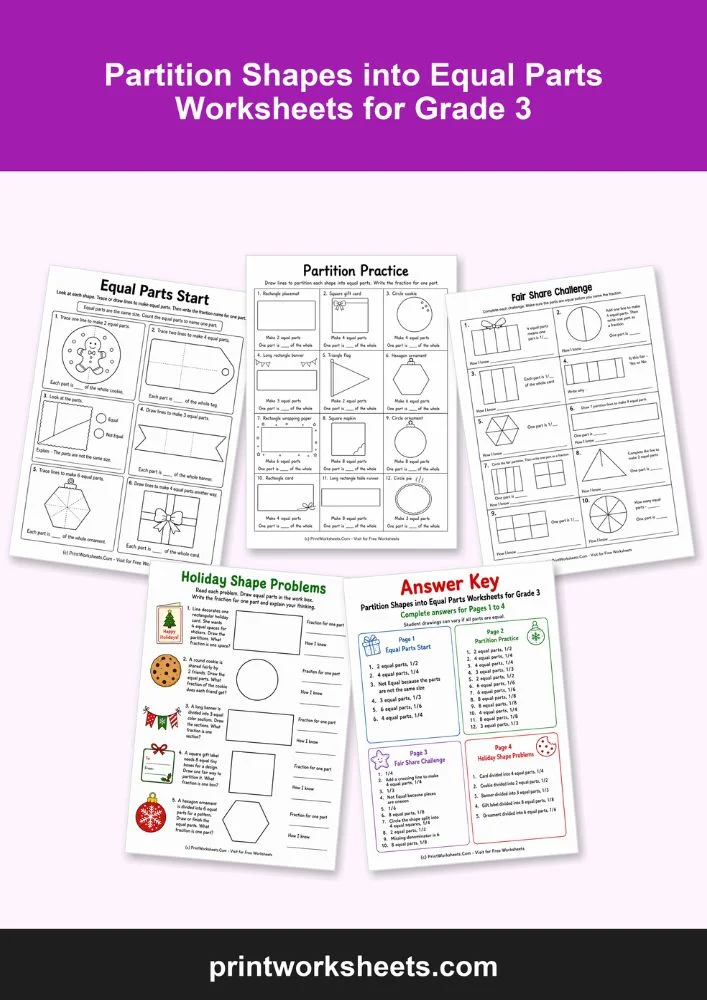
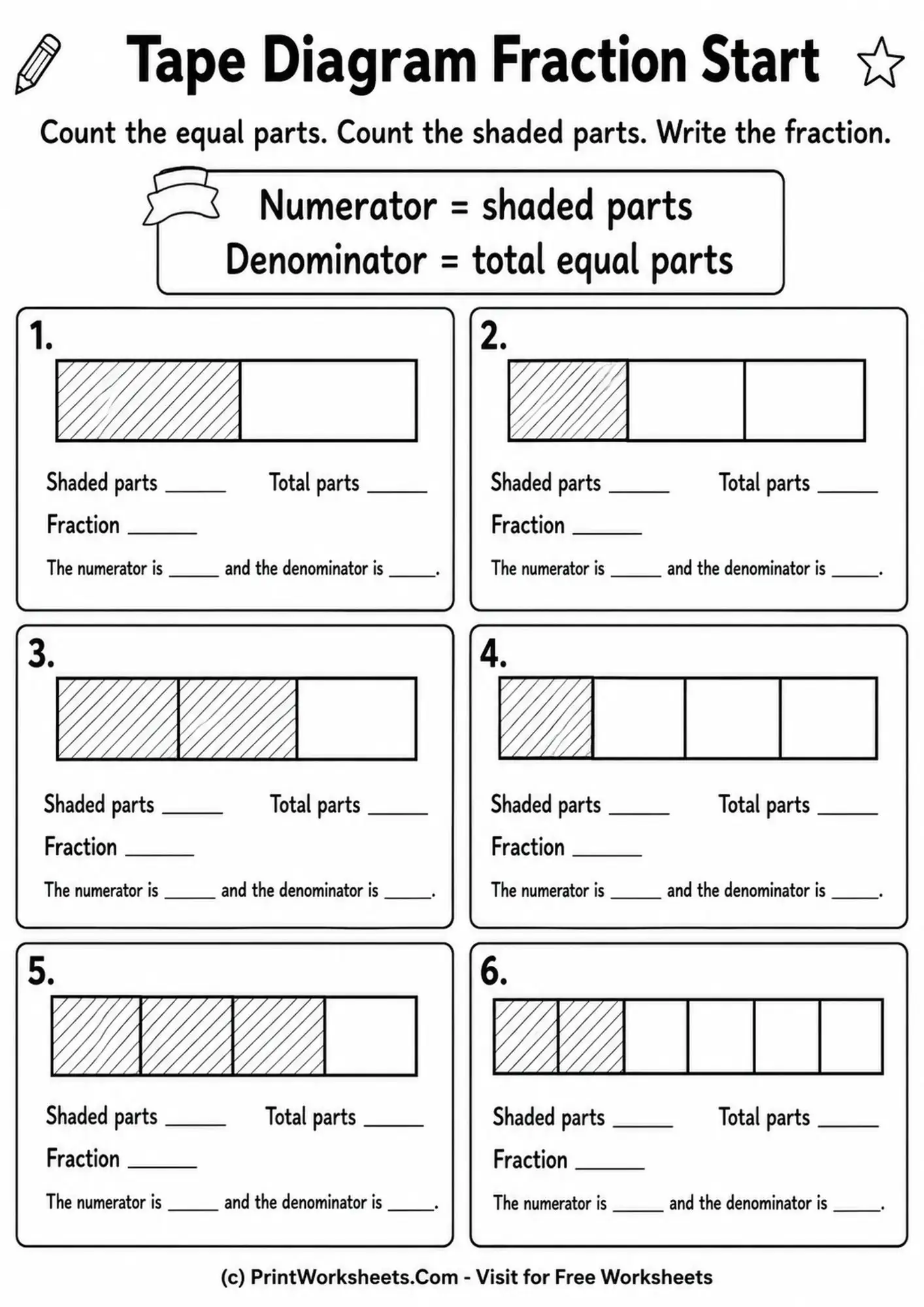
- Visualizing Parts of a Whole: Foundational worksheets focus on area and set models. Students learn to identify the denominator as the total number of equal pieces and the numerator as the specific pieces being counted or shaded.
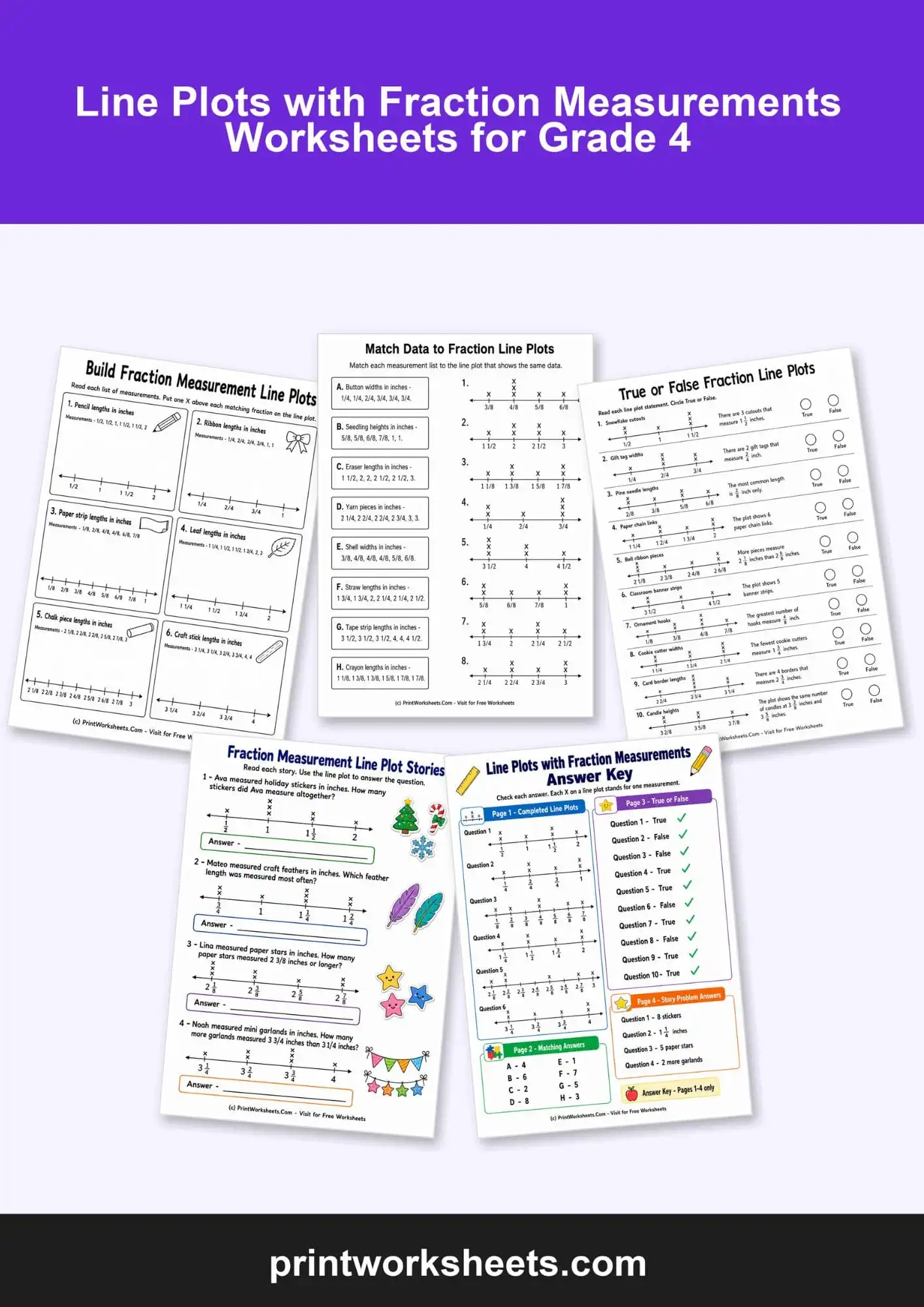
- Spatial Reasoning and Number Lines: Intermediate resources force students to view fractions as exact numerical locations. Instead of counting discrete objects, students partition empty horizontal axes to measure continuous distance between zero and one.
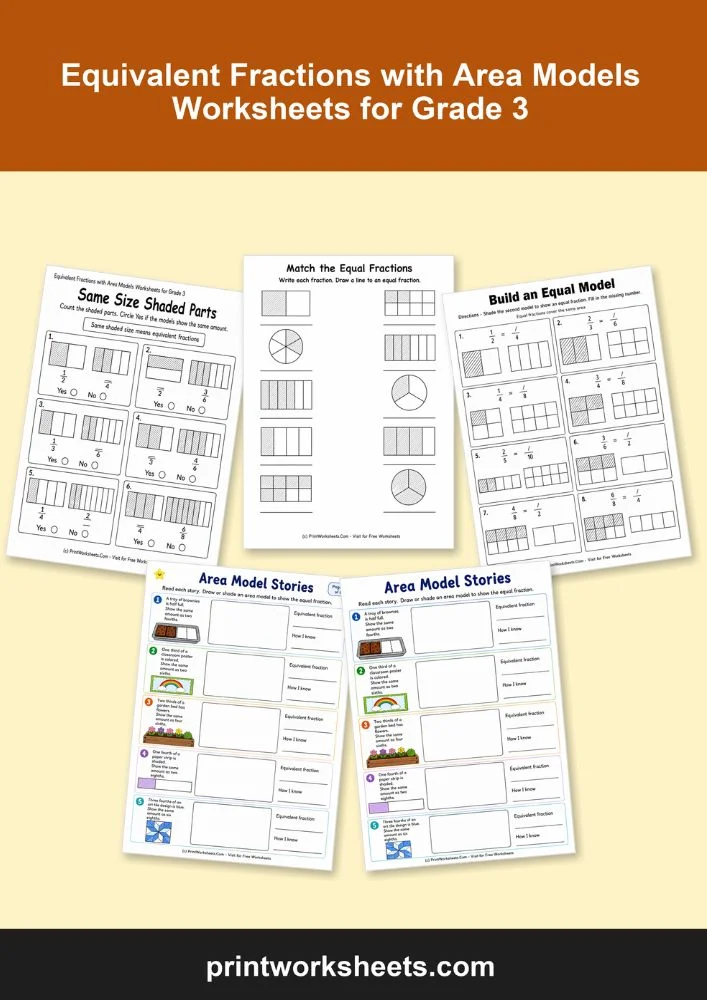
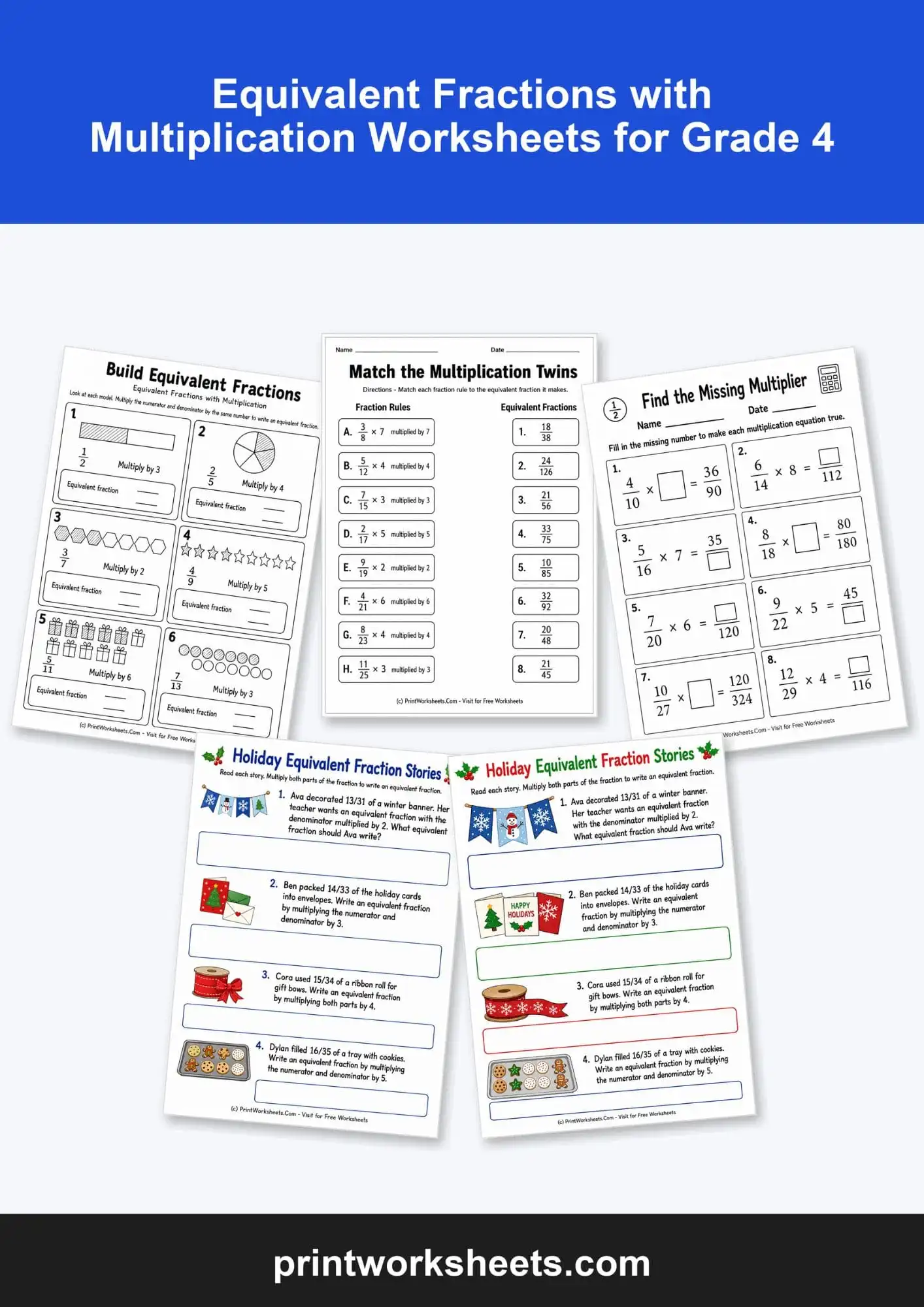
- Equivalent Fractions: Advanced graphic organizers introduce the concept of mathematical proportion. Students use visual grids and multiplication rules to prove that different numerators and denominators (like 1/2 and 2/4) occupy the exact same spatial footprint.
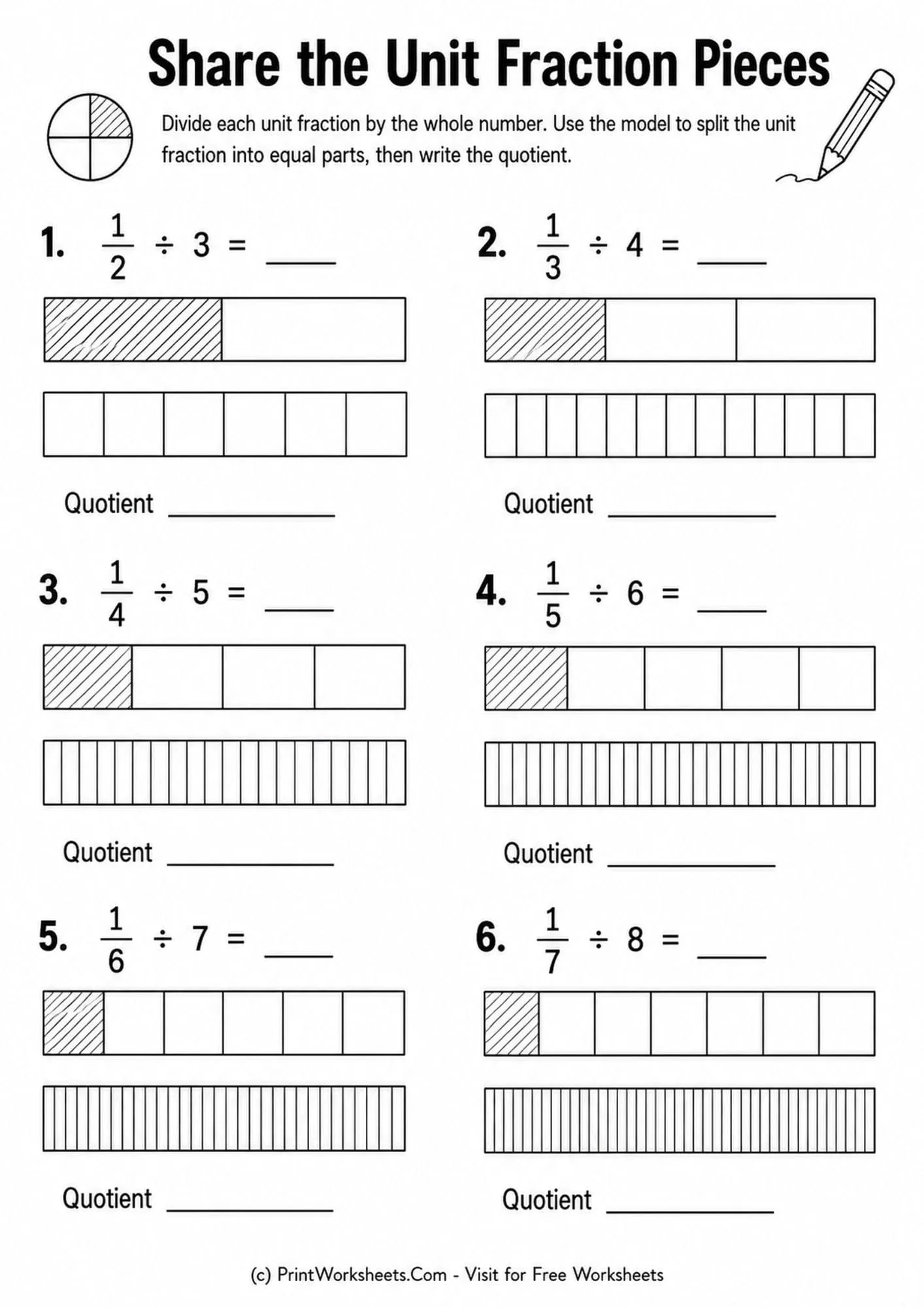
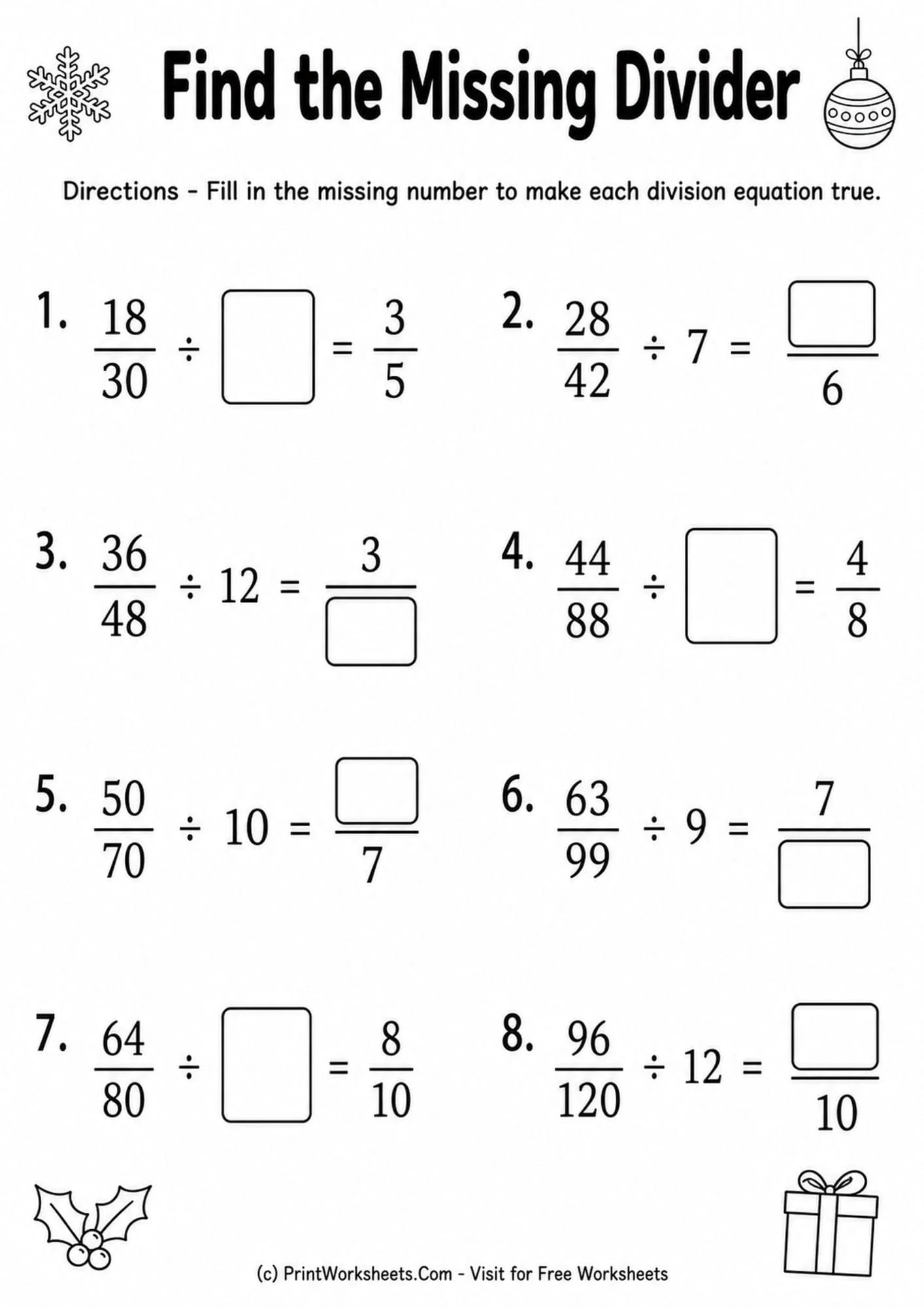
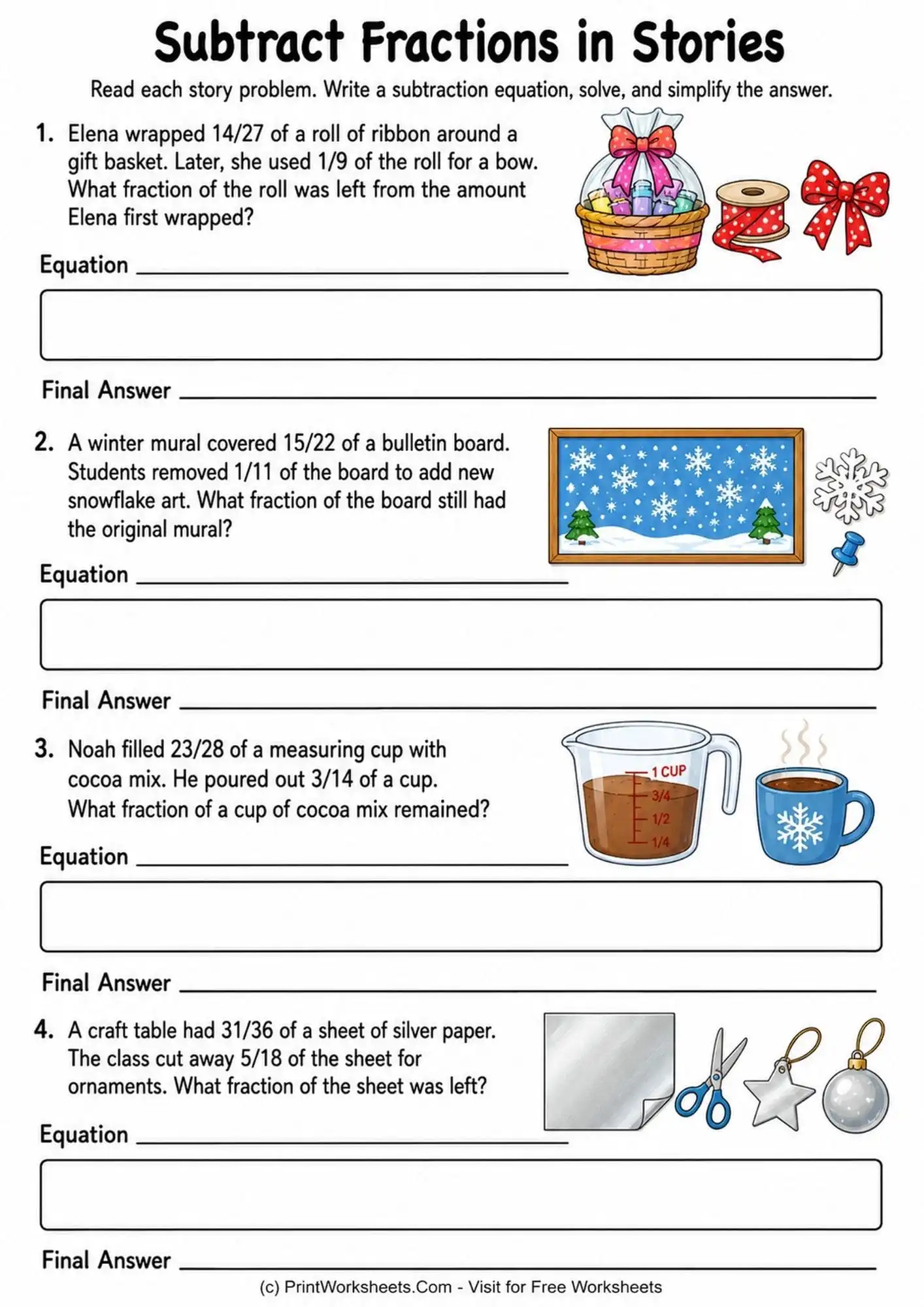
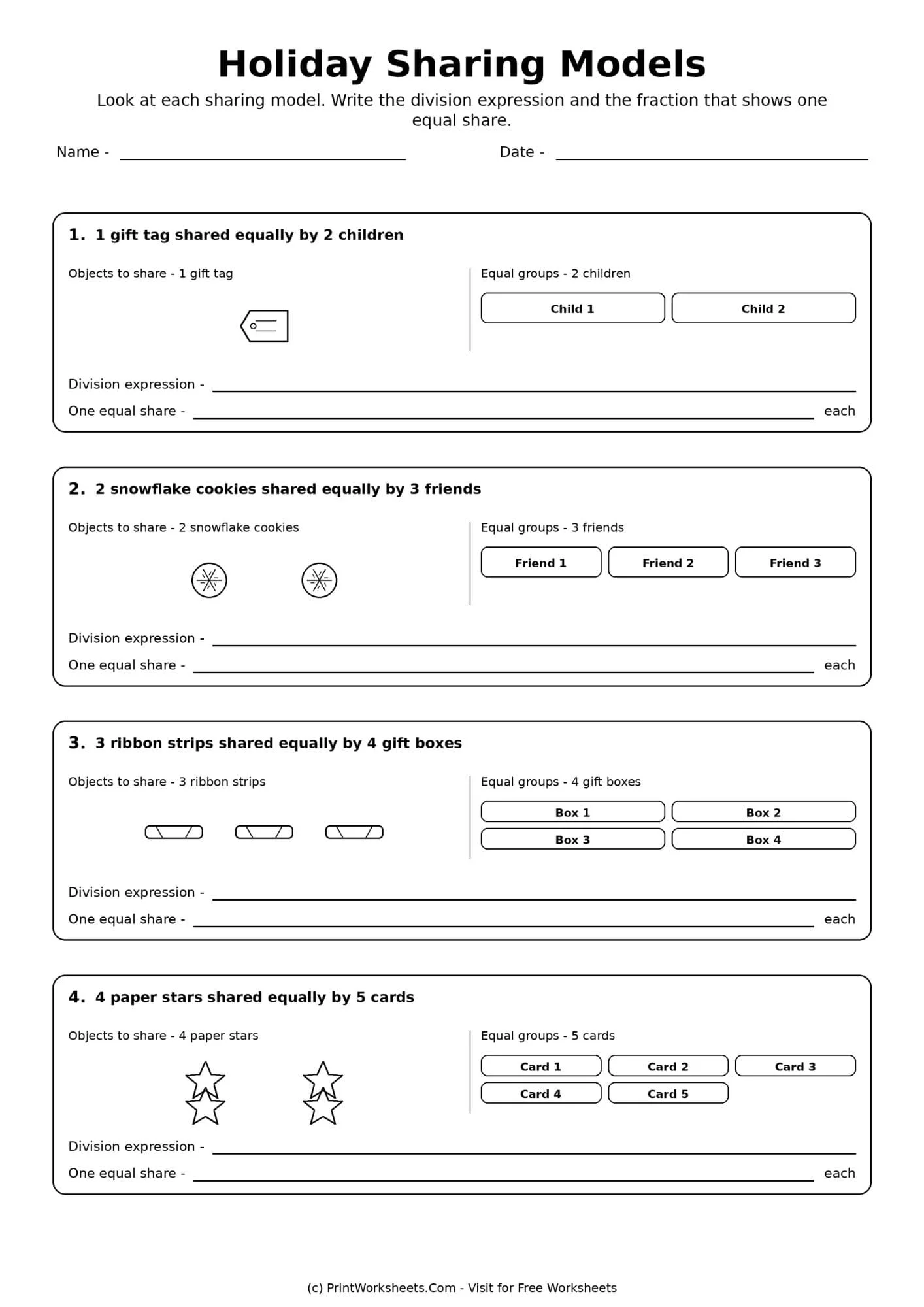
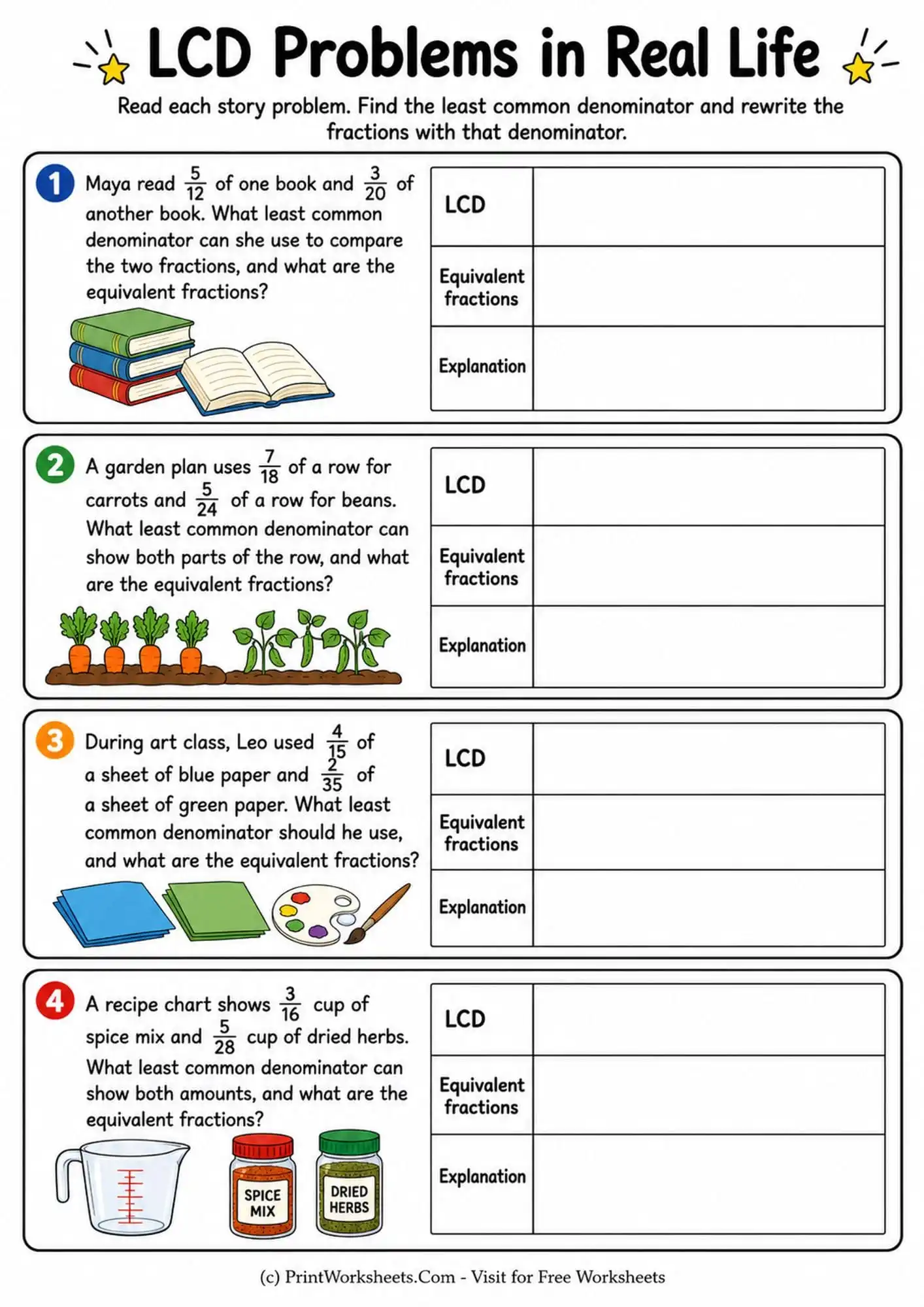
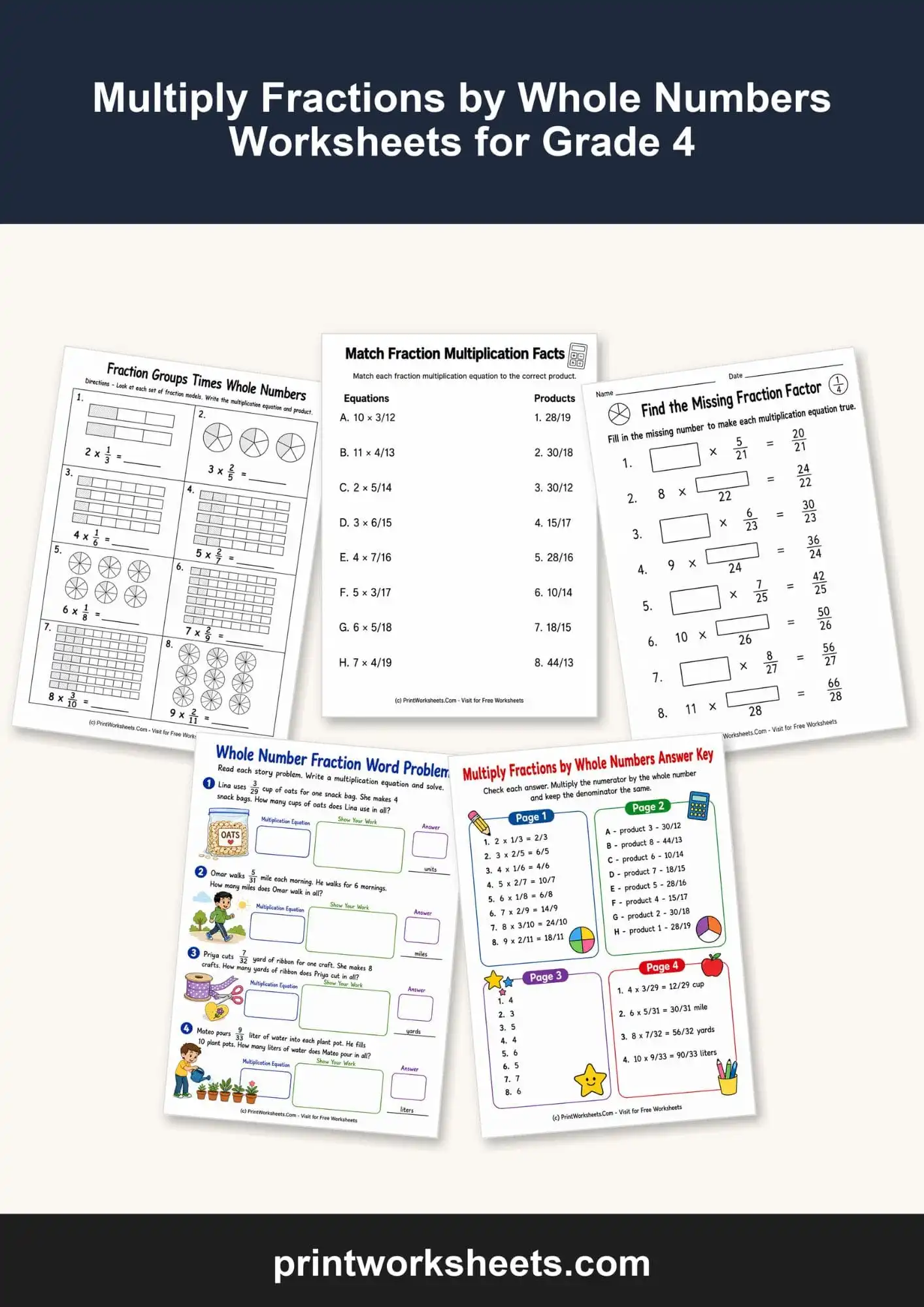
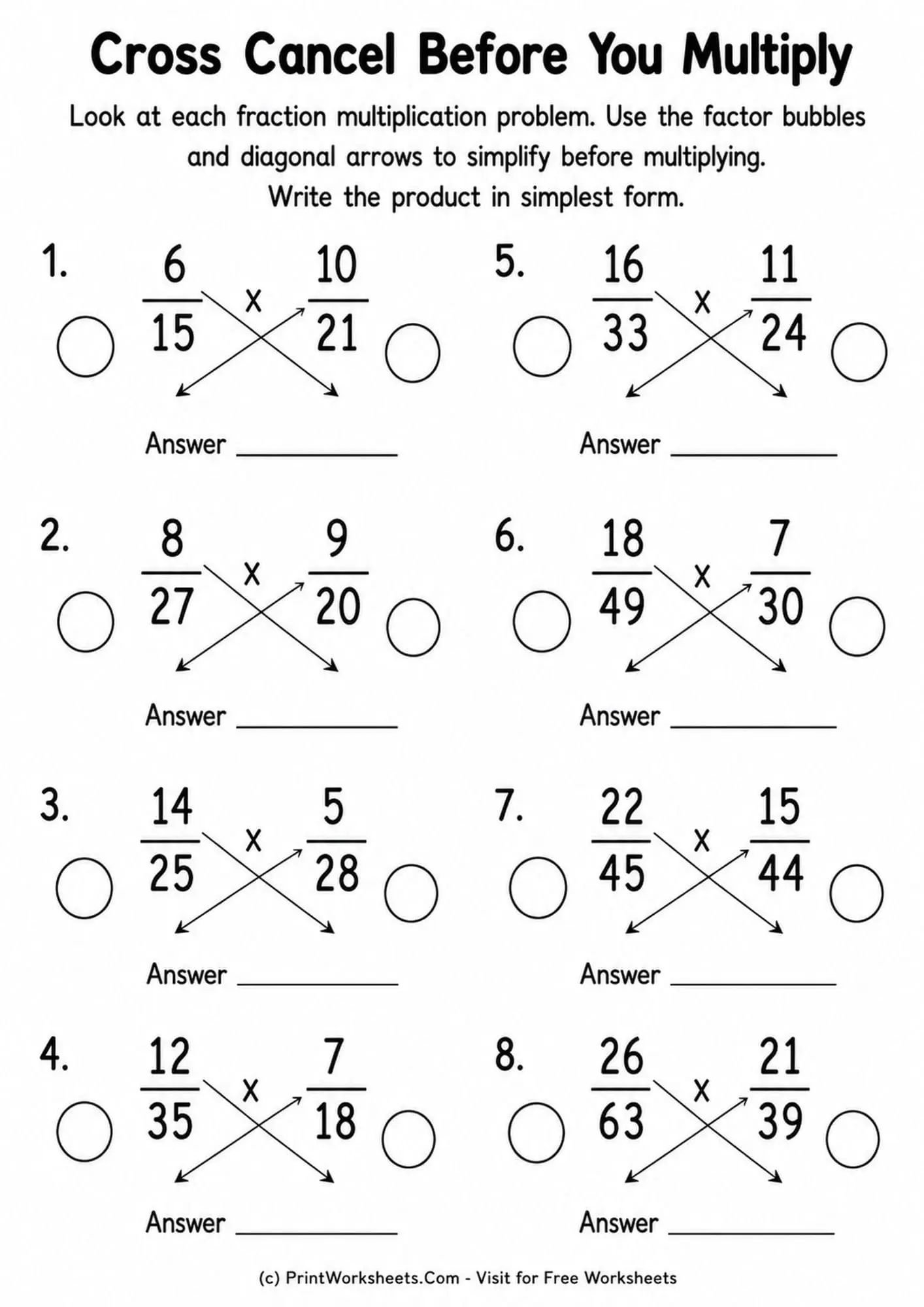
- Fractional Operations: Culminating arithmetic worksheets guide students through the procedural algorithms of adding, subtracting, multiplying, and dividing rational numbers, beginning with like denominators and advancing to finding common multiples.
Overcoming the Whole-Number Bias
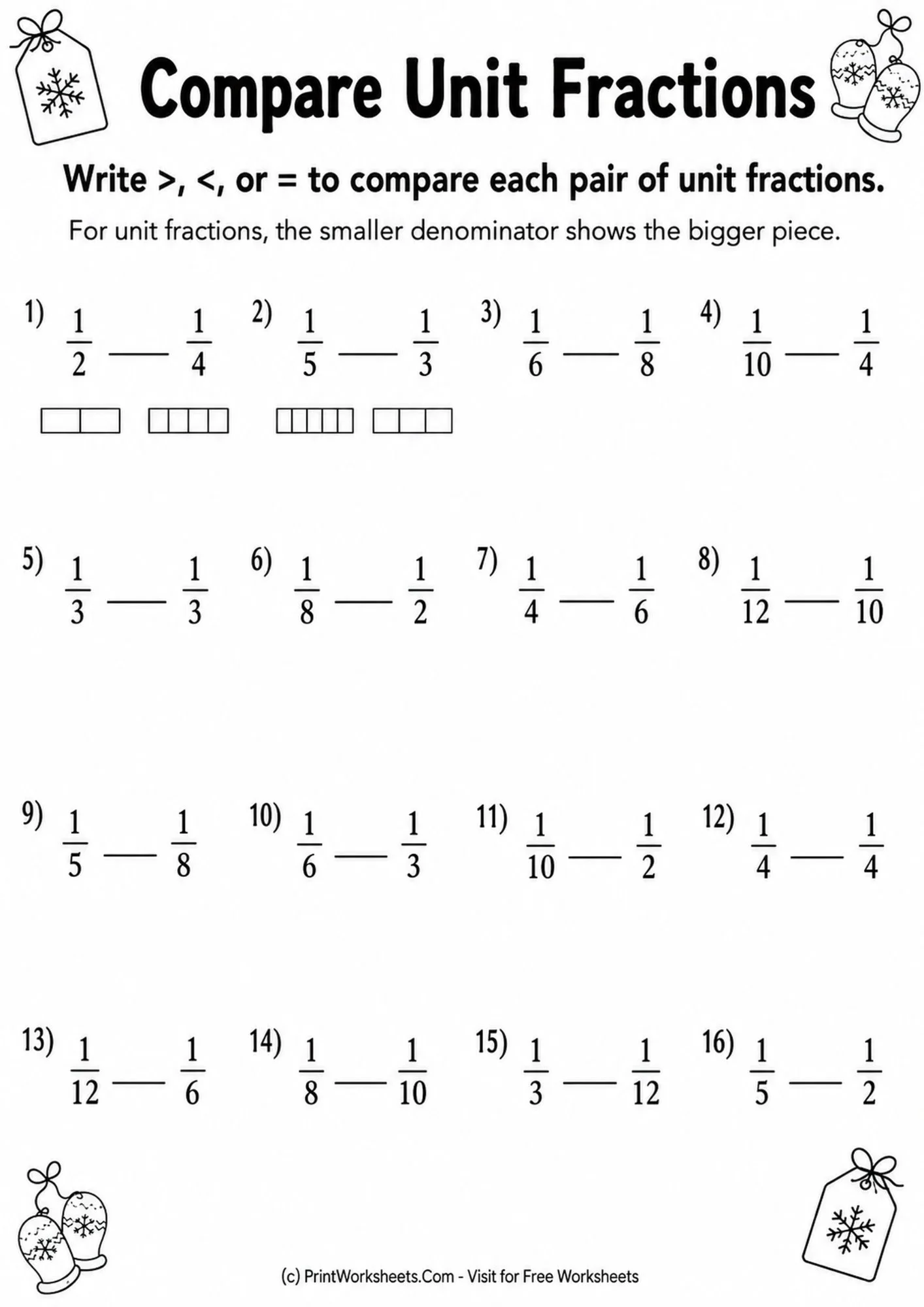
The greatest pedagogical challenge in teaching fractions is the "whole-number bias." When a student sees the fraction 1/8, their brain immediately focuses on the large number "8" and assumes the value is larger than 1/2. They apply whole-number logic to rational quantities. Our fraction printables directly combat this cognitive obstacle. By utilizing visual comparison charts and explicit fraction line stories, students physically see that a larger denominator creates smaller individual pieces. Consistent, targeted practice on paper permanently rewires this mathematical misconception.
Targeted Academic Standards
Integrating these targeted printables into your math block directly supports the Number and Operations—Fractions (NF) domain of the Common Core State Standards. The resources in this category systematically address CCSS standards from grade 3 (developing understanding of fractions as numbers) through grade 5 (applying and extending previous understandings of multiplication and division to multiply and divide fractions). They provide the exact visual scaffolding required to meet these rigorous academic benchmarks.
Frequently Asked Questions
What grade levels use fractions worksheets most frequently?
Fractions worksheets are most frequently used by 3rd, 4th, and 5th-grade educators. Third grade introduces fractions as numbers on a line, fourth grade focuses on equivalence and ordering, and fifth grade centers on complex arithmetic operations with unlike denominators.
Why do students struggle so much with learning fractions?
Students struggle with learning fractions because it is the first time in their academic career that a single mathematical value is represented by two separate numbers stacked on top of each other. Furthermore, the operational rules they memorized for whole numbers do not directly apply to numerators and denominators.
How do fraction worksheets build mathematical fluency?
Fraction worksheets build mathematical fluency by providing repetitive, structured exposure to visual models. Before a student can memorize abstract procedural algorithms (like finding a common denominator), they must physically manipulate and visually compare printed models to internalize the logic behind the math.